




Every Forced Hug at a Family Party Teaches a Child to Stay Quiet

The CSR Journal Magazine

I want to start with a number that should stop every reader in their tracks. In 2024, India registered 187,702 crimes against children, an average of 512 every single day, the highest figure in a decade. Cases have doubled since 2015.

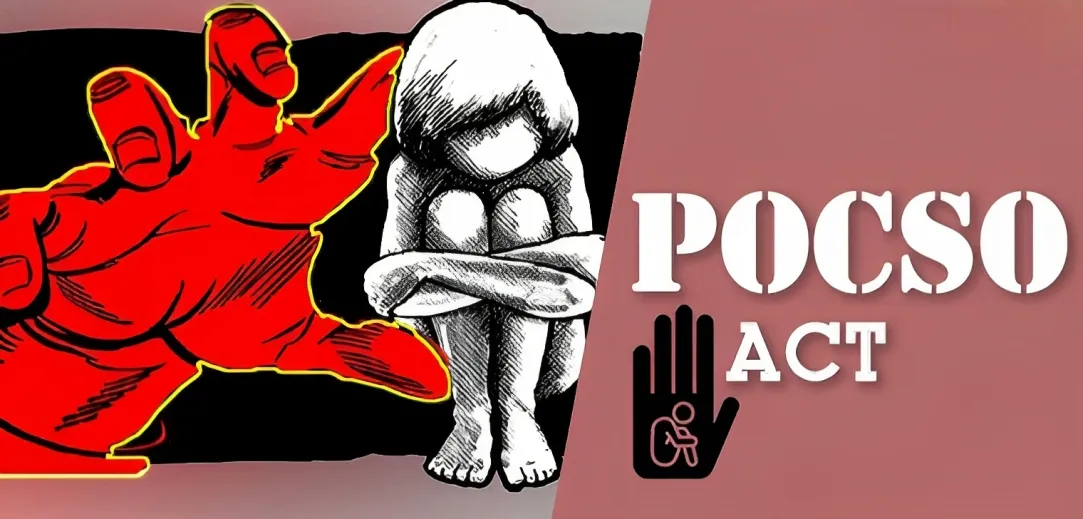
Offences under the ‘Protection of Children from Sexual Offences Act’, the law we call ‘POCSO’, now account for more than a third of all crimes against children in the country. This is not a fringe problem. This is a national emergency hiding in plain sight, and I am done pretending otherwise.

I teach geopolitics and international business to MBA students. I am not a criminologist or a child rights lawyer. But I read data for a living, and I have spent enough years dissecting Indian institutions to know when a system is failing by design rather than by accident. The POCSO numbers are not just tragic. They are a diagnostic. They tell us exactly where our courts, our schools, our homes, and our digital habits have collapsed. This article is my attempt to read that diagnostic honestly, without the euphemisms we usually wrap around this subject.

The Rise Is Real, But Read It Correctly

Before I go further, I want to make one thing clear, because ‘lazy’ commentary on this subject usually gets it wrong in one of two directions. Either people panic and declare Indian society uniquely depraved, or they dismiss the numbers as media exaggeration. Both readings are wrong.

The honest reading is this: Registered POCSO cases have risen sharply, but a rising number of registered cases is not the same as a rising number of actual incidents. It can also mean, and substantially does mean, that more survivors and families are choosing to report rather than stay silent. NCRB data shows POCSO registrations increased more than 30% between 2016 and 2020, and the number of children sexually abused as recorded in official data rose 65% between 2017 and 2021, climbing from 32,608 cases to 53,874. That is a brutal number. But brutal numbers going up because people are finally speaking is a different story from abuse itself multiplying unchecked.

For decades, child sexual abuse in India lived inside a wall of silence. A 2018 study by the Kailash Satyarthi Children’s Foundation found that only 7% of victims or their families ever approached the police. Shame, stigma, fear of the family’s reputation, and plain disbelief kept the other 93% quiet. So when I see case registrations climbing year after year, my first instinct is not despair. It is cautious relief. A society that used to bury this issue is now, however slowly, dragging it into the open. More FIRs are not automatically bad news. Silence was always the worse outcome, because silence protected the offender, not the child.

That said, I am not going to let this framing become an excuse. Even after accounting for improved reporting, the absolute scale is staggering. Delhi alone recorded a crime rate of 138.3 cases per 100,000 children in 2024. Maharashtra, Uttar Pradesh, and Madhya Pradesh post the highest raw numbers. Bihar has seen a sixfold increase over the decade, the steepest rise of any state, followed by Tamil Nadu, Jharkhand, and Odisha, each tripling. Reporting alone cannot explain increases of that magnitude. Something in the underlying conditions is also getting worse, and I will spend the rest of this piece arguing about what that something is.

A Justice System That Punishes Patience Out of Children

If there is one institutional failure I want to bash without qualification, it is the Indian judiciary’s handling of POCSO cases. We passed this law in 2012 specifically because ordinary criminal trials were too slow for child victims. We built ‘Fast Track Special Courts’ in 2019, promising 1,023 of them, including 389 exclusive POCSO courts, precisely to solve the delay problem. 13 years after the law and half a decade after the fast track scheme, the delay problem is worse than when we started.

Look at the pendency numbers. By the end of 2020, POCSO case pendency in courts had crossed 94 percent. Rape cases under ordinary criminal law showed almost the same figure, 94.4 percent. A parliamentary response in March 2022 revealed over 2.26 lakh POCSO cases pending in designated POCSO courts as of January that year.

By 2024, the picture across all crimes against children had not improved. Of 707,523 cases under trial nationally that year, 644,887, or 91 percent, remained pending at year’s end. Cases pending before courts have nearly tripled in a decade, from 165,853 in 2015 to 644,887 in 2024. IndiaSpend’s analysis of nearly 400,000 POCSO cases across 28 states found the average case takes 510 days to be disposed. That is a year and a half of a child returning to court, reliving trauma, facing the accused in hearings, before a verdict even arrives.

I want to be blunt about what this pendency actually does. It is not a neutral administrative delay. It is a second injury. A child who survives abuse is then asked to survive the legal system, and the legal system takes longer than her own recovery. Families give up. Witnesses turn hostile after years of pressure and fatigue. Memories fade under cross examination conducted half a decade after the incident. The conviction rate under POCSO stood at 37.9% in 2020, only slightly ahead of the 39.3 percent conviction rate for rape cases against women generally. A conviction rate below 40 percent, sitting on top of a pendency rate above 90 percent, is not a justice system. It is a queue that occasionally produces justice as a side effect.

Why is disposal so slow when the police machinery is not actually the bottleneck. Chargesheeting rates are high. In 2024, police filed chargesheets in 95% of POCSO cases, a rate that has held steady between 93-95% since 2017. The bottleneck sits squarely in the courts. Judicial vacancies in fast track courts remain unfilled. Many so called special courts lack child friendly infrastructure such as video recording facilities, separate waiting areas, or in camera testimony rooms that spare a child from facing the accused directly.

Judges assigned to these courts frequently have no specialised training in handling child witnesses, a gap the Kailash Satyarthi Children’s Foundation flagged repeatedly in its reports. As of May 2021, only 640 of the promised 1,023 fast track courts had become functional, and only 338 of the promised 389 exclusive POCSO courts existed. We built half a solution and called it a scheme.

The Poor Accused Move Fast, the Powerful Accused Do Not

Here is the part of this story that makes me genuinely angry, and I say this as someone who otherwise defends due process without apology. The same slow judicial machine that takes 510 days on average to dispose a case does not apply that delay evenly. If the accused is poor, unconnected, and unable to afford competent legal counsel, the machinery of the state can move with surprising speed. Overworked legal aid lawyers, minimal cross examination, no resources for a defence investigation, and a presumption of guilt in the public eye all combine to produce quick convictions or quick, coerced plea arrangements. Poor defendants in India routinely spend years in undertrial detention even before their case reaches a verdict, because they cannot afford bail, and once the trial starts it often proceeds without the kind of procedural friction that money can buy.

Contrast that with cases involving the economically or politically powerful. Bail becomes easier to obtain. Adjournments multiply. Star witnesses turn hostile after being approached, whether through pressure or inducement. Cross examinations stretch for years. Appeals climb through multiple tiers of the court system, each one adding months. High profile POCSO cases involving religious figures, politically connected individuals, or the wealthy have historically taken far longer to conclude, and several have ended in acquittal or in convictions that were later diluted on appeal. I am not naming specific ongoing matters here because sub judice cases deserve caution, but anyone who has followed Indian criminal trials over the last decade knows this pattern by heart. Justice delayed for the poor looks like an undertrial languishing in jail. Justice delayed for the powerful looks like an accused living freely on bail while the case quietly loses momentum.

This is the uncomfortable truth about our POCSO system. It does not simply fail child victims uniformly. It fails them differently depending on who sits in the accused’s chair. A system that claims to protect the most vulnerable citizens in the country, its children, cannot simultaneously operate two different clocks depending on the wealth of the accused. That is not a justice system. That is a caste system wearing judicial robes.

This Is Not Just About Lust. It Is a Mindset Problem

Most public commentary on child sexual abuse treats it purely as an expression of uncontrolled sexual urge. I think that framing is incomplete and, frankly, lets society off the hook too easily. Lust does not explain why an overwhelming share of offenders’ target children they already know, children who trust them, children who are structurally powerless to resist or report. What explains that pattern is entitlement. It is a mindset that treats a child’s body as available, that treats a child’s silence as consent, and that treats a child’s inability to fully understand or articulate violation as an opportunity rather than a moral red line.

This entitlement mindset is cultivated, not innate. It grows in households and communities where hierarchy trumps consent as an organising principle, where elders are never questioned, where a closed door in a family home is treated as sacred regardless of what happens behind it, and where the idea that a child has bodily autonomy independent of adult authority barely exists as a concept. Until we treat this as a cultural and psychological problem, not merely a criminal impulse problem, we will keep building courts and fast track schemes that address the crime after it happens instead of the conditions that produce it.

We Are Not Teaching Children How to Say No

Most Indian households still raise children to be deferential to all adults by default. Touch a relative’s feet. Do not question an elder. Do not embarrass the family by making a scene. These are values taught with good intentions, respect for age and hierarchy, but they come at a brutal cost. A child conditioned from birth never to say no to an adult, never to question an elder’s behaviour, and never to make a scene in front of family, is a child who has been pre trained to comply with an abuser rather than resist one.

Consent as a concept, the idea that a child’s body belongs to the child and that “no” is a complete sentence regardless of who is asking, is almost entirely absent from Indian home education. We teach children to share, to respect elders, to not talk back. We rarely teach them that they are allowed to refuse physical affection from anyone, including family, if it makes them uncomfortable. Parents who force children to hug or kiss relatives at gatherings, dismissing the child’s visible discomfort as shyness, are unintentionally teaching the exact opposite lesson an abuser depends on: that discomfort should be overridden for the sake of social harmony. This has to change at the level of the dinner table, not just the classroom.

Schools Failed First, Then Some of Them Learned

Schools were supposed to be the second line of defence after the home, and for a long time they were not even that. The POCSO Rules of 2020 finally mandated that central and state governments prepare age appropriate educational material on personal safety for children, to be disseminated through schools, panchayats, community centres, and even digital spaces. That mandate came eight years after the original Act, which tells you how long institutional child safety education was treated as optional.

The VIBGYOR Group of Schools case from 2014 remains one of the starkest illustrations of what happens when a school treats child safety as a brand risk rather than a duty of care. A six year old student at VIBGYOR High School in Marathahalli, Bengaluru, was allegedly raped by 2 staff members. The case triggered protests across Bengaluru and the country, the group’s chairman was arrested on charges of suppressing information, and two staff members were eventually chargesheeted. What made the case so damaging was not just the abuse itself but the perception that the institution’s first instinct was to protect its reputation rather than the child. That instinct, unfortunately, is not unique to one school group. It is a structural incentive across private education in India, where enrolment numbers and brand image often outweigh child protection protocols in the actual priorities of school management.

To their credit, VIBGYOR and many other institutions did eventually respond by introducing structured good touch, bad touch sessions and personal safety modules for young students, a step several Indian schools now treat as standard practice rather than optional add on.

A 2024 field report from personal safety educators working with adolescents in Pune found that even after a case as high profile as the Badlapur child sexual abuse case had dominated headlines, half the children in a session on personal safety had never previously attended a school session on the subject. Among those who had, understanding was shallow. Some children equated bad touch purely with physical pain rather than violation of boundaries, missing the point entirely.

Good touch, bad touch as currently taught in most Indian schools is often a single assembly session delivered once, without follow up, without integration into an ongoing curriculum, and without training teachers to handle disclosures if a child actually comes forward afterward. Comprehensive sexuality education curricula, of the kind now being piloted by groups such as Prayas in Maharashtra through programs like SAHAJ, treat personal safety as one module within a broader, age appropriate, repeated curriculum covering consent, healthy relationships, and self-worth. That is the direction schools need to move in nationally, not a single poster on a noticeboard once a year. CBSE has begun including some of this content, but the rigor and consistency across schools remains wildly uneven, and teacher training on how to actually deliver these sensitive sessions remains the single biggest gap.

Most Offenders Are Not Strangers

If there is one fact that should reshape how Indian parents think about child safety, it is this. The stranger danger narrative, the idea that abuse comes from an unknown man lurking outside school gates, is largely a myth. NCRB age profile data on child rape victims shows that a significant share of cases involve victims aged 12 to 18, and case pattern data collected by child rights organisations consistently shows that the overwhelming majority of offenders are known to the child. Relatives, parents, step parents, neighbours, tutors, family friends, and people who hold positions of trust within a household or a school are disproportionately represented among accused persons in POCSO cases.

This single fact should end the fantasy that child safety is achieved by monitoring strangers and unfamiliar spaces. It should redirect our attention to the people who have unsupervised, repeated, trusted access to a child, which is precisely the access that a known relative or neighbour has by default. Parents who obsess over stranger danger while remaining blind to patterns of behaviour from a trusted uncle, a family friend, or a domestic staff member are protecting their children from the wrong threat entirely. The uncomfortable implication is that Indian families need to be willing to question people within their own social circle, something the culture of hierarchy and unquestioning respect for elders, which I addressed earlier, makes extremely difficult to do.

Social Media and Easy Access to Pornography Are Rewiring Expectations

I do not think it is possible to have an honest conversation about the rise in child sexual abuse without talking about smartphones. India has some of the cheapest mobile data in the world, and children now get unsupervised access to devices at younger ages than any previous generation. Two consequences follow from this, and both matter here.

First, unrestricted access to pornography, including violent and non-consensual content, has become nearly universal among adolescents with a smartphone and an internet connection, often without any parental awareness. Repeated exposure to content that normalises coercion, power imbalance, and non-consent as titillating rather than criminal shapes sexual expectations at a formative age, for both potential victims and potential offenders. When a teenager’s primary source of sexual information is unmoderated internet content rather than any structured education from home or school, distorted norms fill the vacuum by default.

Second, social media has become a direct vector for grooming and exploitation. Predators use messaging platforms and social apps to build trust with children over time, often posing as peers or presenting fabricated identities, before escalating toward abuse either online or in person. Law enforcement agencies and child protection groups have flagged a rise in cases where the first point of contact between an offender and a victim was a social media platform, not a physical space at all. I will not go into the specific mechanics’ predators use, because describing them serves no protective purpose and only risks handing a playbook to the wrong reader. What parents and schools need to understand is simpler: the assumption that a child is safe once physically at home, phone in hand, is dangerously outdated.

What Actually Needs to Change

I will not end this piece with a vague call for awareness, because vague calls for awareness have achieved close to nothing in thirteen years of POCSO. Here is what the data actually points toward.

Court capacity has to match caseload growth in real numbers, not in press releases about schemes. Every promised fast track court needs to actually be functional, staffed with judges trained specifically in child testimony, and equipped with the infrastructure the law already mandates, in camera testimony, video recording, child friendly waiting spaces. A scheme that is 60 percent implemented eight years after launch is not a scheme. It is a failure with a good name.

Bail and trial procedures need genuine parity regardless of the accused’s wealth or connections. If undertrial poor defendants can be tried and convicted within a reasonable timeframe, there is no legitimate reason wealthy or influential defendants require years of adjournments to reach the same procedural point. Any visible disparity in trial speed correlated with the accused’s resources should itself be treated as a red flag warranting judicial oversight.

Consent education has to start at home, before school, and it has to override the reflexive cultural instinct to prioritise adult comfort over a child’s discomfort. Parents forcing physical affection onto reluctant children at family gatherings need to stop doing that, immediately, as a first and free intervention available to every household regardless of income.

Schools need mandatory, recurring, professionally designed personal safety curricula, not single assemblies, delivered by trained staff capable of handling disclosures appropriately when they occur. The VIBGYOR case should be remembered not as an isolated scandal but as the moment Indian schools were forced to confront how unprepared they were, and every school that has not yet built a comparable, ongoing program is repeating that same unpreparedness today.

Parents need to redirect vigilance away from strangers and toward the people who actually have close, trusted, repeated access to their children. That is uncomfortable. It requires questioning relatives, neighbours, and family friends, exactly the people culture tells us never to question. Do it anyway.

Finally, digital literacy for both children and parents needs to catch up with the reality of how much unsupervised time children now spend online, and how directly that exposure connects to both distorted sexual norms and active predatory contact.

Nevertheless

I started this piece with a number, 512 crimes against children every day. I want to end with a reframe of that number rather than a repetition of it. Every one of those 512 daily cases represents either a family that finally found the courage to report, breaking a silence that protected abusers for generations, or an abuse that has not yet been reported at all. Neither possibility is comfortable. But only one of them is something we can actually influence starting today, in our own homes, our own schools, and our own expectations of the justice system.

I would rather live in a India that reports too much and prosecutes too slowly than one that stayed silent and called it peace. But I refuse to accept slow prosecution as the ceiling of our ambition. We built a law in 2012. Thirteen years later, it is time we built a system that actually lives up to it.

Long or Short, get news the way you like. No ads. No redirections. Download Newspin and Stay Alert, The CSR Journal Mobile app, for fast, crisp, clean updates!

App Store –  https://apps.apple.com/in/app/newspin/id6746449540 

Google Play Store – https://play.google.com/store/apps/details?id=com.inventifweb.newspin&pcampaignid=web_share

Latest News

Popular Videos