


Delhi High Court Upholds Temporary Telegram Ban Ahead of NEET-UG Re-Examination
The CSR Journal Magazine

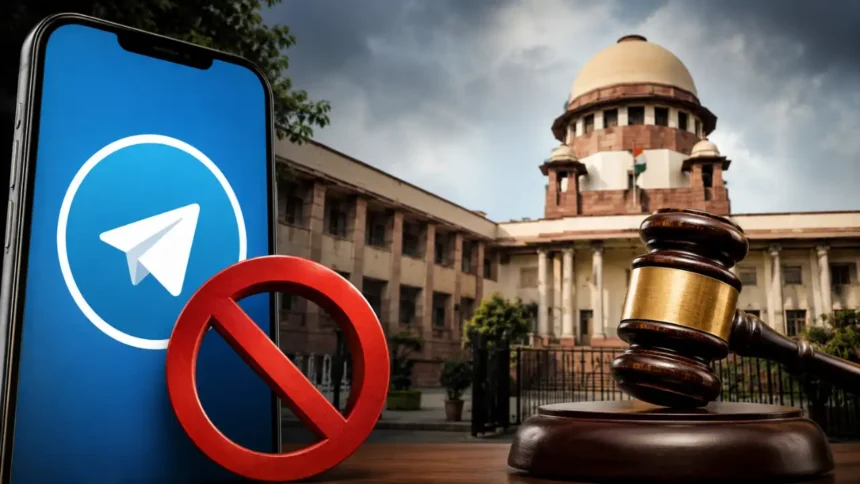
The Delhi High Court on Friday upheld the Centre’s decision to temporarily block access to Telegram ahead of the June 21 NEET-UG re-examination, accepting the government’s argument that the platform poses a significant risk of enabling the rapid circulation of leaked examination material.

The ruling, delivered by a bench headed by Justice Tejas Karia, comes amid heightened concerns over examination security following allegations of paper leaks in several competitive examinations. The restrictions are expected to remain in force until June 30.

Court Accepts Government’s Concerns Over Telegram Features

In its judgment, the High Court agreed with the Centre’s contention that Telegram’s architecture allows information to be amplified and distributed to large numbers of users within minutes.

According to the court, the platform’s ability to host large channels and groups makes it particularly vulnerable to misuse in cases involving leaked examination papers.

The court observed that even when authorities identify and disable channels involved in unlawful activity, administrators can quickly create mirror channels under different names and redirect users, thereby circumventing enforcement measures.

It also expressed concern over Telegram’s message-editing functionality, noting that files and messages can be modified after being sent.

The court said this could potentially enable the creation of misleading narratives, including the possibility of altering documents after an examination and presenting them as evidence of a prior paper leak.

Section 69A Interpretation Central to Verdict

A key aspect of the ruling relates to Section 69A of the Information Technology Act, 2000, which empowers the government to block access to information under specified circumstances.

The court held that the definition of “information” under the law includes “codes”, “computer programmes” and “software”, thereby bringing digital platforms and applications within its ambit.

According to the judgment, applications perform communication, storage and processing functions through computer systems and networks, making information hosted or transmitted through them subject to blocking powers under Section 69A.

Sources familiar with the matter said Telegram is considering challenging the order.

Digital Rights Advocates Raise Concerns

The decision has reignited debate over the extent of the government’s powers to block entire platforms because of the actions of some users.

Apar Gupta, Director of the Internet Freedom Foundation, argued that intermediaries are generally protected from liability for user-generated content under Section 79 of the IT Act, provided they comply with due diligence requirements and lawful takedown orders.

He referred to the Supreme Court’s ruling in the Shreya Singhal v Union of India case, which held that platforms are not expected to independently determine the legality of content and become liable only if they fail to comply with valid legal orders.

Gupta said responsibility for a leaked examination paper lies with those who leaked it and may attract penalties under the Public Examinations (Prevention of Unfair Means) Act, 2024.

He also questioned whether the platform-wide ban satisfies the constitutional test of proportionality laid down by the Supreme Court in the Anuradha Bhasin v Union of India case, which requires authorities to demonstrate that no less restrictive measure was available.

Critics argue that if specific channels or content could have been blocked, a blanket restriction affecting millions of users may not meet that standard.

Debate Extends to Encryption and Intermediary Liability

Legal experts noted that the issue also raises questions regarding surveillance and encrypted communications.

End-to-end encrypted platforms such as WhatsApp, Signal and Telegram’s Secret Chats do not allow service providers to read messages, whereas cloud-based chats are generally accessible to the platform itself.

Under Section 69 of the IT Act and provisions under the Telecommunications Act, 2023, authorised agencies can intercept, monitor or decrypt information in specified circumstances involving public order, national security and criminal investigations.

Nikhil Narendran, Partner at Trilegal, said Telegram cannot automatically be held responsible merely because some users misuse the platform.

He argued that liability arises only when a platform actively participates in unlawful conduct or knowingly disregards lawful directions issued by authorities.

Narendran also said platform-wide bans tend to affect ordinary users more than wrongdoers, who can migrate to alternative services or use virtual private networks.

“Telegram is only the messenger,” he said, adding that authorities should instead focus on improving examination security and prosecuting those responsible for leaks.

Namita Viswanath, Partner at CMS INDUSLAW, similarly cautioned that blanket restrictions could adversely affect users who depend on such platforms for communication, education, business and access to information.

Ruling May Shape India’s Digital Future

Beyond the immediate issue of the NEET-UG re-examination, the judgment has opened a wider debate over the balance between public order and constitutional protections relating to free speech and access to information.

Whether higher courts ultimately uphold this broader interpretation of the government’s blocking powers could have significant implications for intermediary liability, digital rights and the future regulation of the internet in India.

Long or Short, get news the way you like. No ads. No redirections. Download Newspin and Stay Alert, The CSR Journal Mobile app, for fast, crisp, clean updates!

App Store –  https://apps.apple.com/in/app/newspin/id6746449540 

Google Play Store – https://play.google.com/store/apps/details?id=com.inventifweb.newspin&pcampaignid=web_share

Latest News

Popular Videos
