


Cabinet Clears ₹3,936 Crore for Two Semiconductor Units in Gujarat to Boost Local Production
The CSR Journal Magazine

The Cabinet has approved the establishment of two additional semiconductor manufacturing units, representing a total investment exceeding Rs 3,936 crore, as part of the India Semiconductor Mission (ISM). This initiative aims to enhance India’s position as a significant global semiconductor hub by the year 2032.

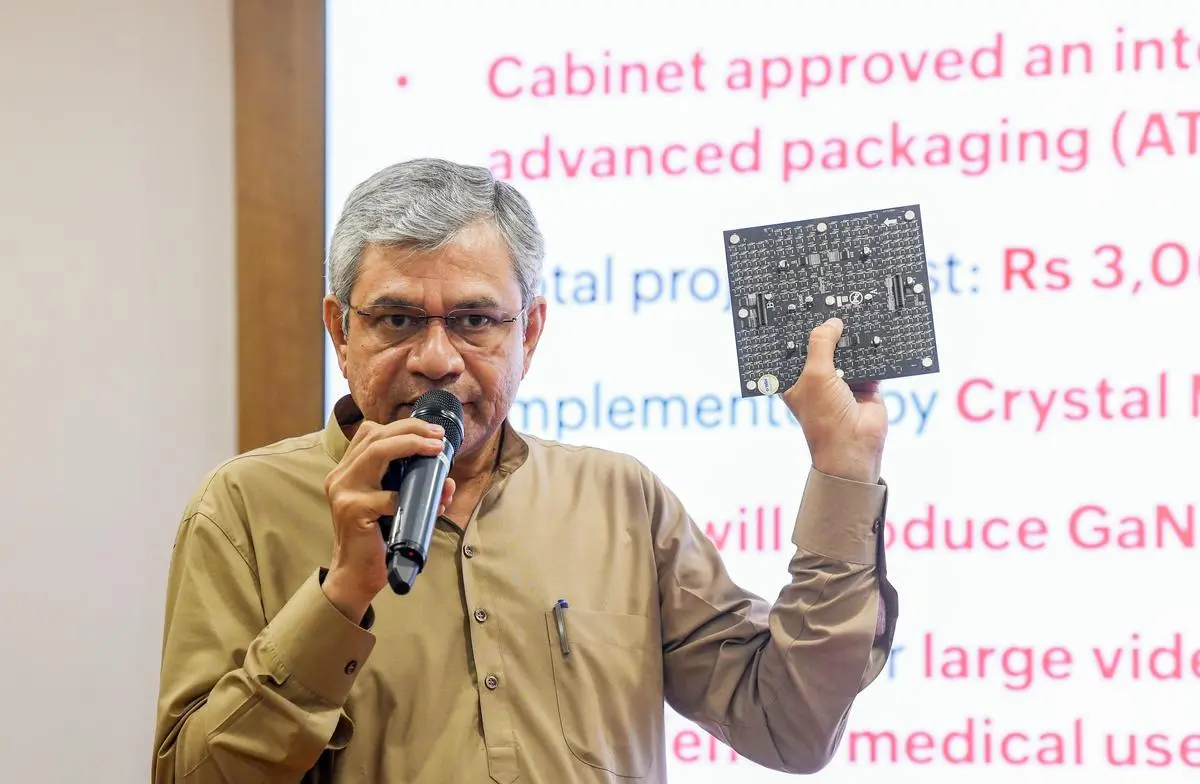
Union Minister for Information and Broadcasting, Ashwini Vaishnaw, made the announcement regarding these projects, which are set to include India’s first commercial minimicro-LED display facility utilising Gallium Nitride (GaN) technology. Additionally, a semiconductor packaging facility will also be part of the developments. Both manufacturing plants are slated to be located in the state of Gujarat.

It is estimated that these facilities will create employment opportunities for around 2,230 skilled individuals. This is a noteworthy move towards not only bolstering the semiconductor industry but also fostering job creation in the region.

Details of the Semiconductor Units

Among the newly approved manufacturing units, Crystal Matrix Limited (CML) is set to establish an integrated facility in Dholera dedicated to compound semiconductor fabrication and ATMP (Assembly, Testing, Marking, and Packaging) specifically for minimicro-LED display modules. In another development, Suchi Semicon Private Limited (SSPL) will erect an Outsourced Semiconductor Assembly and Test (OSAT) facility in Surat focused on discrete semiconductors.

These additional approvals have increased the total number of projects under the ISM to twelve, bringing the cumulative investment in India’s semiconductor ecosystem to an approximate Rs 1.64 lakh crore. This marks a significant step towards achieving a self-sufficient semiconductor sector in India.

The introduction of these semiconductor hubs is expected to attract not only investments but also technological advancements within the country, reinforcing India’s goal of becoming a key player in the global semiconductor supply chain.

India’s Semiconductor Landscape and Future Aspirations

Currently, India’s semiconductor requirements are heavily reliant on imports, particularly from China, which have exceeded 50 per cent in recent years. In response, the Indian government is actively pursuing strategies to diversify its supply sources while simultaneously nurturing domestic chip design expertise.

The establishment of these two manufacturing units is poised to significantly enhance local semiconductor production capabilities, thereby reducing dependence on foreign imports. This initiative aligns with national strategies to bolster technological self-sufficiency and stimulate the innovation ecosystem within the country.

Prime Minister Narendra Modi has emphasised the importance of the cabinet’s recent decision, stating that the projects under the India Semiconductor Mission are critical to establishing India as a leader within the global semiconductor value chain. The focus, he noted, will encompass aspects such as manufacturing, packaging, and advanced materials.

The Indian government’s commitment to developing the semiconductor industry indicates a proactive approach towards economic transformation and fostering a robust technological infrastructure. This initiative is expected to play a crucial role in the evolution of India’s economic landscape over the coming years.

Long or Short, get news the way you like. No ads. No redirections. Download Newspin and Stay Alert, The CSR Journal Mobile app, for fast, crisp, clean updates!

App Store –  https://apps.apple.com/in/app/newspin/id6746449540 

Google Play Store – https://play.google.com/store/apps/details?id=com.inventifweb.newspin&pcampaignid=web_share

Latest News

Popular Videos
