


Armed Guards On Board Become Standard in Gulf Waters
The CSR Journal Magazine

The shipping industry is grappling with rising tensions due to Iranian drones and US military operations near the Strait of Hormuz. As these issues show slight signs of diminishing, a new challenge has emerged in the Red Sea, where piracy is creating additional concerns for commercial vessels. The Indian Navy successfully intervened in a recent piracy attempt against the MV Golden Arsenal in the Gulf of Aden, employing the stealth frigate INS Trikand to secure the merchant ship.

This incident highlights a significant shift regarding maritime risks in the region. The Gulf of Aden and the Red Sea are becoming increasingly important pressure points for global trade, mirroring the strategic importance of the Strait of Hormuz.

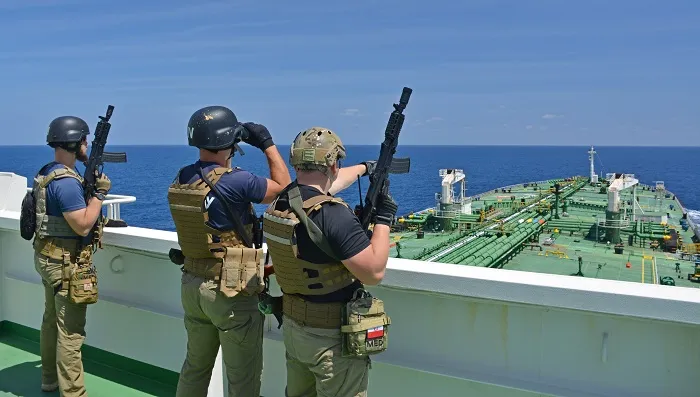
Evidence of heightened anxiety among shipping companies was apparent on Thursday morning. Around 25 vessels, including five associated with India, altered their destination signals to note the presence of armed guards on board.

Vessels Taking Precautionary Measures

The Indian-flagged LPG tanker Nanda Devi, located in the Gulf of Aden during this period, was prominently featured in reports. The vessel signalled “IND VL ARMED GUARDS” as it traversed the corridor, indicating a deliberate and strategic measure to ensure security in a high-risk area.

Other commercial vessels operating in the Gulf of Aden similarly updated their messages on the Automatic Identification System (AIS) to indicate that armed guards were present on board. This reflects a broader trend of increased vigilance driven by piracy concerns along vital trade routes.

Additionally, various other India-linked ships also transmitted similar security messages, including Savir Lion, an Indonesian-flagged vessel bound for India, and Cape Layla. Their updated signals were indicative of a region fraught with risks stemming from piracy, Houthi threats, and overarching instability.

Global Shipping Anxiety Reflects Broader Trends

The growing anxiety about maritime safety extends beyond Indian vessels. Analysis of MarineTraffic signals revealed a collective increase in armed guards messages among various commercial craft in the Gulf of Aden. This indicates a widespread enhancement of security measures across the industry.

The destination signals displayed on AIS are typically brief notes entered manually by a ship’s crew, meant to communicate the next port of call while also serving an important role in navigation safety and traffic management. However, some vessels are now utilising these signals to provide further information, including armed guards on board.

Reports indicate at least 18 additional commercial vessels displayed similar armed guards messages while navigating the Gulf of Aden. These vessels hailed from various countries, including Hong Kong, Liberia, Sierra Leone, Panama, and Malta, suggesting a rising global concern among shipping operators.

This trend reflects a shared apprehension among international shipping lines regarding the increasing risks in maritime corridors, which have seemingly heightened universally across vessels, regardless of their flags or ownership. The ongoing challenges in the Red Sea and Gulf of Aden demonstrate a pressing need for enhanced security measures in global trade transportation.

Long or Short, get news the way you like. No ads. No redirections. Download Newspin and Stay Alert, The CSR Journal Mobile app, for fast, crisp, clean updates!

App Store –  https://apps.apple.com/in/app/newspin/id6746449540 

Google Play Store – https://play.google.com/store/apps/details?id=com.inventifweb.newspin&pcampaignid=web_share

Latest News

Popular Videos
