


Xi And Putin Call For New Global Order During High-Level Beijing Talks
The CSR Journal Magazine

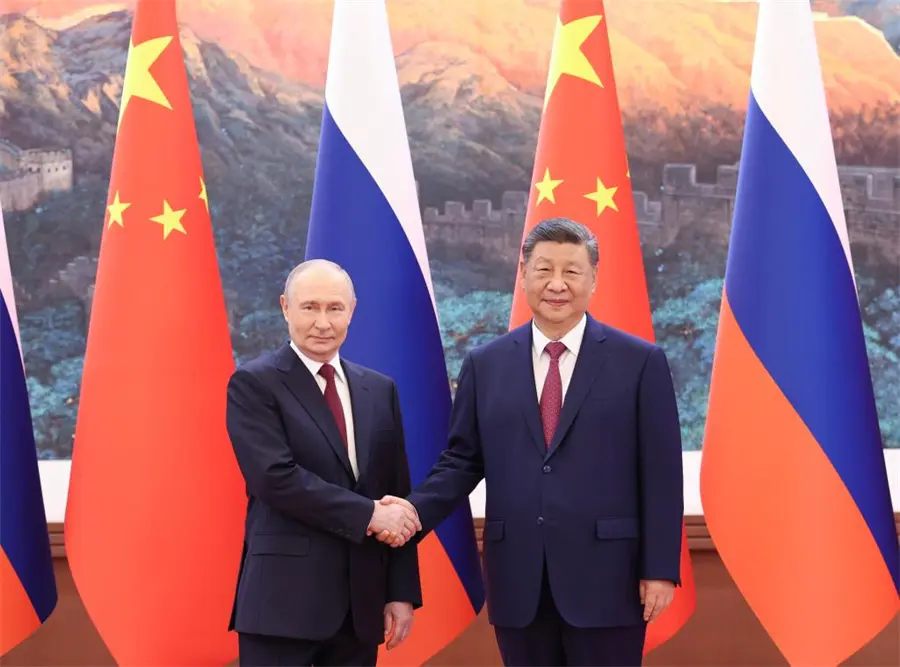
The recent encounter between Xi Jinping and Vladimir Putin, which took place in Beijing from May 19-20, highlights the ongoing collaboration between China and Russia. The meeting followed closely after Xi’s interaction with US President Donald Trump on May 15, underlining the geopolitical significance of both visits. Analysts suggest that during their discussions, Xi and Putin may have addressed mutual concerns regarding their common adversary, the United States.

Putin’s visit marks his 25th trip to China, reinforcing the long-standing relationship the two leaders have fostered since Xi took office in 2013. The two have met in person over 40 times, indicating a solid diplomatic rapport that transcends mere formalities.

The summit has been portrayed as an opportunity for the two leaders to coordinate their strategic stances amid escalating global tensions, particularly concerning NATO and its actions in Europe. Some analysts perceive this as a potential realignment in the global power landscape that could echo historical precedents.

Joint Declaration Emphasises Multipolar World

During this summit, a joint declaration was issued, advocating for a “multipolar world” and promoting a “new type of international relations.” Analysts view this as an indication of the durability of Sino-Russian ties, coupled with a shared intent to reshape global governance away from perceived Western dominance. The declaration stated concerns over rising neocolonial tendencies and the erosion of fundamental international legal norms.

Both nations expressed the need for inclusive cooperation and equal security among states, while also warning against the use of human rights as a pretext for external interference. Such statements, however, have raised eyebrows, particularly concerning Russia’s actions in Ukraine and China’s stance in the South China Sea, which contradict the principles they espouse.

The declaration serves as a public relations effort to project an image of unity and collaborative intention, yet it remains clear that underlying tensions and differences persist in their relationship. Experts suggest that Beijing and Moscow’s partnership is motivated by pragmatic calculations rather than deep-rooted ideological alignment.

Geopolitical Implications and Future Considerations

The strategic partnership between China and Russia has garnered mixed reactions from geopolitical analysts. On one hand, their alignment presents a counterbalance to Western influence; on the other, it reflects a relationship marked by cautious pragmatism. Both leaders have significant national interests that shape their diplomatic agendas, often leading to a careful balance of cooperation and competition.

Moreover, the economic interdependence between China and Russia continues to expand, with bilateral trade reaching US$228 billion in the previous year. As both nations manoeuvre through a complex global landscape, Xi and Putin’s strategic goals may converge on issues like energy security and military cooperation, while simultaneously navigating their individual aspirations for economic stability.

While the meeting between Xi and Putin sends a message of camaraderie, it is critical to recognise the underlying complexities that characterise their relationship. The dynamics are shaped by geographical proximity, shared interests, and strategic calculations rather than an unbreakable bond of friendship. Analysts caution against oversimplifying the narrative, as the true depth of their partnership remains complicated and subject to the evolving global context.

Long or Short, get news the way you like. No ads. No redirections. Download Newspin and Stay Alert, The CSR Journal Mobile app, for fast, crisp, clean updates!

App Store –  https://apps.apple.com/in/app/newspin/id6746449540 

Google Play Store – https://play.google.com/store/apps/details?id=com.inventifweb.newspin&pcampaignid=web_share

Latest News

Popular Videos
