


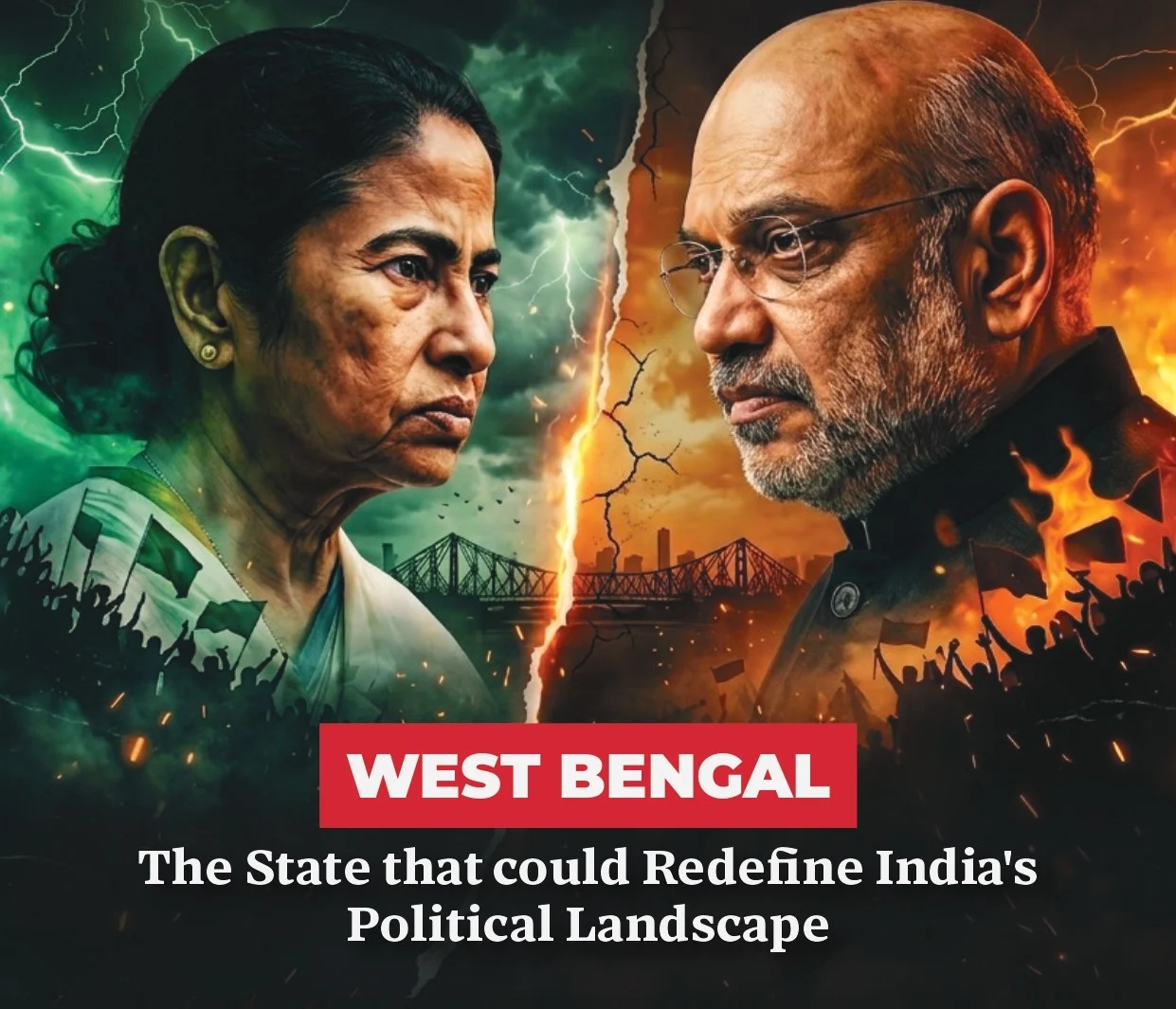

West Bengal is on edge.
As the votes are counted in one of India’s most volatile and fiercely contested elections, the outcome is set to trigger political shockwaves that could redefine not just the state’s future—but the balance of power across the country.
This is no ordinary election. This is a battle for narrative, for dominance, and for the political soul of eastern India.
Bengal at Boiling Point
From the moment campaigning began, the state transformed into a political war zone. Allegations flew thick and fast. Clashes erupted. Communities polarized. The streets, once filled with campaign slogans, now carry an uneasy silence as the state waits for the verdict.
At the center stands Mamata Banerjee, fighting to defend her turf against an aggressive challenge from the Bharatiya Janata Party, which has poured enormous resources into cracking Bengal’s resistance. The stakes could not be higher.
If TMC Holds: A Defiant Fortress
If the All India Trinamool Congress retains power, it will not just be a victory—it will be a declaration.
A declaration that regional forces can still withstand the full might of a national juggernaut. A declaration that welfare politics, grassroots networks, and regional identity remain potent weapons.
Such a result would instantly elevate Banerjee’s national stature, positioning her as one of the most formidable faces of opposition politics. It would energize efforts to build a broader anti-BJP coalition and inject new confidence into regional parties across India.
But victory may come at a cost. Expectations will surge. Pressure to deliver governance, control political violence, and stabilize the state will intensify dramatically.
If BJP Breaks Through: A Political Earthquake
If the BJP pulls off a win—or even comes close—it will be nothing short of a राजनीतिक earthquake.
For years, West Bengal has resisted the BJP’s expansion. A breakthrough here would signal that no region is beyond its reach.
It would:
-
Cement the BJP’s rise in eastern India
-
Deal a psychological blow to opposition unity
-
Redraw India’s electoral map ahead of future national elections
Such an outcome would also trigger a dramatic shift in governance. Administrative alignment with the central government could accelerate, but it may also deepen social and political fault lines that have already been stretched thin during the campaign.
A Fractured Political Landscape
This election has exposed deep cracks beneath Bengal’s political surface.
Traditional vote banks are shifting. Minority votes, once consolidated, are showing signs of fragmentation. Smaller players are no longer fringe—they are potential kingmakers.
The result? A state that may emerge from the election more divided than ever before. And in that division lies risk.
The Shadow of Violence
West Bengal’s elections have long been shadowed by political violence—and this time is no different.
Security forces remain on high alert. Political camps are bracing for post-result clashes. The fear is real: that the announcement of results could ignite fresh unrest.Because in Bengal, elections are not just about ballots.They are about control.
National Fallout: Beyond Bengal
What happens here will not stay here.
A strong BJP performance will turbocharge its national narrative of unstoppable expansion. A TMC victory will revive opposition hopes and reshape alliance politics ahead of the next big electoral battles.
Either way, the message will echo far beyond Bengal:
-
Can regional leaders stand up to centralized political power?
-
Is the BJP’s dominance inevitable—or containable?
-
Are voters shifting toward national narratives, or doubling down on local identity? The answers begin here.