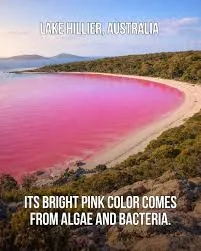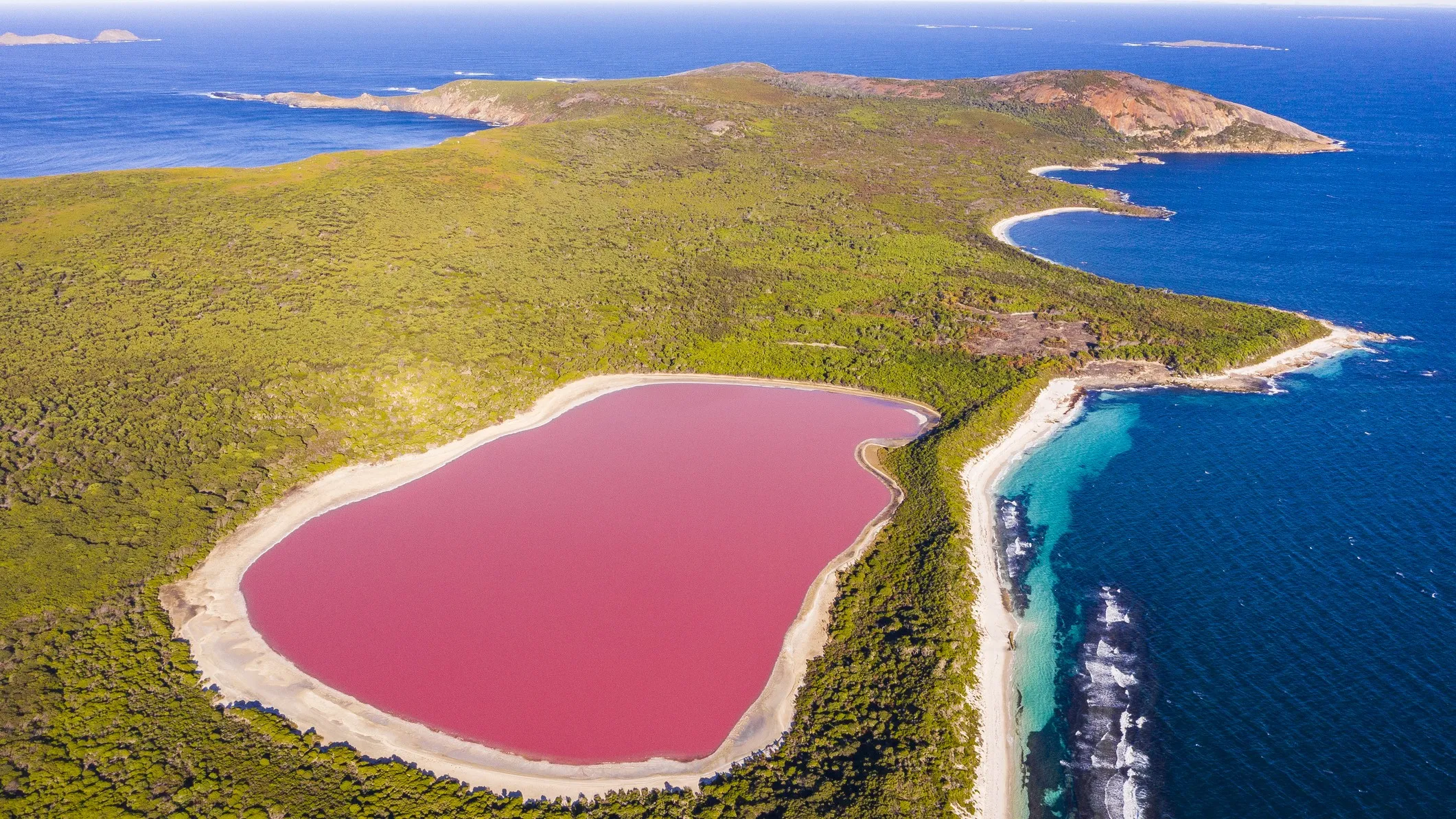

Lake Hillier, famed for its striking pink waters, is situated on Middle Island, which is part of Western Australia. This rare natural phenomenon offers a captivating contrast between its vibrant pink surface, the deep blue waters of the Southern Ocean, and the lush greenery of the surrounding forest. The lake’s unusual colour has led many to question whether it is a natural occurrence or artificially altered, but it is indeed a natural marvel.
Scientific Explanation of Lake Hillier’s Pink Colour
The pink hue of Lake Hillier can be attributed to a combination of microorganisms residing in its salty waters. Researchers have identified the presence of salt-loving bacteria, most notably Salinibacter ruber, which produces red pigments. Additionally, microalgae such as Dunaliella salina contribute to this vibrant colouring by generating beta-carotene, a pigment also found in carrots. The interaction of these biological elements forms the lake’s distinctive shade, distinguishing it from mere dyes or pollutants.
Salinity plays a crucial role in the lake’s ecology. Lake Hillier possesses salt concentrations that can be ten times higher than that of typical ocean water, creating an ideal habitat for extremophiles. These organisms are adapted to thrive in harsh environments and produce protective pigments that allow them to withstand intense sunlight and ultraviolet rays, resulting in the pink appearance of the water.
What sets Lake Hillier apart from other similar bodies of water is its remarkable consistency in colour. Unlike many pink lakes that may experience fluctuations in hue, it maintains its vibrant pinkness throughout the year. Colour intensity can, however, be influenced by factors such as salinity, sunlight exposure, and water conditions. Environmental changes, including rainfall, may result in temporary shifts in the lake’s colour but generally, it retains its signature look.