


Satyendranath Tagore: The First Indian Civil Servant
The CSR Journal Magazine

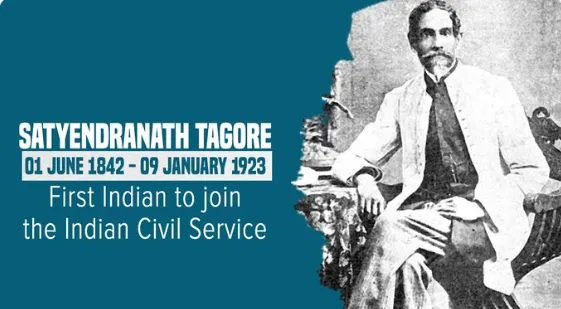
Satyendranath Tagore’s journey to becoming the first Indian to clear the Indian Civil Service (ICS) examination began in a vibrant intellectual environment. Born in 1842 into the prominent Tagore family of Bengal, he was immersed in discussions about literature, reform, and social change. This household was not simply a family home but a hub for the intellectual trends that characterised the Bengal Renaissance. As the elder sibling of Rabindranath Tagore, India’s first Nobel laureate, Satyendranath’s pursuit of education was seen as essential for leveraging change in a colonial setting.

In an era where access to governance was heavily influenced by social capital, Tagore faced significant barriers. Colonial systems often overshadowed individual merit, making it vital for candidates to possess strong connections alongside academic prowess. While talent was necessary, it was not sufficient in the face of entrenched colonial structures.

The ICS Examination: A Colonial Challenge

The nature of the ICS examination underwent a significant transformation in 1853. Prior to this, appointments to the East India Company’s civil services primarily occurred through nominations, facilitated by influence rather than competition. However, the British Parliament abolished this system, introducing competitive examinations intended to level the playing field. While this reform was publicly hailed as progressive, it retained underlying biases, making it clear that ideal candidates were expected to have had elite British education.

To qualify, candidates needed to be aged between 18 and 23, and tackle a demanding syllabus that was heavily focused on classical studies. For Indian candidates such as Satyendranath, the daunting task involved not only financial strain due to overseas travel but also navigating a curriculum that was distant from their cultural understanding. The requirement of a horse-riding test exemplified the challenges rooted in colonial expectations.

Despite the introduction of competitive examinations, the barriers remained formidable. Indian aspirants had to engage with the colonial education system, which was primarily centred on Greek literature, Latin, and European classics. This disparity highlighted the fact that even a strong academic background could not entirely overcome the systemic challenges faced by Indian candidates.

Contributions Beyond Administration

Upon successfully passing the examination in 1863, Satyendranath Tagore served in various regions in western India, covering areas that are now part of Maharashtra and Gujarat. His role transcended the typical administrative functions; he actively advocated for women’s education and engaged with reformist ideologies. His commitment to education for women was significantly supported by his wife, Jnanadanandini Devi, who played a crucial role in challenging societal norms regarding women’s public participation within Bengal.

In addition to his administrative career, Tagore was also known for his literary contributions. He translated numerous works and wrote extensively, showcasing his commitment to intellectual pursuits. His journey reflects the ongoing evolution of India’s bureaucratic framework, rooted historically in the ICS. Today, thousands of students prepare diligently for the UPSC examination, illustrating the continued relevance of civil services in modern India.

As the Indian civil service has developed through numerous transformations, it has retained many features originating from its colonial past. Satyendranath Tagore’s achievement in the ICS in 1863 stands as a significant milestone, marking the intersection of personal ambition and the broader context of colonial governance in India. His success against a backdrop of systemic challenges underscores a pivotal moment in Indian history when barriers began to be challenged more openly.

Long or Short, get news the way you like. No ads. No redirections. Download Newspin and Stay Alert, The CSR Journal Mobile app, for fast, crisp, clean updates!

App Store –  https://apps.apple.com/in/app/newspin/id6746449540 

Google Play Store – https://play.google.com/store/apps/details?id=com.inventifweb.newspin&pcampaignid=web_share

Latest News

Popular Videos
