


Putin Criticises 30,000 Sanctions Imposed on Russia; Highlights Eco Growth
The CSR Journal Magazine

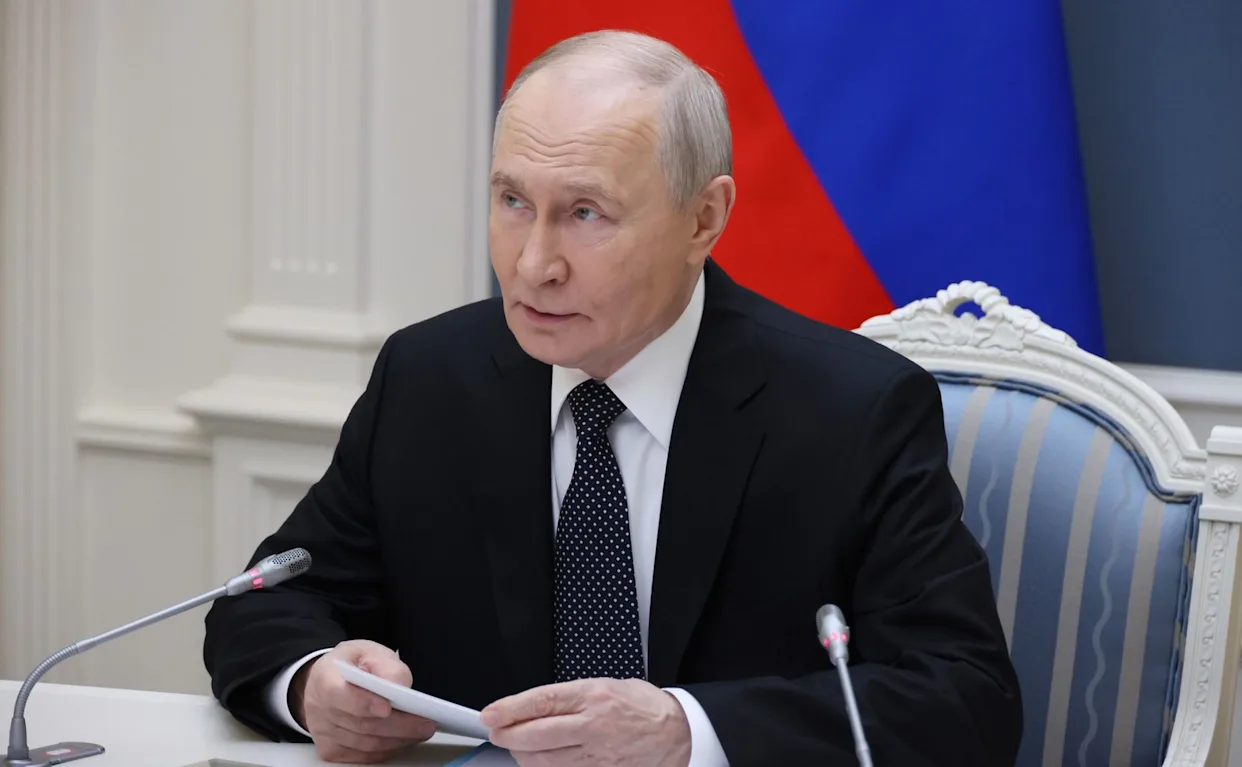
Russian President Vladimir Putin has publicly condemned what he labelled as unjust Western sanctions during his address at the BRICS Business Forum in New Delhi, asserting that over 30,000 sanctions have been enforced on Russia. He argued that this figure is double the total of sanctions imposed on all other nations combined. Putin accused Western competitors of utilizing increasingly unscrupulous tactics to preserve their economic dominance, including disrupting transport systems and infrastructure.

Putin went on to assert that Russia’s economic recovery over the past three years has exceeded the global average. He indicated that the economy has undergone significant structural changes in the last four years, making it more resilient and adaptable to challenges posed by the sanctions. His comments serve to highlight Russia’s intent to display its strength amidst external pressures.

This statement from Putin follows a recent move by the United States Senate, which on August 7, 2026, passed the Lindsey Graham Sanctioning Russia and Iran Act of 2026. The legislation, which received an 86-11 vote, establishes both primary and secondary sanctions targeting Russian officials, oligarchs, and financial institutions, alongside extending sanctions on Iran.

Confrontation Between BRICS and the West

Putin expressed concerns regarding the escalating confrontations between BRICS and Western economies, asserting that competitive measures have evolved to include tactics beyond traditional economic parameters. He remarked, “Sometimes competition is taking some ugly forms,” suggesting that such negative actions are observable at the governmental level.

He specifically referenced the destruction of pipelines, attempts to obstruct international transport routes, and the seizure of maritime vessels as examples of these harmful measures. In a subtle critique of the United States, Putin denounced the secondary sanctions targeting nations that pursue their genuine economic interests. He claimed that Western powers are attempting to maintain their historical competitive edge by restricting trade and exerting pressure on governments that sustain economic relationships with Russia.

This assertion reflects a continuing narrative about the struggle for economic influence on the global stage. As a response to this mounting pressure, Putin stated that Russia is focusing on enhancing its economic resilience while strengthening political ties with reliable and predictable partners, thereby adopting a more proactive stance against economic coercion.

Talks Between Modi and Putin at BRICS Summit

President Putin’s remarks followed his discussions with Indian Prime Minister Narendra Modi, held on the sidelines of the BRICS summit. According to the Ministry of External Affairs, the pair engaged in talks regarding energy, defence, and broader bilateral relations, along with discussing ongoing conflicts in West Asia and the Black Sea region. The conversations also delved into how these conflicts affect maritime trade and the safety of Indian seafarers.

Modi reiterated India’s belief that conflicts should be resolved through dialogue and diplomacy, affirming New Delhi’s readiness to contribute to peace initiatives. Energy remains a crucial component of the India-Russia relationship, with India being one of the largest importers of Russian crude oil. Russia accounted for a record share of 51 per cent of India’s crude imports in July 2026, though predictions suggest that this might decrease in August due to increased Chinese purchases.

Additionally, the two leaders attended an industrial exhibition showcasing Russian advancements in several sectors, including artificial intelligence, aviation, and nuclear science. Modi presented Putin with a Russian edition of the Thirukkural, a classic Tamil text consisting of 1,330 couplets. Amidst increasing Western pressure and disruptions in global trade, India and Russia are aiming to expand their economic collaboration, setting a target to elevate bilateral trade to $100 billion by 2030, up from nearly $70 billion in 2024-25.

Long or Short, get news the way you like. No ads. No redirections. Download Newspin and Stay Alert, The CSR Journal Mobile app, for fast, crisp, clean updates!

App Store –  https://apps.apple.com/in/app/newspin/id6746449540 

Google Play Store – https://play.google.com/store/apps/details?id=com.inventifweb.newspin&pcampaignid=web_share

Latest News

Popular Videos
