




Why China Still Remembers the Opium Wars as National Trauma

The CSR Journal Magazine

The Opium Wars stand as one of the most consequential chapters in modern Asian history. These mid-19th century conflicts between Qing China and Western powers, led primarily by Britain, reshaped global trade, imperial power, and the trajectory of China itself.

Fought in two main phases from 1839 to 1842 and 1856 to 1860, the wars arose from deep economic imbalances, the explosive growth of the illegal opium trade, and fundamental clashes over sovereignty and diplomacy. China suffered decisive military defeats and was forced into a series of unequal treaties that opened its ports, ceded territory, and granted extraterritorial rights to foreigners. The conflicts marked the beginning of what Chinese historians later termed the Century of Humiliation and accelerated the decline of the Qing dynasty.

The Economic Roots of Conflict

By the late eighteenth and early nineteenth centuries, Britain faced a persistent trade deficit with China. British consumers demanded large quantities of Chinese tea, silk, and porcelain. China, however, showed little interest in British manufactured goods. The Chinese authorities insisted on payment in silver, which steadily drained British reserves. To reverse this imbalance, British merchants and the East India Company turned to opium cultivated in India.

Opium grown in Bengal and the Malwa region was shipped to China, where demand for the drug as both medicine and recreational substance had long existed. Although Chinese emperors had banned the sale and smoking of opium as early as 1729, enforcement remained weak. Corrupt officials and local smugglers allowed the trade to flourish. From the 1820s onward the volume of imports rose dramatically. By the late 1830s tens of thousands of chests arrived each year. British traders sold the opium for silver, which they then used to purchase Chinese tea and other goods for export to Europe. This triangular system of Indian opium, Chinese silver, and British tea solved Britain’s trade problem while creating severe problems inside China.

Widespread addiction spread across Chinese society. Social productivity declined, families were ruined, and the outflow of silver disrupted the domestic monetary system. Taxes assessed in silver became harder for peasants to pay as the metal grew scarce and more expensive. The resulting economic pressure, combined with official corruption linked to the trade, alarmed the Qing court. In the eyes of Chinese officials, the opium trade threatened both public health and the moral foundations of the empire.

Britain, by contrast, viewed the trade as a legitimate commercial activity essential to its imperial economy. British merchants resented the restrictions of the Canton System, which confined all foreign trade to the single port of Guangzhou and treated Westerners as subordinate outsiders rather than equal trading partners. Earlier British diplomatic missions, including the Macartney Embassy of 1792 to 1793, had failed to secure freer access or diplomatic equality. Tensions therefore mounted on both sides.

The First Opium War

In 1839 the Daoguang Emperor appointed Lin Zexu as Imperial Commissioner with orders to suppress the opium trade. Lin arrived in Guangzhou and acted with determination. He forced foreign merchants to surrender more than twenty thousand chests of opium, amounting to roughly fourteen hundred tons. The confiscated drug was destroyed under his supervision. British merchants regarded the seizure as an unlawful confiscation of private property. The British government, already eager to expand commercial and diplomatic influence in China, decided to respond with force.

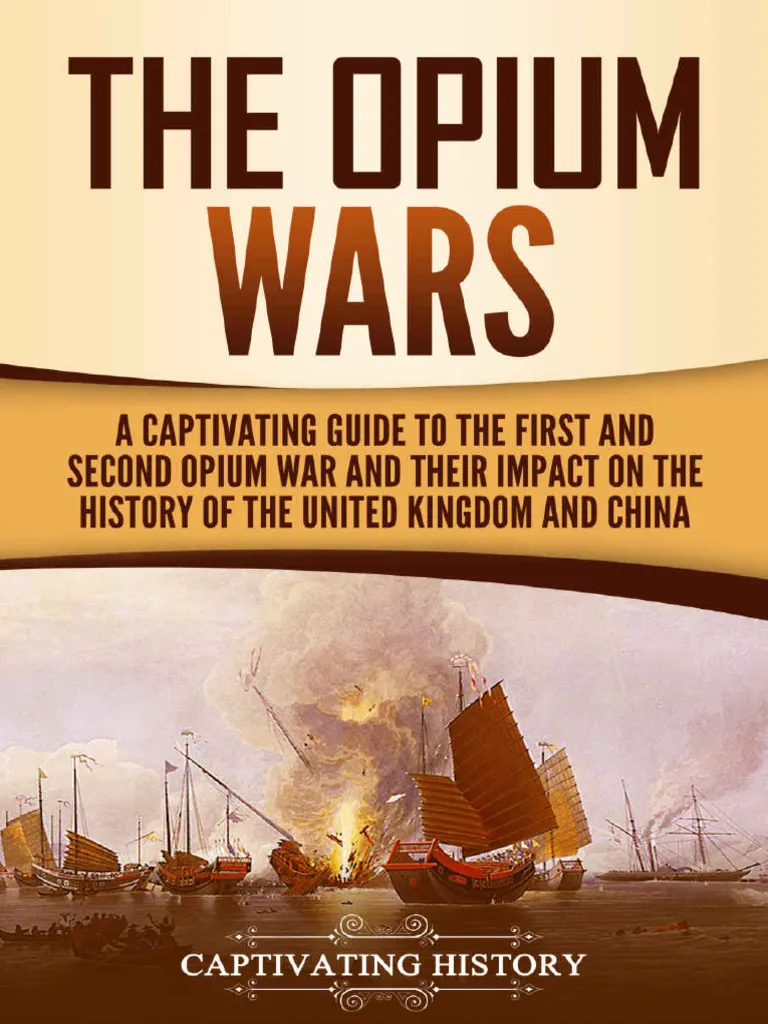
A British naval expedition arrived in 1840. Armed with superior steam powered ships, modern artillery, and better organization, British forces quickly demonstrated their military advantage. Chinese junks and coastal fortifications proved no match. British ships broke Chinese blockades, captured key positions along the coast, and advanced up the Yangtze River. After a series of defeats the Qing government agreed to negotiate.

The Treaty of Nanjing, signed on 29 August 1842, ended the First Opium War. China was required to pay a large indemnity that included compensation for the destroyed opium. Hong Kong Island was ceded to Britain. Five treaty ports, including Guangzhou, Xiamen, Fuzhou, Ningbo, and Shanghai, were opened to foreign trade and residence. Tariffs were fixed at low rates, and British subjects were granted extraterritoriality, meaning they would be tried under British rather than Chinese law. The restrictive Canton System effectively collapsed. Although the treaty did not explicitly legalize opium, it ended Chinese efforts to suppress the trade and established a pattern of unequal treaties that would define China’s relations with foreign powers for decades.

The Second Opium War

Peace proved temporary. Britain and other Western powers sought still greater commercial privileges, the right to station diplomats in Beijing, and the formal legalization of the opium trade. Chinese authorities resisted further concessions and continued to restrict foreign access to the city of Guangzhou. In October 1856 Chinese officials boarded the Arrow, a Chinese owned vessel registered in Hong Kong and flying the British flag. They arrested several Chinese crew members on charges of piracy and smuggling. Britain treated the incident as an affront to its flag and an opportunity to force further negotiations.

France joined Britain, motivated in part by the murder of a French missionary. Allied forces captured Guangzhou, advanced northward, and seized the Dagu forts near Tianjin. In 1858 the Treaties of Tianjin were signed, granting foreign envoys the right to reside in Beijing, opening additional ports, allowing foreigners to travel in the interior, and permitting Christian missionaries greater freedom of movement. When the Qing court delayed ratification, hostilities resumed. In 1860 British and French troops entered Beijing and burned the Old Summer Palace. The Convention of Beijing confirmed the earlier treaties, legalized the opium trade, ceded the southern portion of the Kowloon Peninsula to Britain, and imposed further indemnities.

Consequences for China and the World

The Opium Wars transformed China’s relationship with the outside world. The unequal treaties stripped the Qing government of key aspects of sovereignty. Foreigners enjoyed extraterritorial rights, controlled tariff policy in practice, and established permanent footholds in treaty ports that became centers of Western commerce and influence. Opium imports increased sharply after legalization, deepening social problems. The wars exposed the military and technological weakness of the Qing state at a time when internal rebellions, most notably the Taiping Rebellion, further drained imperial resources.

In Chinese historical memory the conflicts inaugurated the Century of Humiliation, a period of foreign encroachment that lasted until the mid-twentieth century. The loss of territory, the imposition of indemnities, and the visible superiority of Western arms undermined the prestige of the dynasty and contributed to its eventual collapse in 1911 and 1912. At the same time the opening of China accelerated the flow of Western ideas, technology, and capital, setting the stage for later reform movements and revolutionary change.

For Britain the wars secured valuable commercial advantages and a strategic foothold in East Asia. Hong Kong became a major imperial outpost. The legalization of opium and the expansion of treaty ports strengthened the economic links between India, China, and Britain that had underpinned the original trade system.

The Role of Indian Merchants from Diverse Communities

While the Opium Wars are usually framed as a conflict between Britain and China, merchants from various Indian communities played a central role in the trade that precipitated the crisis. Operating within the structures of British colonial rule, these groups handled financing, procurement, inland transport, shipping, and consignment of opium, particularly the Malwa variety produced in central India. Their participation cut across religious and regional lines and helped generate significant capital that later supported urban growth and industry in western India.

Parsis, who follow the Zoroastrian faith, were among the most prominent ship owners and consignment merchants. Families such as the Jejeebhoys, Wadias, Camas, Banajis, and Readymoneys owned vessels, established agencies in Canton, and partnered with British firms. Jamsetjee Jejeebhoy rose from modest beginnings to become one of the largest suppliers of opium to Jardine Matheson. He later received a knighthood and baronetcy and directed much of his wealth toward philanthropy in Bombay.

Gujarati Jains and Banias formed another important group. They specialized in financing cultivators in Malwa, acting as agents, and linking inland production to coastal exporters. Motichund Amichund, a Jain merchant, was a key partner in Jamsetjee Jejeebhoy’s firm and maintained strong connections with opium producers in central India.

Marwari merchants, who were predominantly Hindu and originally from Rajasthan, dominated much of the inland financing and speculative side of the trade. Known as sahukars or sowcars, they advanced credit to poppy growers, controlled local money markets, purchased raw opium, and later engaged in futures speculation in Bombay and Calcutta. Their networks proved essential to the scale of Malwa production.

Konkani Muslims contributed shipping expertise and capital. Mahomed Ali Rogay, a Konkani Muslim ship owner, was another partner in Jejeebhoy’s firm and helped manage maritime operations.

Goan Catholics and Indo Portuguese merchants were early pioneers of the Malwa export trade, especially through Portuguese controlled ports such as Daman. Rogério de Faria stood out as one of the leading figures in this group during the early nineteenth century, using his connections with Portuguese authorities to facilitate shipments.

Baghdadi Jews who had settled in Bombay, most notably the Sassoon family under David Sassoon, became major exporters after the First Opium War. They built substantial trading houses and competed effectively in the China market.

Other participants included Bohra, Khoja, Memon, and Ismaili Muslim traders from Gujarat, as well as some Sindhi and Shikarpuri merchants. In eastern India a few Bengali entrepreneurs, such as Dwarkanath Tagore, invested in the Company controlled Bengal opium trade.

These communities often collaborated across religious lines. Jejeebhoy’s firm itself brought together a Parsi, a Jain, a Konkani Muslim, and later a Goan Catholic partner. Profits from the trade enriched many of these groups and financed later investments in textiles, banking, insurance, and public institutions in Bombay. Their involvement illustrates how Indian capital and commercial networks formed an integral part of the larger colonial trading system that linked Indian production to Chinese markets.

Legacy and Reflection

The Opium Wars continue to shape historical understanding of imperialism, trade, and national sovereignty. For China they represent a foundational trauma that informs modern attitudes toward foreign interference and national rejuvenation. For Britain they form a less celebrated episode in the history of empire, one in which commercial interests and military power combined to force open a reluctant market.

The participation of diverse Indian merchant communities adds important complexity to the narrative, showing how colonial subjects from multiple religious and regional backgrounds both enabled and benefited from imperial expansion.

The conflicts demonstrated the transformative power of industrial military technology and the vulnerability of traditional agrarian empires to determined commercial aggression. They also revealed the human cost of a trade that enriched distant merchants and governments while devastating communities through addiction and social disruption.

More than a century and a half later the Opium Wars remain a powerful reminder of how economic ambition, technological disparity, and cultural misunderstanding can combine to alter the course of nations.

The story of the wars is therefore not only about battles and treaties. It is about the interconnected economies of India, China, and Britain, the rise of varied commercial communities across religious lines, and the long shadow cast by decisions made in the pursuit of profit and power.

Understanding these events in their full complexity offers insight into the origins of the modern world order and the enduring questions of sovereignty, trade, and moral responsibility that continue to resonate today.

Views of the author are personal and do not necessarily represent the website’s views.

Dr. Jaimine Vaishnav is a faculty of geopolitics and world economy and other liberal arts subjects, a researcher with publications in SCI and ABDC journals, and an author of 6 books specializing in informal economies, mass media, and street entrepreneurship. With over a decade of experience as an academic and options trader, he is keen on bridging the grassroots business practices with global economic thought. His work emphasizes resilience, innovation, and human action in everyday human life. He can be contacted on jaiminism@hotmail.co.in for further communication.

Long or Short, get news the way you like. No ads. No redirections. Download Newspin and Stay Alert, The CSR Journal Mobile app, for fast, crisp, clean updates!

App Store –  https://apps.apple.com/in/app/newspin/id6746449540 

Google Play Store – https://play.google.com/store/apps/details?id=com.inventifweb.newspin&pcampaignid=web_share

Latest News

Popular Videos