


OpenAI Launches ChatGPT for Clinicians to Alleviate Paperwork Burden in Hospitals
The CSR Journal Magazine

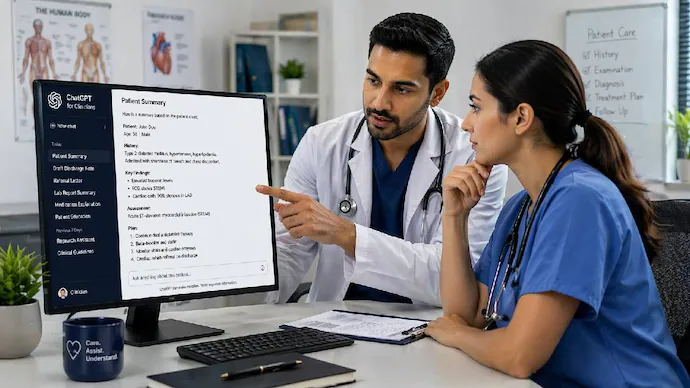
OpenAI has introduced its latest innovation, ChatGPT for Clinicians, aimed at supporting healthcare professionals in managing administrative tasks. This new tool addresses the common challenges clinicians face, such as handling patient history, referral letters, and lab report summaries. OpenAI claims that this application will streamline documentation and medical research, allowing clinicians to devote more time to patient care.

The company emphasises that the tool is designed to assist clinicians rather than replace them. It enables users to generate initial drafts that can later be reviewed, edited, and approved before being incorporated into official patient records. This approach is expected to enhance workflow efficiency in healthcare settings.

Evolution of AI in Healthcare

The launch of ChatGPT for Clinicians represents a notable transition from experimental uses of artificial intelligence to practical applications within the healthcare sector. Historically, AI has primarily focused on areas such as diagnosis and medical research. With this new tool, OpenAI is now tackling specific workflow-related challenges, particularly the excessive paperwork that can hinder the delivery of healthcare services.

By targeting these administrative burdens, OpenAI is contributing to a broader movement within the AI industry to create solutions that directly improve the efficiency of medical professionals. Such innovations could potentially relieve some of the stress associated with the extensive paperwork that accompanies clinical practice.

Users on various platforms have responded positively to the announcement, acknowledging the ongoing administrative challenges doctors face. Many comments highlight the potential benefits of the tool in easing workloads related to referrals and documentation, ultimately supporting better clinical outcomes.

User Reactions and Industry Impact

According to a recent survey by the American Medical Association, there has been a significant increase in physician utilisation of AI, with 72 per cent of doctors reporting they use such technologies in clinical practice. This statistic has risen sharply from 48 per cent the previous year. The release of this tool is therefore seen as timely and essential in bolstering the use of AI in daily medical routines.

OpenAI recently disclosed its benchmarking tool, HealthBench Professional, which evaluates the performance of AI in clinical interactions, documentation, and research. The results indicate that ChatGPT for Clinicians attained an overall score of 59.0, surpassing that of competitor Claude Opus 4.7, which scored 47. These findings suggest that OpenAI’s latest model is outperforming other available AI tools in a clinical setting.

Long or Short, get news the way you like. No ads. No redirections. Download Newspin and Stay Alert, The CSR Journal Mobile app, for fast, crisp, clean updates!

App Store –  https://apps.apple.com/in/app/newspin/id6746449540 

Google Play Store – https://play.google.com/store/apps/details?id=com.inventifweb.newspin&pcampaignid=web_share

Latest News

Popular Videos
