


N Chandrasekaran Reappointed Tata Sons Chairman, But Legal Question Remains
The CSR Journal Magazine

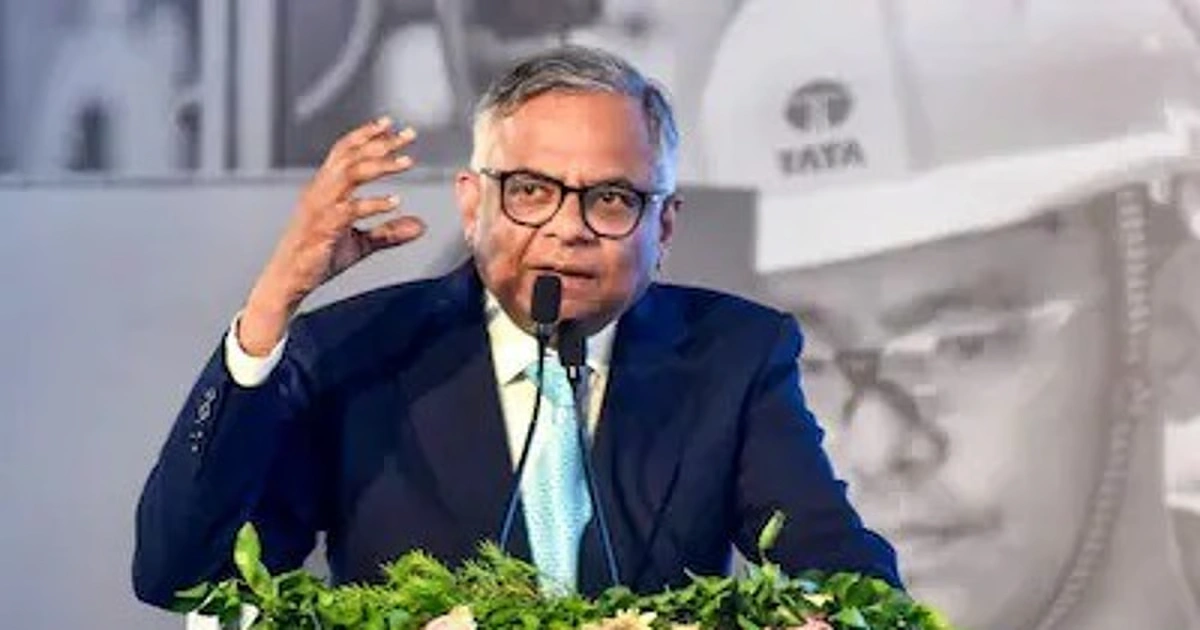
N Chandrasekaran has been reappointed as chairman of Tata Sons for another five-year term, but the decision may not conclusively settle his continuation at the helm of the Tata Group’s holding company. The resolution was passed at a board meeting on Thursday after Tata Trusts’ two nominee directors voted differently on the proposal.

Tata Trusts chairman Noel Tata voted against Chandrasekaran’s reappointment, while fellow Trusts nominee Venu Srinivasan supported it. With the two nominees divided, independent director Harish Manwani, who was chairing the meeting, exercised his casting vote in favour of the resolution, breaking the deadlock.

Why The Casting Vote Matters

The board’s approval has raised a separate legal question over whether an independent director’s casting vote can settle a matter when the two nominee directors representing Tata Trusts, which together with affiliated trusts owns around 66 per cent of Tata Sons, are split.

A legal opinion obtained by Tata Trusts from former Chief Justice of India D Y Chandrachud has reportedly taken the view that an affirmative vote from a majority of the Trusts’ nominee directors is a separate requirement. According to a Times of India report, Chandrachud’s opinion is that Manwani’s casting vote cannot override that requirement.

The opinion, however, is not a judicial ruling declaring Chandrasekaran’s reappointment invalid. It is a legal opinion obtained by Tata Trusts and could provide the Trusts with a basis to question whether Thursday’s board resolution was sufficient to complete the reappointment.

The central issue is therefore whether the resolution can be considered valid because the overall board vote was settled in favour of Chandrasekaran through the casting vote, or whether it first required the necessary support from Tata Trusts’ nominee directors.

Tata Trusts’ Role In The Dispute

Tata Sons has an unusual ownership structure, with Tata Trusts and affiliated trusts collectively holding around 66 per cent of the company’s equity. The Trusts are therefore the majority shareholders and have two nominee directors on the board, one of whom is Noel Tata.

However, majority ownership does not by itself mean that Noel Tata can overturn a board decision. The relevant question is what voting rights the Trusts’ nominees have under the Articles of Association of Tata Sons and what happens when those two directors disagree.

That issue came into focus at Thursday’s meeting. Noel voted against Chandrasekaran’s reappointment, while Srinivasan voted in favour. Manwani then used his casting vote to resolve the deadlock and the resolution was approved.

The legal opinion cited by Tata Trusts reportedly distinguishes between a general board vote and a separate requirement relating to the Trusts’ nominee directors. The interpretation could determine whether the board’s approval was sufficient to secure Chandrasekaran’s third term.

Noel Tata’s Position On Chandrasekaran

Noel Tata’s detailed statement to the Tata Sons board does not itself state that Chandrasekaran’s reappointment is invalid. Instead, it focuses largely on the process followed by Tata Sons and the continuing disagreement over whether the holding company should remain unlisted.

The statement nevertheless provides context on Noel’s position. He said that during a February 2026 board discussion on Chandrasekaran’s reappointment, he had asked the chairman to state his personal determination and desire to keep Tata Sons private.

Noel also asked whether all necessary steps had been taken to ensure that outcome. According to his statement, Chandrasekaran reiterated that all necessary steps had been taken.

Noel said he accepted that assurance but wanted a detailed briefing on the options considered, the company’s engagement with the regulator and the possible way forward. He also maintained that Tata Sons and the Trusts should arrive at their position together.

The issue is significant because the question of keeping Tata Sons unlisted has become a major point of disagreement between the holding company and Tata Trusts.

The Tata Sons Listing Dispute

The Tata Sons board had unanimously decided in March 2024 that the company should remain unlisted. Following that decision, Tata Sons applied to the Reserve Bank of India to voluntarily surrender its certificate of registration.

According to Noel’s statement, the resolution has not subsequently been placed before the board for reconsideration and no director has moved a proposal to revisit it.

Tata Trusts separately reiterated their position in 2025. In May that year, trustees of the Sir Dorabji Tata Trust and Sir Ratan Tata Trust unanimously agreed that listing Tata Sons would have far-reaching implications.

In July, both Trusts unanimously resolved that Tata Sons should remain unlisted and asked the chairman to explore all available avenues and engage with the RBI.

Noel has maintained that the Trusts’ position remains unchanged. Their argument is not limited to the question of whether Tata Sons should be privately held. The Trusts have said the existing structure, in which they own the majority of Tata Sons and dividends from operating companies ultimately support charitable activities, is central to the Tata model.

In his statement, Noel argued that this structure has allowed Tata Sons to make decisions that may not always be justified by a narrow commercial calculation. He cited the group’s long-term investments and commitments in areas including semiconductors, electronics and civil aviation.

He also argued that a listed holding company would have to respond to institutional and other shareholders whose primary legitimate interest would be financial returns. According to Noel, this could affect Tata Sons’ ability to support distressed businesses or undertake projects requiring long gestation periods.

In a separate statement from Tata Trusts, Noel said a listing would alter the character of Tata Sons and affect the principle on which the group had operated for more than a century.

RBI Decision Adds Urgency To Listing Question

The disagreement gained further urgency after the RBI’s latest decision on Tata Sons’ registration. The company had sought to voluntarily surrender its certificate of registration in March 2024.

In its communication dated September 11, the RBI said the request could not be accepted and advised Tata Sons to comply with regulations applicable to an upper-layer non-banking financial company.

Noel pointed out that the communication did not itself refer to listing and did not prescribe a specific step that Tata Sons must take. He has therefore argued that the company should examine all legally permissible alternatives before moving towards a public listing.

His statement called for detailed consideration of available options, legal advice and further engagement with the regulator. He also said Tata Trusts should be involved before any structural step towards listing is taken, advisers are appointed or decisions are made regarding the structure or timing of a transaction.

According to Noel, if the listing issue returns to the board, it should first be considered by Tata Trusts in their capacity as the majority shareholder.

SP Group Puts Forward Rs 25,000 Crore Proposal

The September 17 board meeting also saw Noel table a separate proposal from the Shapoorji Pallonji Group aimed at addressing its liquidity requirements without Tata Sons necessarily proceeding with an immediate public listing.

The proposal involves monetising part of the Tata Sons shares held by Sterling Investments Corporation Pvt Ltd and Cyrus Investments Pvt Ltd, two investment companies belonging to the SP Group.

Under the proposal, enough Tata Sons shares would be sold to generate at least Rs 25,000 crore, based on the minimum valuation determined under Rule 11UA of the Income Tax Rules. The transaction would be structured in two tranches over 18 months and would involve Tata Sons initiating a selective capital reduction through the NCLT.

Noel proposed that the liquidity requirement could be addressed through a combination of Tata Sons’ internal cash flows, the sale of listed shares, bringing investors into newer businesses and potentially listing some businesses through an offer for sale.

The proposal provides another possible route for addressing the SP Group’s liquidity needs. However, it remains a proposal placed before the board and does not mean Tata Sons has approved the transaction or decided to list the holding company.

What Happens To Chandrasekaran’s Third Term?

Chandrasekaran’s reappointment is therefore unfolding against two separate but connected issues. The first concerns whether Thursday’s board voting process was sufficient to approve his third term. The second is the broader disagreement between Tata Trusts and the Tata Sons board over the company’s future structure, including the question of listing and the Trusts’ role in major structural decisions.

Noel Tata’s statement indicates that Tata Trusts want to be involved before significant structural decisions are taken. It also records Noel’s earlier questions to Chandrasekaran about his commitment to keeping Tata Sons private.

At the same time, the legal opinion reported by the Times of India has brought the voting rights of Tata Trusts’ nominee directors directly into the question of Chandrasekaran’s reappointment.

The Trusts’ position carries significance because of both their majority ownership of Tata Sons and their nominee representation on the board. Whether those rights can prevent or invalidate the reappointment, however, depends on the company’s Articles of Association and applicable law and, if challenged, could ultimately be a matter for the courts.

For now, the board has approved Chandrasekaran’s reappointment for another five-year term, with the resolution passing after Manwani used his casting vote to break the split among the Tata Trusts nominees.

The unresolved question is whether that casting vote completed the reappointment process or whether the separate requirement concerning the Trusts’ nominee directors means the matter could require further consideration.

Long or Short, get news the way you like. No ads. No redirections. Download Newspin and Stay Alert, The CSR Journal Mobile app, for fast, crisp, clean updates!

App Store –  https://apps.apple.com/in/app/newspin/id6746449540 

Google Play Store – https://play.google.com/store/apps/details?id=com.inventifweb.newspin&pcampaignid=web_share

Latest News

Popular Videos
