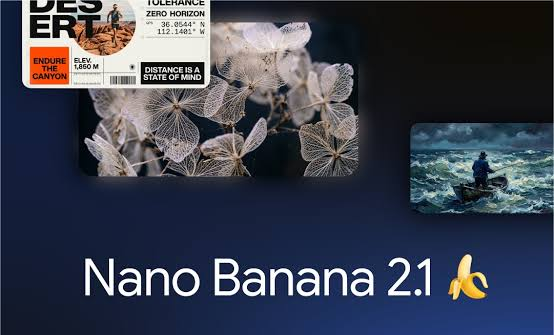
Google has introduced Nano Banana 2.1, a significant upgrade to its artificial intelligence model designed for image generation and editing. The latest version promises enhanced visual quality, improved adherence to instructions, and superior editing capabilities compared to its predecessor.
The new model is built upon Google’s Gemini 3.6 Flash architecture and is being integrated across various Google platforms. These include the Gemini app, Google AI Studio, Gemini API, and Google Search’s AI Mode, among others. The company aims to provide a more cost-effective solution for both developers and users through this release.
Enhancements in Image Generation and Editing
One of the standout features of Nano Banana 2.1 is its ability to generate images based on user-defined text prompts. This version reportedly excels at following intricate instructions and maintaining consistency during the editing process. Users can provide multiple reference images and request a combination, with the model capable of managing up to 14 references simultaneously.
Moreover, the model ensures consistency for up to four characters and ten objects in a single image, making it particularly suited for scenarios where recurring elements are required, such as in marketing materials or storytelling visuals.
In terms of editing, Nano Banana 2.1 enables users to modify existing images through text commands. This includes changing clothing, backgrounds, adding or removing objects, and altering styles without starting from scratch. The advancement allows for greater flexibility and efficiency in creating tailored images.
Improvements in Text Handling and Pricing
Another notable enhancement is in the model’s ability to incorporate readable text within AI-generated images. This advancement will support the creation of posters, diagrams, and infographics where text clarity is crucial. The model can produce images in resolutions of 1K, 2K, and 4K, providing users with various quality options according to their needs.
In terms of processing power, users have the option to select different levels of AI reasoning, allowing for customisation based on project requirements. A significant development is Google’s Search grounding feature, which enables the model to source information from Google Search and Google Image Search, thus providing a more accurate basis for generating images.
The pricing structure has also seen substantial changes. Generating a 1K image through the API now costs approximately $0.0336, a decrease from $0.067, while a 4K image is priced at about $0.0756, down from $0.151. This reduction effectively means developers and businesses can produce images at almost half the previous cost, making large-scale image generation significantly more economical.
Impact and Future Rollout
The implications of Nano Banana 2.1 extend beyond a mere update to Google’s image-generation capabilities. The reduced costs for generating images at scale are expected to attract a wider range of developers and enterprises who require a high volume of visuals for various applications.
The rollout of Nano Banana 2.1 across Google’s platform marks a pivotal moment in AI-generated imagery, providing access to innovative features that enhance both the creation and editing processes. Future developments may further refine these capabilities as the technology continues to evolve.
As Google continues to integrate this advanced model into its services, it is anticipated that users will experience substantial benefits in terms of quality, efficiency, and cost-effectiveness in image generation and editing tasks.
Long or Short, get news the way you like. No ads. No redirections. Download Newspin and Stay Alert, The CSR Journal Mobile app, for fast, crisp, clean updates!