


Massive Warm Water Pulse Affects Pacific Ocean, El Niño Returns
The CSR Journal Magazine

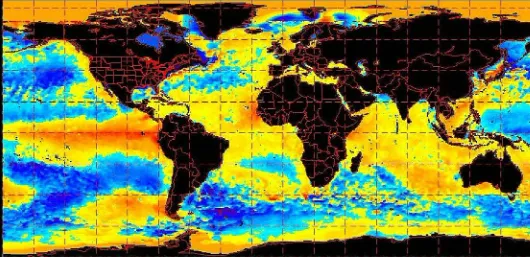
A significant surge of warm water is currently moving beneath the Pacific Ocean. This phenomenon originated near Indonesia and has been propagating eastwards along the equator for several months, described by scientists as a pulse extending close to 14,500 km across the tropical region. Although this surge is imperceptible to seafarers, it was detected by a NASA satellite orbiting approximately 1,300 kilometres above the Earth’s surface. The satellite observed that as the warm water progressed, the ocean’s surface rose subtly by about 15 centimetres.

This gradual increase in sea surface height serves as an early warning signal, tracking the warm water’s advancement. The National Oceanic and Atmospheric Administration (NOAA) officially announced on June 11 that El Niño conditions had developed. Forecasts suggest that this El Niño has the potential to escalate into a significant and robust climate event.

The term “El Niño” originates from fishermen and refers to the warm phase of a natural climatic cycle, characterised by rising temperatures in the central and eastern Pacific. This phenomenon has a historical peak around Christmas and is named after “the boy,” a reference to the birth of Jesus Christ.

Understanding Kelvin Waves and Their Role in El Niño Formation

Under normal conditions, trade winds create a westward flow of water across the Pacific Ocean, causing warm water to accumulate near Indonesia while colder, nutrient-rich water surfaces off the coast of Peru due to a process known as upwelling. However, periodically, the trade winds can weaken or even reverse, allowing the accumulated warm water to flow back eastward.

This eastward movement of warm water, often referred to as a Kelvin wave, spans several hundreds of kilometres and is instrumental in initiating the El Niño phenomenon. The expansion of warm water results in a rise in sea surface height and disrupts the thermocline, which separates warm surface waters from cooler depths. This disruption consequently halts the cooling upwelling near South America, leading to increased temperatures in the eastern Pacific.

As this warmth spreads, the conditions for El Niño are established, marking a significant shift in global weather patterns. The interplay of these climatic forces underlines the dynamics of ocean-atmosphere interactions that are critical for understanding weather anomalies across the globe.

NASA’s Satellite Monitoring and Future Predictions

The Sentinel-6 Michael Freilich satellite, launched in 2020 with collaboration from NASA and its European partners, is designed to monitor ocean heights with remarkable accuracy, conducting measurements every ten days. In late January, this satellite detected a small Kelvin wave near Micronesia, which dissipated by mid-February. However, a larger Kelvin wave manifested in early March and continued to traverse eastwards, resulting in sea levels around Peru rising over 15 centimetres above long-term averages by mid-May.

Predicting the potential intensification of this El Niño event, NOAA forecasts indicate a 63 per cent likelihood that sea temperatures in the Pacific could exceed 2 degrees Celsius above average, signifying the onset of a very strong El Niño, comparable to the significant events of 1997 and 2015.

This strong occurrence may pose challenges for regions such as India, as similar past events have correlated with weakened southwest monsoons. However, other climatic factors, such as the Indian Ocean Dipole, may mitigate some of the impacts. Expectations suggest this El Niño will reach its peak during the upcoming winter months, marking a critical period of observation and analysis for meteorologists globally.

Long or Short, get news the way you like. No ads. No redirections. Download Newspin and Stay Alert, The CSR Journal Mobile app, for fast, crisp, clean updates!

App Store –  https://apps.apple.com/in/app/newspin/id6746449540 

Google Play Store – https://play.google.com/store/apps/details?id=com.inventifweb.newspin&pcampaignid=web_share

Latest News

Popular Videos
