


Kangana Ranaut Urges Sharmila Tagore To Look Beyond ‘Hindu-Muslim Mindset’
The CSR Journal Magazine

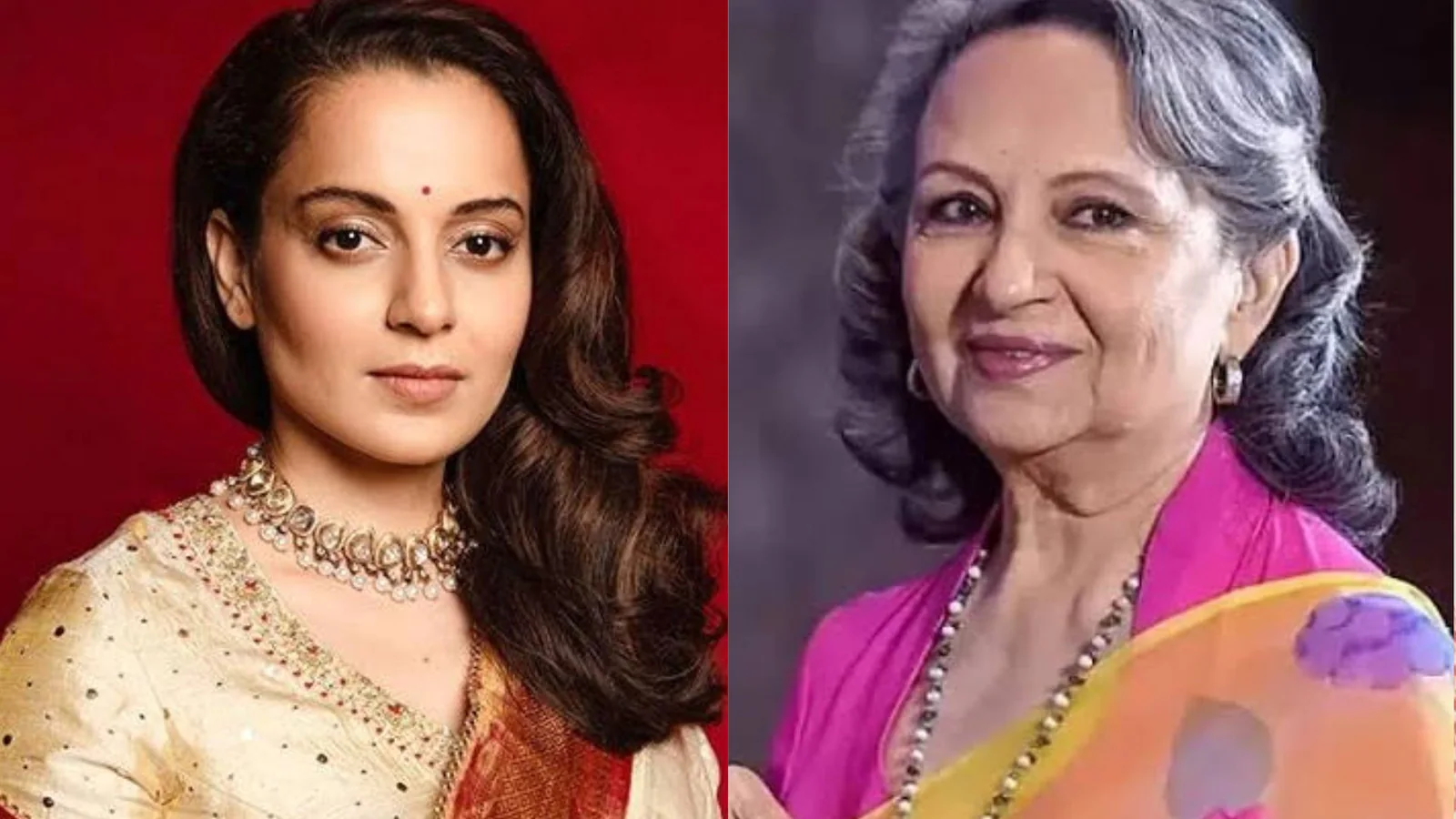
Actor Kangana Ranaut has responded to veteran actor Sharmila Tagore’s recent remarks on Vande Mataram, disagreeing with her view that only the first two stanzas of the National Song should be retained because references to Hindu deities in later verses may be difficult for people from monotheistic faiths to accept.

Ranaut shared a video of Tagore’s interview on Instagram Stories and said she respected the veteran actor’s right to express her reservations. However, she argued that poetry and artistic works often use metaphors and should be interpreted within their artistic and historical context rather than treated purely as religious texts.

Sharmila Tagore Raises Concerns Over Later Verses

Tagore recently discussed Vande Mataram in an interview with IANS, focusing on how the song could be received by people belonging to different faiths.

She said that some of the later verses could be difficult for people who believe in one God because they contain references to multiple Hindu deities.

“My point of view is that there are many religious people who believe in one single God, not many Gods. In ‘Vande Mataram’, there is a stanza which says that many Gods are mentioned in ‘Vande Mataram’,” Tagore said.

She added, “It is difficult for those who believe in one religion to say, ‘Vande Kali, Vande Durga’. Therefore, if we take all the religious people in India together, the first two stanzas are very good.”

Kangana Defends Poem’s Artistic Meaning

Responding to Tagore, Ranaut said she was surprised that an artist would interpret the poem in what she considered a restrictive manner.

“I appreciate that Sharmila ji has spoken about her reservation on Vande Mataram, but I am shocked as an artist how can her views on artpoetry can be so limiting and contrived, in any poetry or song words are metaphors, a poet or artist uses all kinds of imaginations draws unbelievable parallels to bring about the desirable effect, Vande Matram is the spirit of freedom struggle Bankim Chandra ji is compelling the nation to awaken the Shakti within, how can you reduce such a great piece of art to mere religious practice.”

Ranaut argued that references to Shakti could be interpreted as symbols of strength and empowerment rather than being understood exclusively as references to religious worship.

She referred to Swami Vivekananda’s use of imagery around physical strength and power to make her point.

Ranaut Calls For Moving Beyond Religious Lens

Ranaut wrote, “Vivekananda famously said I need youth who are made of iron, bones of steel and veins in which runs thunderbolt, he was not giving weather forecast, he was simply demanding Shakti to rise, please come out of Hindu Muslim mindset even if we believe in one God doctors also call power Shakti, let’s embrace each other like our own, I absolutely love you and don’t mind a crushing hug like you always give me.”

Ranaut’s response adds another dimension to the ongoing discussion over the interpretation of Vande Mataram, particularly the distinction between its artistic imagery and religious references.

Written by Bankim Chandra Chatterjee in the 1870s and later included in his novel Anandamath, Vande Mataram became closely associated with India’s freedom movement.

Debate Over Vande Mataram’s Verses

The first two stanzas of Vande Mataram describe and praise the motherland, while later verses contain references to Hindu goddesses including Durga, Lakshmi and Saraswati.

The religious imagery in the later verses has periodically prompted debate over whether the complete poem can be embraced equally by people from different religious backgrounds.

Tagore’s position was that the first two stanzas could be more widely accepted because they focus on the motherland, while the references in the later verses could create difficulties for people following monotheistic faiths.

Ranaut, meanwhile, has argued that the imagery should be understood as part of the poem’s artistic and historical context and not reduced to religious practice.

Mukesh Khanna Also Enters Debate

The discussion comes shortly after actor Mukesh Khanna called for Vande Mataram to replace Jana Gana Mana as India’s National Anthem.

Khanna has previously argued that Vande Mataram should be accorded the status of the National Anthem. He also made a claim about the origins of Jana Gana Mana, saying it was written as a tribute to Queen Elizabeth.

“I have said this three years ago that ‘Vande Mataram’ should be made a national anthem. ‘Jana Gana Mana’ is not the national anthem of our country. It is a tribute to Queen Elizabeth. Rabindranath Tagore wrote a song in praise of her. We have accepted it. Bhagyavidhata, Punjab, Sindh. It is not ours. ‘Vande Mataram’ is ours,” Khanna had told IANS.

Khanna also praised Lata Mangeshkar’s rendition of Vande Mataram and said he had recorded a seven-minute version of the song.

Jana Gana Mana is India’s National Anthem, while Vande Mataram has the status of the National Song. Both have played significant roles in the country’s history and remain closely associated with India’s national identity and freedom movement.

Long or Short, get news the way you like. No ads. No redirections. Download Newspin and Stay Alert, The CSR Journal Mobile app, for fast, crisp, clean updates!

App Store –  https://apps.apple.com/in/app/newspin/id6746449540 

Google Play Store – https://play.google.com/store/apps/details?id=com.inventifweb.newspin&pcampaignid=web_share

Latest News

Popular Videos
