


Iran Proposes Return to Ceasefire Agreement with the US Amid Rising Tensions
The CSR Journal Magazine

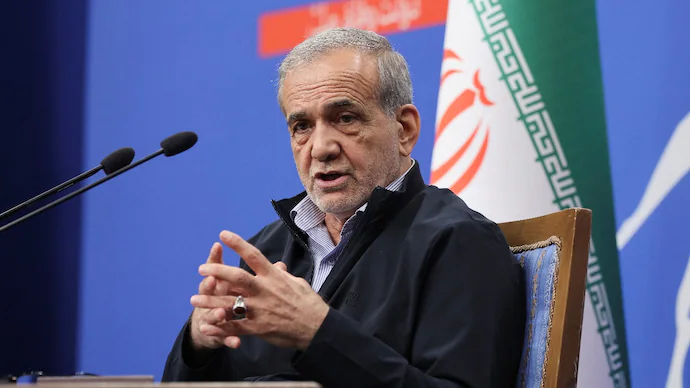
In a recent announcement, Iranian President Masoud Pezeshkian stated that Tehran is prepared to revert to the ceasefire agreement established with the United States in June, contingent upon reciprocal action from Washington. His comments were made on Tuesday following the first military confrontation between both nations in a month, coinciding with heightened tensions in and near the Strait of Hormuz.

The situation escalated further with reports indicating that two vessels were targeted by attacks in the region. While there were no immediate claims regarding responsibility for these incidents, diplomatic discussions were reportedly ongoing at the Shanghai Cooperation Organisation summit in Kyrgyzstan, where the Iranian President made his statements.

Details of the June Memorandum of Understanding

Pezeshkian elaborated that if the United States returned to its obligations outlined in the June memorandum, Iran would respond promptly and positively. This agreement included an immediate ceasefire and a 60-day period dedicated to negotiations aimed at securing a more comprehensive peace settlement.

As part of this memorandum, Iran committed to remove mines from the Strait of Hormuz, ensuring the safe passage of ships during this period. In exchange, the US agreed to cease its naval blockade, lift sanctions, issue waivers for Iranian oil exports, and initiate a reconstruction package for Iran, among other stipulations. However, the agreement quickly deteriorated, leading to renewed hostilities.

Despite initial reductions in conflict, recent exchanges of fire indicate a downturn in relations, with US forces targeting Iranian missile installations on Larak Island. Subsequently, Iran launched missiles at American military assets in Jordan, although these were reportedly intercepted without inflicting damage.

Ongoing Hostilities and International Relations

While President Pezeshkian has advocated for a negotiated peace, the Revolutionary Guard remains a significant influencer within Iran, seeking greater concessions from the US. These demands reportedly include Iranian oversight of the Strait of Hormuz and financial reparations for wartime actions—demands that are likely to be unacceptable to the US government.

The ongoing summit in Kyrgyzstan features leaders from China, Russia, and India, and is aimed at balancing US influence on the global stage. Iran’s Foreign Minister has already held discussions with his Chinese counterpart, and President Pezeshkian was scheduled for talks with Russian President Vladimir Putin later that day.

In related developments, the United Kingdom’s Maritime Trade Operations Centre announced it had received accounts of a ship attack in the Strait of Hormuz and another incident involving a tanker nearby. Notably, a tanker was reportedly struck by three projectiles while departing from the Persian Gulf towards the strait on Monday, although there were no reported casualties or significant environmental impact.

In another occurrence, UKMTO noted a report about a tanker and military forces off the coast of Oman, east of the Strait. Maritime risk company Ambrey indicated that this vessel had reportedly been halted and remained adrift, with no casualties reported in this instance either. These incidents highlight the ongoing tension in the Strait of Hormuz, where Iranian forces have consistently limited maritime activities and engaged in hostilities against vessels. This complex dynamic underscores the fragile state of ceasefire commitments and the broader conflict between the two nations.

Long or Short, get news the way you like. No ads. No redirections. Download Newspin and Stay Alert, The CSR Journal Mobile app, for fast, crisp, clean updates!

App Store –  https://apps.apple.com/in/app/newspin/id6746449540 

Google Play Store – https://play.google.com/store/apps/details?id=com.inventifweb.newspin&pcampaignid=web_share

Latest News

Popular Videos
