


Iran Threatens Undersea Internet Cable Disruption Amid Rising Tensions
The CSR Journal Magazine

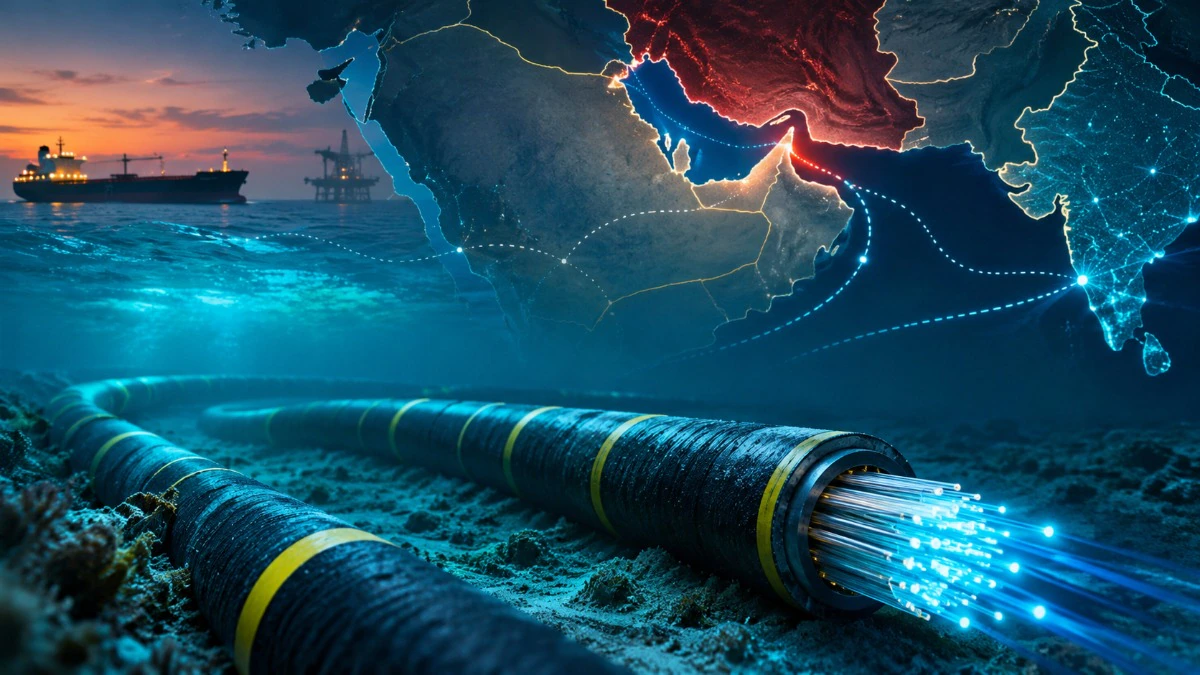
The recent threat from Iran to target undersea internet cables in the Persian Gulf could have significant implications for global internet connectivity. This warning comes as tensions escalate between Iran, the United States, and Israel. Iranian security officials have reportedly outlined plans to attack these vital cables if military actions resume, which could hinder repair efforts and prolong disruptions.

Such actions may not only affect regional countries but could also impact nations like India, which relies on these cables for international connectivity. The undersea cables serve as the backbone of global internet traffic, carrying approximately 99 per cent of international data.

The Strait of Hormuz, a critical maritime route, is home to several of these cables, including systems that link the Gulf with Asia, Africa, and Europe. Any disruption in this area could halt internet services globally, but the ramifications would be particularly pronounced for countries dependent on these connections.

According to TeleGeography, six active submarine cable systems currently traverse the Strait of Hormuz, with two more under construction. These cables facilitate essential services such as messaging, video calls, and online banking, thereby sustaining the digital economy. The Iranian officials’ statements have raised concerns about the potential for significant internet outages if these cables are targeted.

India’s Internet Infra and Vulnerability

India’s internet connectivity is heavily reliant on several submarine cables that land at various points, including Mumbai and Chennai. These cables connect India to countries in the Gulf and beyond. An investigation by India Today has identified seven major submarine cable systems that pass through or near the Strait of Hormuz, four of which have links to Indian landing stations.

Three of these systems—FALCON, Gulf Bridge International (GBI), and AAE-1—are already operational, while the SeaMeWe-6 system is expected to commence service in 2027. If Iran proceeds with its threats, the consequences for India could be severe. An estimated one-third of India’s westbound data traffic is routed through the Hormuz corridor.

Disruptions to these cables would necessitate rerouting of data, potentially leading to slower internet speeds and increased latency. This could affect users’ experiences with international websites and online services, resulting in buffering during video calls and delays in app functionalities.

While everyday internet usage may not cease entirely, the strain on connectivity could be significant. Businesses that depend on stable internet connections, particularly in sectors like banking and IT, could face operational challenges. Financial institutions rely on these networks for cross-border transactions, and any disruptions could hinder their processes.

Broader Implications for Indian Businesses

The potential for slower internet connections could have a cascading effect on various sectors in India. For instance, IT and outsourcing companies, which often work with clients in the US and Europe, could experience disruptions in their operations. Meetings, data transfers, and other essential functions may be adversely affected due to slower connectivity.

Despite these challenges, it is important to note that domestic payment systems like the Unified Payments Interface (UPI) are unlikely to be impacted directly. UPI operates on India’s domestic banking infrastructure, which does not rely solely on undersea cables. However, international banking operations may face delays, and the costs associated with rerouting data could increase for telecom companies.

In summary, while Iran’s threats do not indicate an imminent collapse of India’s internet infrastructure, they highlight vulnerabilities in the global digital economy. The situation underscores the importance of maintaining secure and reliable internet connections, particularly in a world increasingly reliant on digital communication.

Long or Short, get news the way you like. No ads. No redirections. Download Newspin and Stay Alert, The CSR Journal Mobile app, for fast, crisp, clean updates!

App Store – https://apps.apple.com/in/app/newspin/id6746449540

Google Play Store – https://play.google.com/store/apps/details?id=com.inventifweb.newspin&pcampaignid=web_share

Latest News

Popular Videos
