


India Faces Possible 100% US Tariff Over Russian Oil Purchases
The CSR Journal Magazine

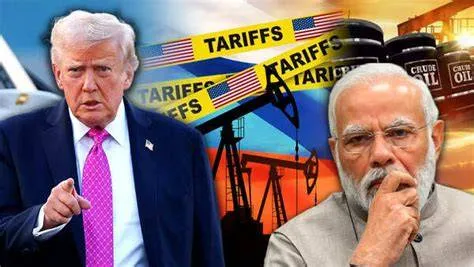
The proposed legislation, known as the Lindsey O Graham Sanctioning Russia and Iran Act of 2026, is set to come under consideration in the US House of Representatives. This bill, previously passed by the Senate with a vote of 86 to 11 last month, aims to empower President Donald Trump to impose tariffs of up to 100 per cent on countries purchasing Russian oil. Notably, an amendment included in the bill specifically identifies India as one of the nations that could face these tariffs.

Amendment Highlighting Targeted Countries

An amendment proposed by Democratic Congressman Steny Hoyer has introduced a list of ten countries that are eligible for the potential tariffs under the bill’s secondary tariff provisions. The countries named include China, India, Turkiye, Azerbaijan, Hungary, the Slovak Republic, the United Arab Emirates, Singapore, Kazakhstan, and the Kyrgyz Republic. This amendment does not automatically impose a 100 per cent tariff on India but identifies it as a country that could be targeted for such measures if the bill is enacted and the President opts to utilise the provided authority.

Unlike the Senate version, which did not specify particular nations, this bill explicitly names these countries and aims to target significant importers of Russian energy resources. The underlying goal of the legislation is to apply sanctions against the Russian leadership and its energy sector, while simultaneously penalising vessels that partake in sanctions evasion.

Another amendment, introduced by Democratic Congressman Gregory Meeks along with several co-sponsors, seeks to eliminate the aspect of the bill that allows the President broad secondary tariff authority. This proposal aims to limit the extent to which tariffs could be imposed without further legislative oversight.

Implications for India and Future Legislative Actions

The specific implications for India will depend largely on the final amendments adopted during the legislative process in the House and any subsequent actions that may follow. As the House approaches a limited number of working days ahead of an early recess in preparation for the November 3 midterm elections, the trajectory of this bill remains uncertain.

The proposed tariffs, if enacted, could have significant economic implications not just for India, but for all countries listed in the amendment. Such measures could disrupt trade relations and impact global oil markets, particularly as many nations continue to seek energy sources amid increasing geopolitical tensions.

As the legislative process unfolds, stakeholders will be closely monitoring developments, with particular attention on how this bill evolves and how it might impact US-India relations. The outcome will also reflect the broader stance of the US regarding its foreign policy priorities, especially in relation to energy security and international sanctions on Russia.

Long or Short, get news the way you like. No ads. No redirections. Download Newspin and Stay Alert, The CSR Journal Mobile app, for fast, crisp, clean updates!

App Store –  https://apps.apple.com/in/app/newspin/id6746449540 

Google Play Store – https://play.google.com/store/apps/details?id=com.inventifweb.newspin&pcampaignid=web_share

Latest News

Popular Videos
