


Explained: What Is in Donald Trump’s 14-Point Deal With Iran?
The CSR Journal Magazine

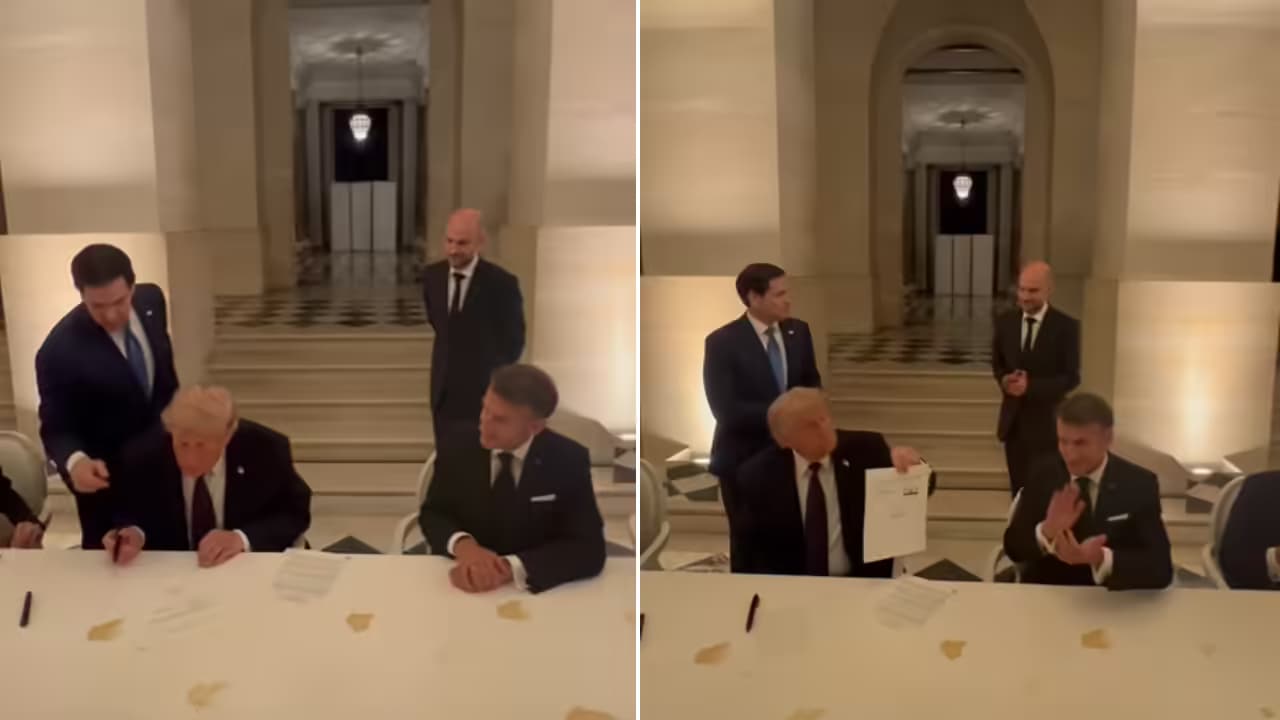
US President Donald Trump has signed a 14-point Memorandum of Understanding (MoU) with Iran aimed at ending nearly four months of conflict and creating a framework for a broader and permanent agreement. Signed on the sidelines of the G7 Summit in France, the accord has been described by the Trump administration as a “performance-based” arrangement, under which Iran receives economic and diplomatic benefits only if it complies with its commitments.

The agreement covers a wide range of issues, including an end to hostilities, reopening of the Strait of Hormuz, sanctions relief, nuclear restrictions, the release of frozen assets and a proposed reconstruction fund. However, many operational details are yet to be negotiated during a 60-day period that has now begun.

Point 1: Immediate End to Military Operations

The agreement calls for an immediate and permanent cessation of military operations between the United States, Iran and their allies.

It also extends to Lebanon, requiring an end to hostilities involving Hezbollah. Both sides have pledged not to threaten or initiate military action against each other and to respect Lebanon’s sovereignty.

One of the unresolved questions is how Israel will respond to this provision, particularly regarding its operations against Hezbollah.

Point 2: Respect for Sovereignty and Non-Interference

Washington and Tehran have agreed to respect each other’s territorial integrity and refrain from interfering in domestic affairs.

The provision effectively commits both sides to abandoning efforts aimed at destabilising or influencing internal political developments in the other country.

Point 3: A 60-Day Window for a Permanent Agreement

The MoU establishes a maximum 60-day period for negotiating a final settlement.

Both sides may extend this deadline by mutual consent.

The agreement signed by President Trump and Iranian President Masoud Pezeshkian marks the beginning of this countdown.

Point 4: End of the US Naval Blockade

The United States has agreed to dismantle its naval blockade around Iranian ports and remove restrictions affecting maritime trade.

The process is expected to be completed within 30 days.

Under a future agreement, US military deployments near Iran are expected to revert to their pre-war posture.

Point 5: Reopening the Strait of Hormuz

Iran has committed to ensuring safe passage for commercial vessels through the Strait of Hormuz.

Shipping is expected to resume immediately after technical and de-mining operations are completed.

The agreement specifies that vessels will not be charged for transit, at least during the initial phase. The reopening of the waterway is regarded as one of the most significant economic outcomes of the accord because roughly a fifth of global oil shipments pass through the strait.

Iran is also expected to work with Oman and other Gulf states to establish a long-term framework for managing maritime traffic.

Point 6: A $300 Billion Reconstruction and Development Plan

The agreement envisages a reconstruction and economic development package worth at least $300 billion.

However, the United States is not obligated to contribute financially.

Instead, Washington would facilitate investments from regional partners and provide licences and approvals required for projects inside Iran.

For example, Gulf countries could finance infrastructure projects with US approval.

Point 7: Eventual Removal of Sanctions

One of the most important provisions concerns sanctions relief.

The agreement envisages the eventual removal of all economic sanctions imposed by the United States and those backed by the United Nations Security Council.

However, the timeline and mechanism for lifting these restrictions remain to be negotiated.

Sanctions relief is tied directly to Iran fulfilling its commitments.

Point 8: Iran Agrees Not to Pursue Nuclear Weapons

Iran has reaffirmed that it will not acquire or develop nuclear weapons.

The agreement also provides for dealing with Tehran’s stockpile of enriched uranium.

At a minimum, the material would be downblended under the supervision of the International Atomic Energy Agency (IAEA), although the precise mechanism is yet to be agreed.

This provision is regarded by the Trump administration as the central achievement of the agreement.

Points 9 and 10: Maintaining the Nuclear Status Quo

Until a permanent settlement is reached, both countries have agreed to preserve the status quo.

Iran will refrain from expanding its nuclear programme, while the United States will avoid imposing new sanctions.

Washington will also issue waivers to facilitate Iranian oil exports and related financial transactions.

Point 11: Release of Frozen Iranian Assets

The agreement provides for the gradual release of Iranian assets frozen abroad.

Procedures for accessing the funds will be finalised during negotiations.

According to US officials, portions of the assets could be released incrementally as Iran fulfils various obligations under the agreement.

Point 12: Monitoring Mechanism

The United States and Iran have agreed to establish a mechanism to monitor implementation of the MoU.

The structure and composition of this body have not yet been finalised.

It is expected to oversee compliance and address disputes arising during implementation.

Point 13: Negotiations on a Final Treaty

Once implementation begins, formal negotiations on a comprehensive and permanent agreement will commence.

These talks are expected to address unresolved issues, including the sequencing of sanctions relief, nuclear activities and regional security arrangements.

Point 14: UN Security Council Endorsement

The final agreement is expected to receive the backing of the United Nations Security Council.

According to the MoU, the permanent settlement will ultimately be formalised through a binding UN Security Council resolution.

What Remains Unclear

Despite the breakthrough, several major questions remain unanswered.

The agreement does not specify exactly when sanctions will be lifted, how enriched uranium will be disposed of, what role Israel will play in the post-conflict arrangement or how compliance will be enforced. The future of Iran’s ballistic missile programme also remains unresolved, although President Trump recently suggested Tehran could retain missiles if regional rivals possessed similar capabilities.

For now, the 14-point Memorandum serves as an interim framework rather than a final peace treaty. The next 60 days are expected to determine whether the ceasefire evolves into a lasting settlement or whether longstanding tensions between Washington and Tehran resurface.

Long or Short, get news the way you like. No ads. No redirections. Download Newspin and Stay Alert, The CSR Journal Mobile app, for fast, crisp, clean updates!

App Store –  https://apps.apple.com/in/app/newspin/id6746449540 

Google Play Store – https://play.google.com/store/apps/details?id=com.inventifweb.newspin&pcampaignid=web_share

Latest News

Popular Videos
