


China’s Z.ai Plans to Develop Mythos-Class AI by 2027
The CSR Journal Magazine

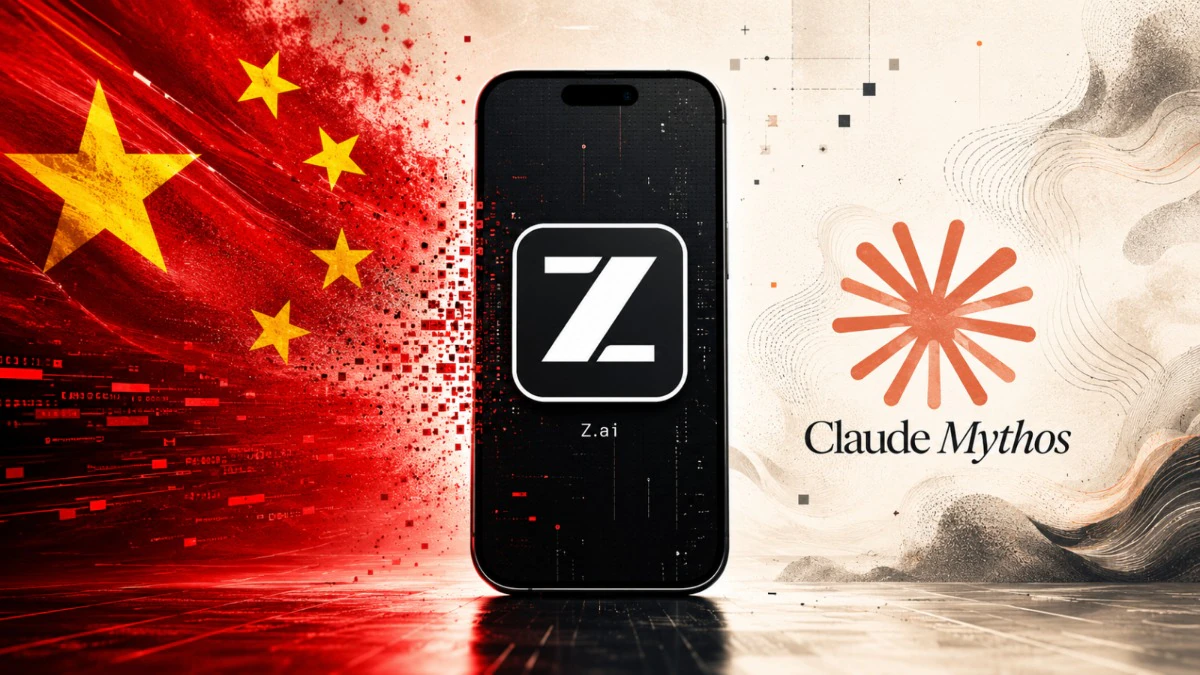
Artificial intelligence has emerged as a significant arena for geopolitical conflicts, particularly between the United States and China. The US has been implementing measures to restrict China’s capacity to develop or utilise advanced AI models. Recently, the US government prohibited the export of state-of-the-art AI chips to China, and it subsequently limited access to the Anthropic AI models, Mythos 5 and Fable 5, for foreign users. This action reportedly stemmed from concerns that entities linked to China might exploit these technologies for cyberattacks.

In this context, Tang Jie, the founder of Z.ai, suggested that China could potentially unveil its own Mythos-class AI model by the year 2027. During a discussion on X, a user posited that Z.ai might achieve this goal even sooner, potentially by the end of 2026. Tech entrepreneur Elon Musk commented on this assertion, speculating that the timeline could extend to the first quarter of 2027, to which Tang Jie countered, emphasising a shorter development period.

Significance of the Mythos-Class Models

The implications of developing Mythos-class AI models are substantial. Anthropic’s models are said to possess unprecedented capabilities, including the potential to identify numerous software vulnerabilities that may have previously gone unnoticed. Should these models fall into the wrong hands, they could be misused for malicious cyber activities.

If Tang Jie’s predictions materialise, the US restrictions on Mythos and Fable models may ultimately be ineffectual, as China could possess comparably advanced models. Meanwhile, it is anticipated that both Anthropic and OpenAI will continue to enhance their own technologies within this timeframe, further intensifying competition in the field of AI.

Introduction of GLM 5.2 by Z.ai

GLM 5.2 represents the latest breakthrough in Z.ai’s AI lineup. Currently, it is the leading open weights model on the Artificial Analysis Intelligence Index, outperforming other Chinese models such as Kimi K2.6. With a score of 51 on the index, GLM 5.2 surpasses Google’s Gemini 3.5 Flash, which scored 50, and Anthropic’s Claude Sonnet 4.6, with a score of 47. However, it still falls short of Fable 5’s score of 60 and OpenAI’s GPT 5.5 score of 55.

This model mirrors the size of its predecessor, GLM 5.1, featuring 744 billion total parameters and 40 billion active parameters. Notably, GLM 5.2 displays an improved index score by 11 points, indicating advancements in its capabilities. It’s also noteworthy that GLM 5.2 was exclusively trained on Huawei Ascend chips, not utilising any Nvidia hardware in its development, which could suggest a strategic pivot in hardware sourcing for AI training.

The training expenses for GLM 5.2 were estimated at around $25 million, which is considerably lower than the costs incurred by companies like Anthropic or OpenAI for comparable AI models. This could highlight a significant advantage for Z.ai in terms of expense management in AI model development.

Long or Short, get news the way you like. No ads. No redirections. Download Newspin and Stay Alert, The CSR Journal Mobile app, for fast, crisp, clean updates!

App Store –  https://apps.apple.com/in/app/newspin/id6746449540 

Google Play Store – https://play.google.com/store/apps/details?id=com.inventifweb.newspin&pcampaignid=web_share

Latest News

Popular Videos
