


Centre Seeks Time to Address Supreme Court Suggestions on CBSE Three-Language Policy
The CSR Journal Magazine

The Centre informed the Supreme Court on Thursday regarding its ongoing efforts to address recommendations related to the three-language policy set by the Central Board of Secondary Education (CBSE) for Class 9 students. Additional Solicitor General Aishwarya Bhati, representing the Centre, conveyed to the bench, which included Chief Justice Surya Kant and Justices Joymalya Bagchi and V Mohana, that the CBSE was actively evaluating the various aspects of the implementation of this policy. An extension of time was sought to ensure thorough consideration of these suggestions.

Upon reviewing the Centre’s request, the Supreme Court decided to postpone the matter by one week. This development follows the court’s previous directive for the Centre and the CBSE to devise a feasible solution regarding the concerns linked to the new language requirements, emphasising the need to avoid placing undue stress on students.

Concerns Raised by the Court

On August 20, the Supreme Court acknowledged the validity of introducing the three-language policy, yet it highlighted several concerns regarding its execution. The petitioners raised issues about how the policy was being implemented, prompting the court to instruct the relevant authorities to investigate these difficulties and propose solutions to potential obstacles in its rollout.

One significant concern addressed by the bench was the availability of qualified teaching personnel to educate students in the diverse range of language options made available. Additionally, the court underlined the necessity of refining the policy to ensure that students do not encounter extra stress as a result of its implementation.

The importance of addressing both aspects—the effective teaching resources and student wellbeing—was clearly outlined by the justices during the session. The court’s focus remains primarily directed towards ensuring that educational policies promote a supportive learning environment for students.

Details of the CBSE Policy

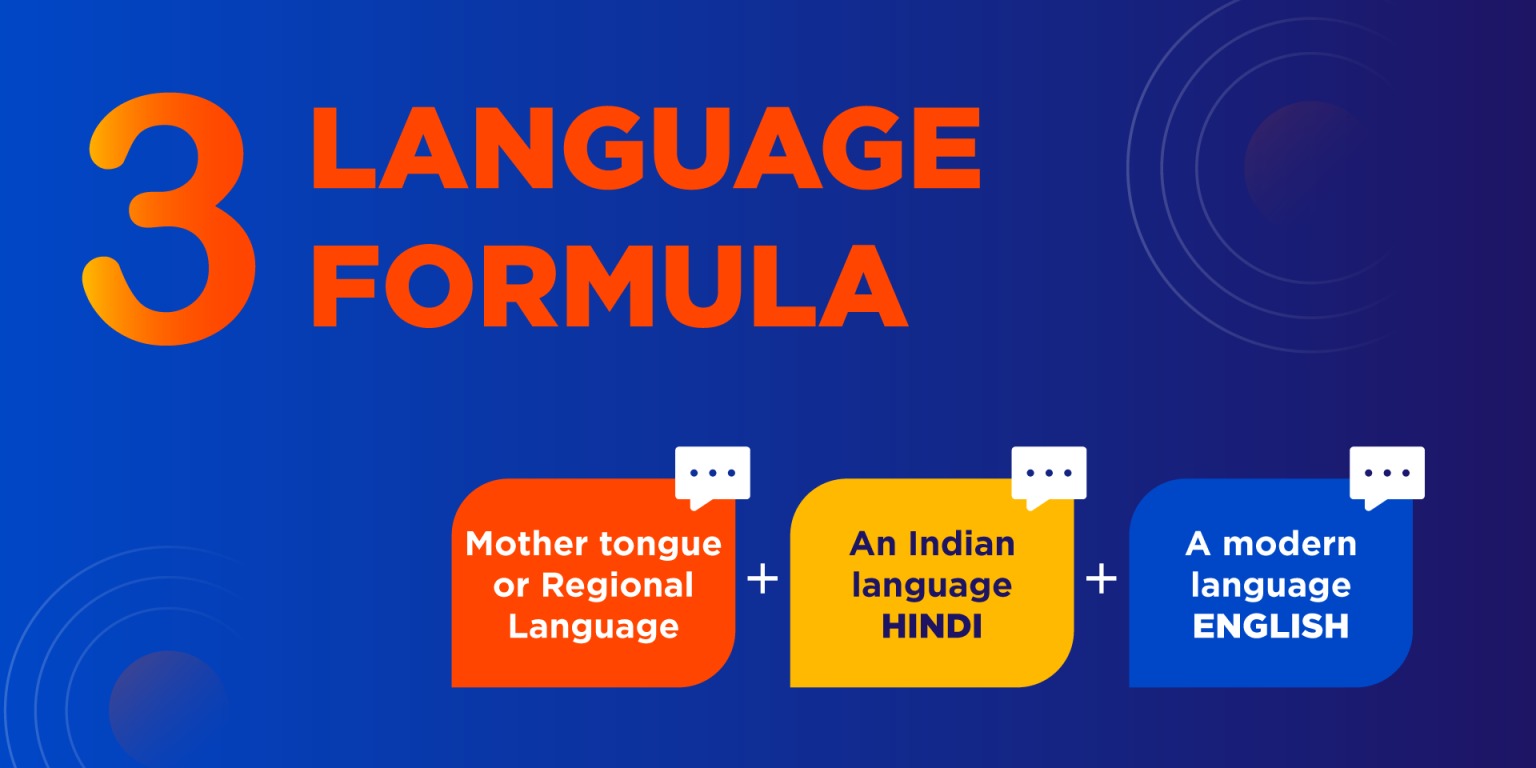
According to a CBSE circular dated May 15, the study of three languages—designated as R1, R2, and R3—has been mandated for Class 9 students starting July 1, 2026. Among these languages, at least two must be native Indian languages. Students will be permitted to select a foreign language only as their third language if they have first studied two native Indian languages, or alternatively as an additional fourth language.

This policy aligns with the broader reforms outlined in the National Education Policy 2020 and the National Curriculum Framework for School Education 2023. It aims to cultivate a multilingual educational framework that reflects India’s cultural diversity.

In a notable adjustment, the CBSE announced that there will be no board examination for R3 at the Class 10 level, aiming to shift the emphasis towards learning rather than examination pressure. In the interim, until new textbooks specifically for R3 are made available, students are advised to use the Class 6 textbooks corresponding to their chosen language.

The changes in the CBSE’s language policy are already under scrutiny in the Supreme Court, which agreed on May 27 to examine a petition challenging these updates. The Court sought responses from various educational authorities, including the Centre, CBSE, and NCERT, indicating the significance of this policy shift within the broader educational landscape.

Long or Short, get news the way you like. No ads. No redirections. Download Newspin and Stay Alert, The CSR Journal Mobile app, for fast, crisp, clean updates!

App Store –  https://apps.apple.com/in/app/newspin/id6746449540 

Google Play Store – https://play.google.com/store/apps/details?id=com.inventifweb.newspin&pcampaignid=web_share

Latest News

Popular Videos
