


NASA’s Voyager 1 to Cross One-Light-Day Distance from Earth on Nov 18
The CSR Journal Magazine

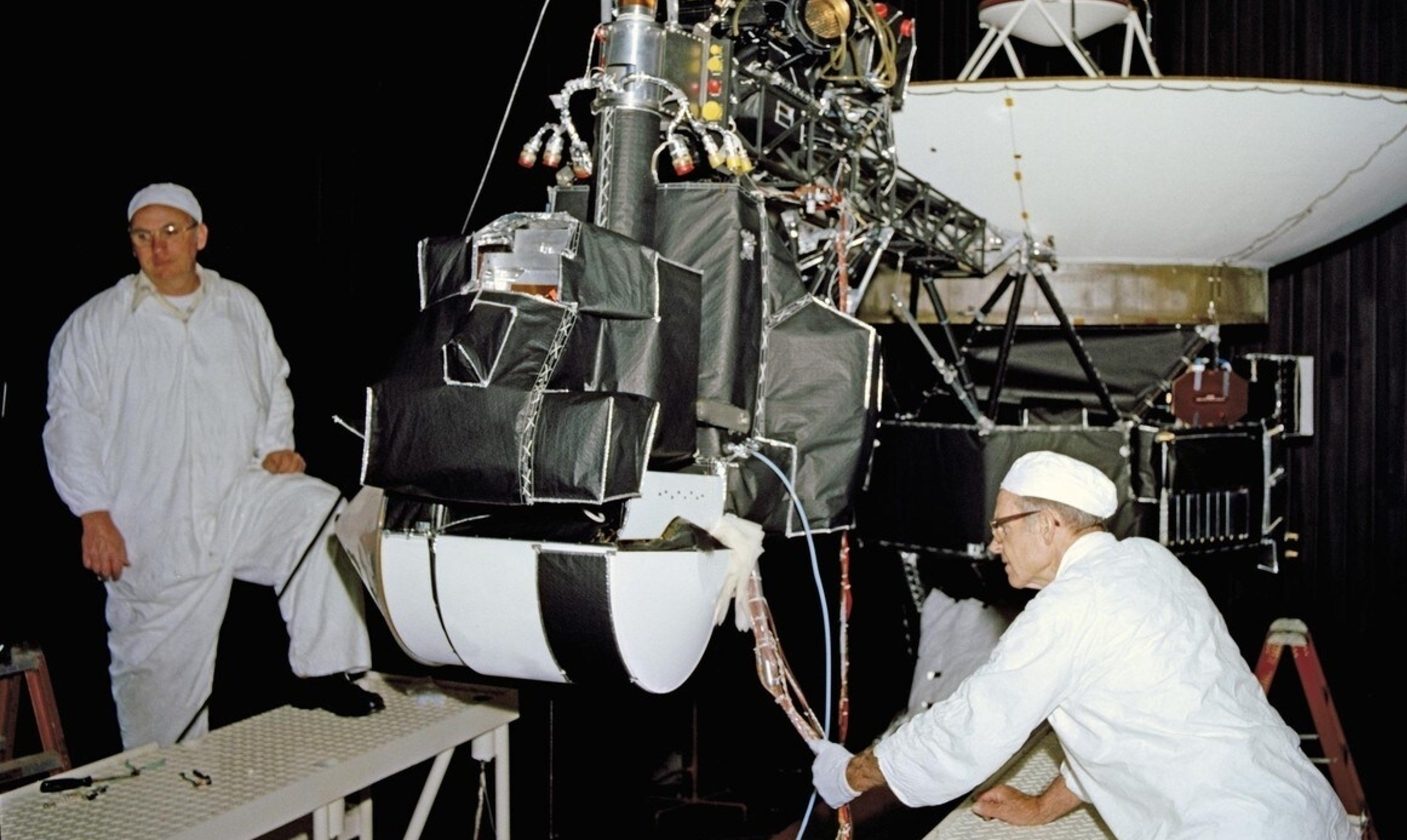
NASA’s Voyager 1, which was launched 49 years ago, is on track to reach a significant milestone on November 18, 2026. On this date, the spacecraft will be approximately 16.09 billion miles (25.89 billion kilometres) from Earth, marking its crossing of the one-light-day distance. At this range, light takes 24 hours to travel from Earth to the spacecraft, thereby defining the one-light-day measurement.

Currently recognised as the farthest human-made object in space, Voyager 1 is travelling at a speed of 28,000 mph. The probe made history in August 2012 when it became the first spacecraft to enter interstellar space, followed closely by its twin, Voyager 2, which entered this region in December 2018.

Voyager 1 is also renowned for capturing the iconic “Pale Blue Dot” photograph of Earth, which has become a symbol of humanity’s place in the universe. As it approaches the one-light-day mark, the spacecraft continues to provide valuable data about the outer reaches of our solar system.

Background of Voyager Missions

Both Voyager 1 and Voyager 2 were launched in 1977, taking advantage of a rare planetary alignment that occurs once every 175 years, involving Jupiter, Uranus, Saturn, and Neptune—the four largest planets in the solar system. By the 1980s, the two spacecraft had diverged in their paths after their encounters with Saturn.

While Voyager 1 set its course towards a star named Gliese 445, located over 17 light-years from Earth, Voyager 2 continued its journey towards Uranus and Neptune. Voyager 2 remains unique as the only spacecraft to have conducted close-range explorations of all four giant planets, revealing important discoveries such as a 14th moon at Jupiter, ten new moons and two rings at Uranus, and five moons, four rings, and a “Great Dark Spot” at Neptune.

Voyager 2 is expected to cross the one-light-day distance mark in November 2035, nine years after Voyager 1 achieves this milestone. The ongoing missions of both spacecraft continue to enhance our understanding of the solar system.

The Golden Record

Each Voyager spacecraft carries a Golden Record, a 12-inch phonograph disc intended to represent humanity and life on Earth. This record includes spoken greetings in 55 languages, 27 musical selections, 116 images, and a variety of sounds from Earth, designed to convey the essence of human culture to any potential extraterrestrial life that may encounter the probes.

The Golden Record is housed in a protective cover that features diagrams indicating the position of our Sun relative to 14 pulsars, along with instructions on how to play the disc. To ensure the preservation of its contents against the harsh conditions of space, the record is made of copper with gold plating, while the protective cover is constructed from aluminium.

Recently, Voyager 1 experienced a brief communication blackout, failing to contact mission control for two days in October. This incident raised concerns among engineers, as the Deep Space Network did not receive signals from the probe on October 18 and 19. However, communication was restored on October 20, and no further issues have been reported since then.

Long or Short, get news the way you like. No ads. No redirections. Download Newspin and Stay Alert, The CSR Journal Mobile app, for fast, crisp, clean updates!

App Store – https://apps.apple.com/in/app/newspin/id6746449540

Google Play Store – https://play.google.com/store/apps/details?id=com.inventifweb.newspin&pcampaignid=web_share

Latest News

Popular Videos
