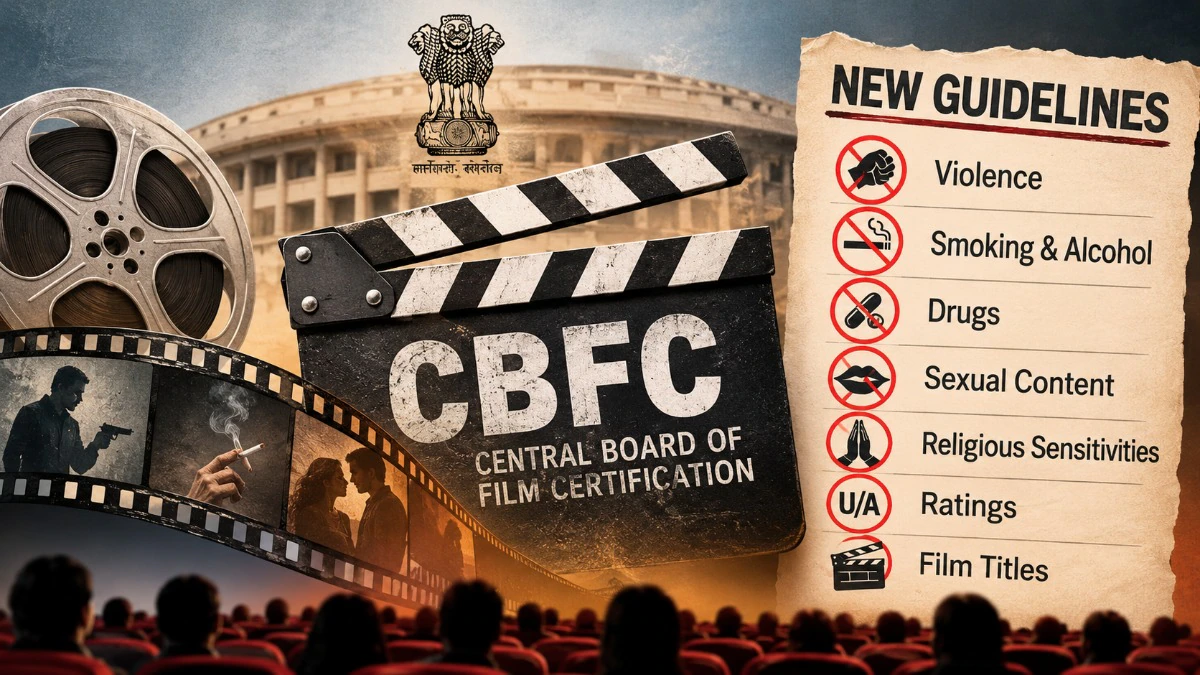
The Central Board of Film Certification (CBFC) has unveiled a new set of guidelines for the certification of films intended for public exhibition in India. This update, issued by the Ministry of Information and Broadcasting, replaces the previous framework established on December 6, 1991. The revised guidelines aim to reflect contemporary societal values while retaining certain principles from the earlier regulations.
According to the government, the objective of these guidelines is to balance responsible storytelling with artistic freedom. They emphasise that creative expression should not be unduly restricted, while also ensuring that films are sensitive to societal values and standards. The guidelines encourage films that exhibit artistic merit and respond to social changes, aiming to provide wholesome entertainment.
This overhaul marks a significant shift in the film certification process, as it seeks to modernise the approach to various sensitive subjects, including violence, drug use, and the portrayal of vulnerable groups.
Stricter Regulations on Violence and Crime
The new guidelines impose stricter scrutiny on the depiction of violence and anti-social behaviour in films. They explicitly state that films should not glorify or justify criminal activities, including violent acts. Additionally, filmmakers are cautioned against presenting methods used by criminals or including dialogues that may incite viewers to commit offences.
The CBFC has been directed to monitor unnecessary violence, cruelty, and horror. Scenes that primarily serve as entertainment and may desensitise audiences to violence or human suffering are prohibited. While films can still explore themes of crime and violence, such content must serve a narrative purpose rather than exist solely for shock value.
Furthermore, the guidelines address the portrayal of vulnerable groups, particularly children. Depictions of children involved in violence, whether as victims or witnesses, must be handled sensitively. The same restrictions apply to scenes of child abuse and cruelty towards animals, as well as the ridicule of individuals with disabilities.
Regulations on Substance Use and Obscenity
Another significant aspect of the new guidelines is the requirement for films that depict drug use or trafficking to include a statutory warning. This warning states: “Illicit Narcotics Destroy Health and Guarantees Imprisonment. Say No to Drugs.” The guidelines prohibit the glamorisation of drug addiction and similar restrictions apply to alcohol and tobacco consumption.
The CBFC has reiterated its stance against vulgarity, obscenity, and indecent content. The guidelines stress that human sensibilities should not be offended, and the use of double-meaning dialogues that appeal to base instincts is discouraged. This provision aims to regulate not just visuals but also dialogues and lyrics that may be deemed inappropriate.
Additionally, the guidelines extend to the portrayal of communities and national issues. Films must avoid content that shows contempt for any racial or religious groups and must not undermine India’s sovereignty or security. Defamatory content against individuals or groups is also prohibited, ensuring that the dignity of the judiciary is upheld.
Age Classification and Overall Film Assessment
The new guidelines maintain the existing age-based classification system, including categories such as U/A 7+, U/A 13+, and U/A 16+. These classifications are designed to assist parents in determining the appropriateness of films for their children. Films suitable for children aged seven and above but requiring parental guidance can receive a U/A 7+ certificate.
Moreover, the guidelines instruct the CBFC to evaluate films as a whole rather than judging individual scenes in isolation. This holistic approach allows the Board to consider the overall impact of a film in the context of the period it represents. However, films must not compromise the moral standards of their audiences.
Titles of films will also undergo scrutiny to ensure they are not provocative or offensive. This comprehensive assessment aims to uphold the standards set forth in the new guidelines, ultimately shaping the landscape of Indian cinema in a manner that balances creative expression with social responsibility.
Long or Short, get news the way you like. No ads. No redirections. Download Newspin and Stay Alert, The CSR Journal Mobile app, for fast, crisp, clean updates!