


Central India Experiences Severe 60 Per Cent Rain Deficit Amid Monsoon Challenges
The CSR Journal Magazine

The current monsoon season is facing significant challenges across various regions of India, with the India Meteorological Department (IMD) reporting a troubling rainfall deficit. As the crucial period of June unfolds, the country has recorded only 3 mm of rainfall against an expected average of 6.1 mm. This shortfall translates into an overall deficit of 50 per cent, creating concerns about agricultural and water resources nationwide.

Central India Most Affected

According to the latest data, Central India has emerged as the most affected region, grappling with a 60 per cent shortfall in rainfall. The region received merely 2.7 mm of precipitation compared to the normal 6.7 mm expected for this time of year. This severe decline poses threats to agriculture, particularly in states like Madhya Pradesh, Chhattisgarh, and Maharashtra, which heavily depend on monsoon rains for their crop cycles.

In addition to Central India, South Peninsular India is also facing a noteworthy deficit of 58 per cent. Meanwhile, Northwest India is reported to be 26 per cent below normal, and the eastern and northeastern parts of the country have recorded a 28 per cent deficit. These regions are expected to feel the impact on both farming practices and water supply throughout the season.

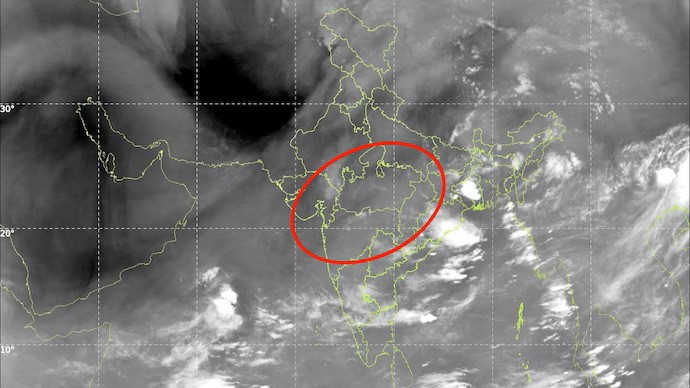
Satellite imagery provided by the IMD further illustrates the dire situation. Central India, which encompasses places like Madhya Pradesh and Chhattisgarh, is notably cloud-free, indicating a lack of rain-bearing systems in the area. Dense cloud formations are confined to the eastern Bay of Bengal and the northern Himalayan region, leaving much of the central and northern parts of the country dry.

Factors Contributing to the Rainfall Deficit

Meteorologists attribute the stalled monsoon to several factors that are currently suppressing rainfall across India. The rebalancing of atmospheric conditions, characterised by a weaker-than-average monsoon trough and the intrusion of dry air from the northwest, has compounded the situation. Furthermore, the absence of robust low-pressure systems in the Bay of Bengal has meant limited moisture availability.

The satellite images also indicate extensive cloud cover over Tibet and areas north of India, suggesting that conducive weather systems remain displaced from vital agricultural areas. This limitation on moisture-laden winds further exacerbates the rainfall deficit, particularly in the vital monsoon regions.

The ongoing dry conditions raise alarming concerns for local farmers who are pending rainfall to initiate sowing for the kharif season. The delays in rain can disrupt planting schedules and compromise soil moisture levels, which are crucial for crop development during the season.

Future Expectations for Monsoon Activity

Despite the current dire circumstances, forecasters have indicated that there may be a gradual improvement in rainfall conditions following June 20. Analyses suggest that the Somali Jet is expected to strengthen, resulting in increased moisture transport from the Arabian Sea, which could facilitate renewed monsoon activity.

Weather models point to the likelihood of diminishing dry air intrusion and the potential emergence of new weather systems over the Bay of Bengal. If these predictions materialise, Central India may finally receive the long-anticipated rains that have thus far eluded its farming communities.

For the time being, however, the region remains under clear skies, leaving many awaiting desperately needed rainfall to sustain agricultural productivity in the crucial kharif growing season.

Long or Short, get news the way you like. No ads. No redirections. Download Newspin and Stay Alert, The CSR Journal Mobile app, for fast, crisp, clean updates!

App Store –  https://apps.apple.com/in/app/newspin/id6746449540 

Google Play Store – https://play.google.com/store/apps/details?id=com.inventifweb.newspin&pcampaignid=web_share

Latest News

Popular Videos
