


Artemis II Astronauts Excelled in Photography Training and Captured Stunning Lunar Images
The CSR Journal Magazine

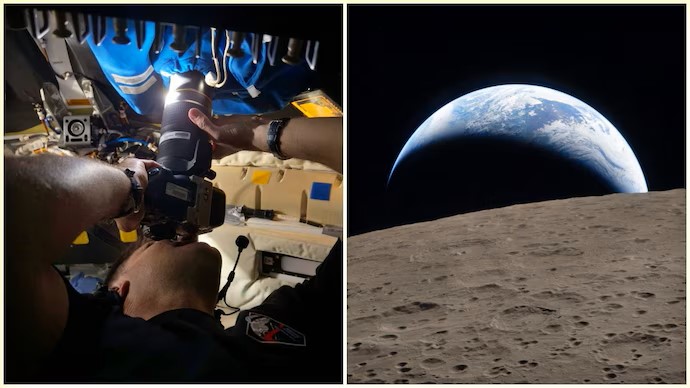
The Artemis II crew, with just 20 hours of specialised training, successfully captured breathtaking images of the Moon and Earth, impressing both scientists and the public. NASA reported that the training was conducted by professional photography instructors Paul Reichert and Katrina Willoughby, who were both educated at the Rochester Institute of Technology. Designed specifically to equip the astronauts for capturing scientifically significant visuals, the training’s outcomes surpassed initial expectations.

Willoughby commented on the nature of space photography, stating that while many individuals can take satisfactory photographs, the goal in space necessitates a higher standard of scientific precision. Despite the brief duration of their training, the astronauts’ results demonstrated a remarkable combination of technical accuracy coupled with impressive visual clarity.

Preparation and Equipment Choice

To ensure effective training, the astronauts practised on Earth with mock-ups of the Orion spacecraft. Activities included photographing a large inflatable representation of the Moon placed in a dim environment, intended to mimic the conditions they would face in space. Mission pilot Victor Glover emphasised the importance of these drills for helping the astronauts adjust to the challenges of microgravity and varying light conditions.

A significant factor contributing to the crew’s success was the selection of photographic equipment. The primary camera used was the Nikon D5, which has a proven track record aboard the International Space Station for its reliability and capability to perform well under low light and radiation exposure. Additionally, the crew employed a Nikon Z9 and even an iPhone 17 Pro Max for certain images, despite experiencing challenges in transmitting large files due to bandwidth limitations.

The results of the mission were impressive, featuring striking images such as the view from the far side of the Moon, showcasing the Sun obscured by the lunar landscape, encircled by a faint halo. Other photographs revealed the Moon’s rugged and cratered terrain with remarkable detail, along with distant perspectives of Earth rising and setting on the lunar horizon.

Technological Advancements in Space Photography

The advances in technology available to the Artemis II astronauts enabled an immediate review of digital images, a significant improvement over the Apollo era when film had to be processed after returning to Earth. The astronauts also utilised GoPro cameras for live video streams, allowing audiences on Earth to witness moments of the mission in real time.

As the first images began to arrive back at mission control in Houston, a palpable excitement emerged among the team. Willoughby reflected on the atmosphere in the control room, noting the incredible energy present at that moment when the visuals were first received.

The achievements in photography by the Artemis II crew underscore important technological advancements and demonstrate the capacity of astronauts to adapt to the unique challenges of deep space. This mission illustrates that even with limited preparatory time, they can achieve extraordinary results under demanding conditions.

Long or Short, get news the way you like. No ads. No redirections. Download Newspin and Stay Alert, The CSR Journal Mobile app, for fast, crisp, clean updates!

App Store –  https://apps.apple.com/in/app/newspin/id6746449540 

Google Play Store – https://play.google.com/store/apps/details?id=com.inventifweb.newspin&pcampaignid=web_share

Latest News

Popular Videos
