


23,000-Year-Old Footprints in White Sands Are Rewriting the Story of the First Humans in the Americas

The CSR Journal Magazine

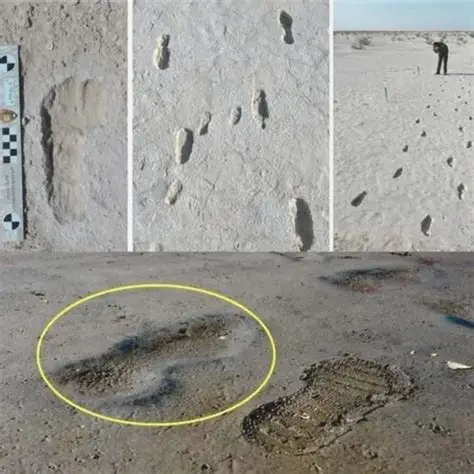
The recent discovery of ancient footprints in the White Sands National Park in New Mexico has provided new insights into the history of early human populations in the Americas. Archaeologists have dated these footprints to be approximately 23,000 years old, suggesting that humans may have arrived on the continent much earlier than previously believed. The footprints were discovered in a layer of sediment, a site known for its rich archaeological significance.

This finding challenges established theories about when and how the first human groups populated North America. Previously, many researchers suggested that humans migrated to the Americas around 13,000 years ago, mostly via a land bridge that existed during the last Ice Age. However, the evidence from White Sands implies a much earlier presence of humans, thereby reshaping the timeline of human migration.

Significance of the Findings

The footprints themselves reveal crucial behavioural aspects of these early inhabitants. Researchers have noted that the prints indicate a diverse range of activities, including running and walking, suggesting that these individuals were capable of traversing different terrains. This information provides valuable insights not only into their mobility but also into their social structures and daily life.

Moreover, the current findings emphasise the adaptability and resilience of prehistoric humans. The footprints demonstrate that these early people were not just surviving in isolated conditions but were actively engaging with their environment. The discovery supports the hypothesis that these populations were capable of complex social interactions and had a deep understanding of their surroundings, which was fundamental for their survival.

The implications of this research extend beyond North America, as it may help illuminate the broader patterns of human migration across the globe. Understanding when and how ancient peoples travelled can provide a clearer picture of human evolution and migration routes over millennia.

Future Research Directions

Following this groundbreaking discovery, additional studies are planned to further investigate the White Sands site. Researchers aim to analyse more sediment layers to gather further evidence about the period of human occupation and their lifestyle. This involves detailed excavations and advanced dating techniques to corroborate the initial findings.

In addition to the footprints, analyses of nearby artefacts, such as tools or remnants of habitation, will be crucial in constructing a comprehensive understanding of the early humans who inhabited the area. Previous studies of similar sites have resulted in significant archaeological insights, making this research particularly promising.

Collaborations among various institutions and researchers globally are essential in this ongoing investigation. The fostering of interdisciplinary approaches will not only facilitate more extensive excavations but also enhance the interpretation of the findings. The implications of this research could resonate within multiple fields, including anthropology, archaeology, and environmental science.

Long or Short, get news the way you like. No ads. No redirections. Download Newspin and Stay Alert, The CSR Journal Mobile app, for fast, crisp, clean updates!

App Store –  https://apps.apple.com/in/app/newspin/id6746449540 

Google Play Store – https://play.google.com/store/apps/details?id=com.inventifweb.newspin&pcampaignid=web_share

Latest News

Popular Videos