


Volodymyr Zelenskyy Claims Ukraine Drone Strike Win—Enemy Position Captured!
The CSR Journal Magazine

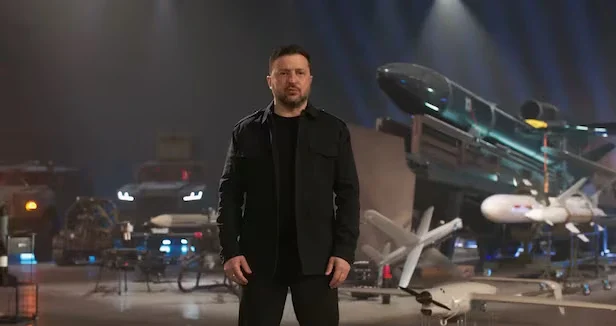
The current conflict in Ukraine is witnessing a significant transformation, described by President Volodymyr Zelenskyy as a shift to robotic warfare. During his address on Defence Industry Worker Day, Zelenskyy highlighted that an enemy position was reportedly captured without any infantry involvement for the first time in the ongoing war. He mentioned that unmanned platforms, including ground systems and drones, played a crucial role in this operation, which resulted in the enemy surrendering with no losses on the Ukrainian side.

Details of the Operation

While specifics about the operation were not disclosed by Zelenskyy, information emerging from a December mission involving Ukraine’s 13th National Guard Brigade, Khartiya, sheds light on this unprecedented warfare approach. The Wall Street Journal reported that the operation commenced with the deployment of a ground drone which successfully navigated challenging muddy terrain to target a Russian bunker. The explosion initiated a coordinated offensive which relied heavily on unmanned systems.

In the operation, a combination of aerial and ground drones was employed. Some drones hovered above to provide a real-time overview of the battlefield, while others executed direct strikes or dropped explosives on enemy positions. This strategic deployment of numerous drones sustained relentless pressure on the defending side, compelling them to address multiple threats from various angles simultaneously.

The scale of the deployment was notable, with dozens of drones engaged in a single offensive. This sophisticated use of technology highlights the evolving nature of military engagements, moving away from traditional troop-led assaults to advanced robotic interventions.

Role of Human Operators

Despite the reliance on automated systems, human oversight remained essential throughout the operation. Teams of remote operators controlled the drones, utilising live video feeds to monitor movements and adapt strategies in real time. The operators’ involvement was critical, from meticulously planning flight paths to rehearsing the mission multiple times, thereby mitigating risks such as signal interference between devices.

However, challenging ground conditions posed difficulties during the operation. Muddy and uneven terrain slowed the movement of land drones, occasionally leading to delays. Issues with individual drones, such as getting stuck, also complicated coordination, particularly in ensuring that the overall mission proceeded smoothly.

The operation was not without resistance. Enemy drones engaged the advancing Ukrainian systems during the assault. In response, the Ukrainian forces employed a coordinated strategy between aerial and ground drones to continue their offensive, allowing them to adapt to the evolving battlefield dynamics.

Lessons Learned from the Operation

The multi-hour operation concluded with Ukrainian troops moving in after the enemy position had been substantially weakened. This shift in military tactics not only achieved its immediate objectives but also provided valuable insights into areas where drone technology could be enhanced for future operations. Operators were able to identify specific improvements necessary for more effective utilisation in subsequent engagements, signalling a significant move towards more technologically integrated warfare in the ongoing conflict in Ukraine.

Long or Short, get news the way you like. No ads. No redirections. Download Newspin and Stay Alert, The CSR Journal Mobile app, for fast, crisp, clean updates!

App Store –  https://apps.apple.com/in/app/newspin/id6746449540 

Google Play Store – https://play.google.com/store/apps/details?id=com.inventifweb.newspin&pcampaignid=web_share

Latest News

Popular Videos
