


US Renames Indo-Pacific Command, Signalling Strategic Shift Toward South Asia
The CSR Journal Magazine

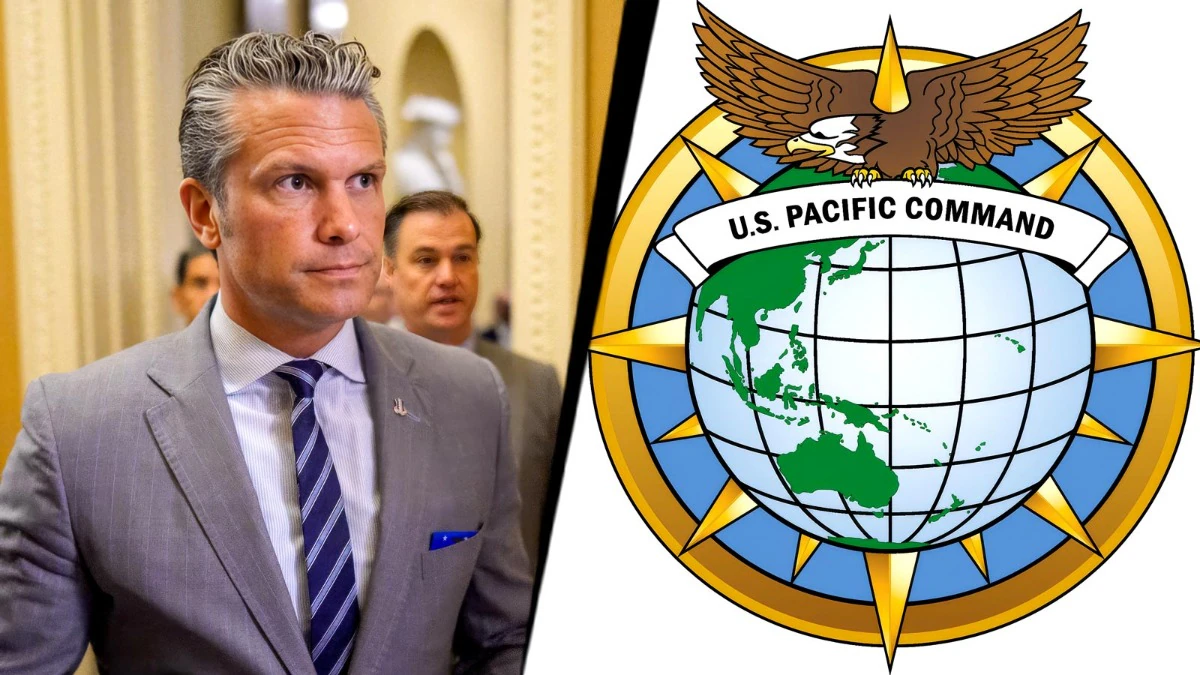
The recent decision by the United States military to revert the name of its Indo-Pacific Command back to the Pacific Command is seen as a significant shift in its approach towards South Asia. This change is perceived not just as a nostalgic nod to history but as an indication of America’s evolving geopolitical strategy in the region. When the term “Indo” was introduced in 2018 under the Trump administration, it symbolised a commitment to viewing India as a key partner against the backdrop of a rising China. However, the removal of “Indo” suggests a shift away from this perspective.

Defense Secretary James Mattis previously asserted that the renaming indicated growing interconnections between India and the Pacific. However, the recent alteration implies a belief that India’s role as a pivotal regional player is in flux. Indian Member of Parliament Shashi Tharoor expressed concerns on social media, interpreting the renaming as a detrimental sign for the Quad alliance involving the US, Australia, India, and Japan.

This change illustrates a broader realignment in which the US is no longer regarding India as the sole arbiter of South Asian affairs, indicating a more direct engagement with neighbouring countries in the region.

Shifting Dynamics in South Asia

The transformation in America’s engagement is a reflection of a more complex geopolitical landscape emerging in South Asia. Historically, the US relied heavily on India, perceiving it as a dominant player while viewing countries like Pakistan and Bangladesh through a narrow lens of development or counterterrorism. The evolving dynamic suggests that Washington is now acknowledging the individual significance of these countries as they assert their own agency on the global stage.

For the US, this shift allows for more nuanced relationships with nations like Pakistan, Bangladesh, and Nepal, which are engaging with American interests independently rather than as appendages to Indian policy. This fresh approach may allow for mutually beneficial partnerships, potentially transforming how the US interacts with these countries.

The US is keen to form alliances that are not reminiscent of Cold War-era dependencies. The focus now is on establishing transactional partnerships based on shared interests rather than aligning countries rigidly along ideological lines. Countries are expected to retain their autonomy in dealing with global powers such as China and Russia, reflecting a multipolar world order.

Pakistan and Bangladesh as Emerging Players

Pakistan’s repositioning is emblematic of this new approach. Historically linked to counterterrorism, Islamabad is now actively crafting a new narrative around its importance as a conduit for Gulf investments and access to critical resources. With substantial mineral reserves, including the Reko Diq project, Pakistan aims to become an alternative hub for supply chains currently dominated by China.

Bangladesh, with its strategic location and burgeoning economy, has also become a focal point for American interests. This nation, with a population of 170 million, is well-placed to attract US investment and strategic partnerships while maintaining its relationships with China and India. Washington’s interest in facilitating humanitarian efforts related to Myanmar underscores its desire to retain influence in Dhaka, particularly as this country distances itself from an India-centric policy.

The US’s evolving strategy illustrates a broader intention to prevent any single country, including India, from monopolising South Asian dynamics. By recognising individual countries as separate entities with distinct roles, Washington aims to foster a balanced regional architecture that reflects contemporary geopolitical realities.

Long or Short, get news the way you like. No ads. No redirections. Download Newspin and Stay Alert, The CSR Journal Mobile app, for fast, crisp, clean updates!

App Store –  https://apps.apple.com/in/app/newspin/id6746449540 

Google Play Store – https://play.google.com/store/apps/details?id=com.inventifweb.newspin&pcampaignid=web_share

Latest News

Popular Videos
