


Sutlej River Originates Near Mount Kailash Without Flowing Through Nepal
The CSR Journal Magazine

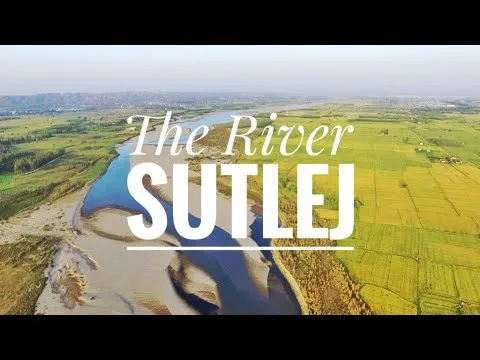
The Sutlej River, which begins close to Mount Kailash and Lake Mansarovar in the Tibetan Plateau, has often been mistakenly believed to flow through Nepal. Contrary to popular belief, it flows from Tibet (China), where it is referred to as the Longcchen Khabab River. The river flows westward before crossing into India at Shipki La in Himachal Pradesh, situated approximately 3,930 metres above sea level.

As it continues its journey through Himachal Pradesh and Punjab, the Sutlej eventually enters Pakistan. This extensive waterway holds significant historical importance with Nepal, dating back over two centuries, yet it does not traverse through its territory.

Ancient Significance and Modern Relevance

One of the oldest rivers in the Indian subcontinent, the Sutlej was referred to as Satudri during the Vedic period and is known as Shatadru in the ancient language of Sanskrit. Stretching nearly 900 miles (1,400 kilometres), it holds the title of the longest river among the five that flow through Himachal Pradesh. The river’s path takes it through various districts, including Kinnaur, Shimla, Kullu, Mandi, Solan, and Bilaspur, before entering Punjab.

This significant water source supports extensive irrigation systems in northern India, making it crucial for agricultural productivity. According to Britannica, the Sutlej is regarded as an essential component for local farming communities.

The river’s flow is heavily influenced by the melting of Himalayan snow during the spring and summer months, alongside monsoon rains that can lead to flooding. The most substantial flood recorded occurred in 1955, with discharges measuring nearly 600,000 cubic feet (17,000 cubic metres) per second, illustrating the river’s dynamic nature.

Connection to Nepal and Historical Context

Although the Sutlej does not currently pass through Nepal, its historical context is tied to the territorial ambitions of the Gorkha Kingdom in the early 19th century. The Gorkhas sought to expand their territory westward, reaching the Sutlej during a military campaign aimed at the Kangra region.

In the year 1809, the Gorkhas faced defeat against the forces of Kangra King Sansar Chand, who had military backing from Maharaja Ranjit Singh of the Sikh Empire. This defeat effectively halted Nepal’s westward expansion, as documented in the Archaeological Survey of India Report from 1872–73.

Though the river itself was never integrated into Nepal’s geography, it played a role in the military history of the region, showcasing the river’s significance beyond mere geography.

A Transboundary Waterway

Today, the Sutlej River flows through three territories: China (specifically the Tibet Autonomous Region), India, and Pakistan, highlighting its role as a vital transboundary river in South Asia. Its journey from the Himalayan origins to the plains of Punjab has influenced civilizations and shaped historical narratives throughout the ages.

The Sutlej stands as a reminder of how geographical features can impact not only the land they traverse but also the societies that develop around them. Its historical influence extends beyond national boundaries, emphasising the interconnectedness of regions even when water flow does not directly link them.

Long or Short, get news the way you like. No ads. No redirections. Download Newspin and Stay Alert, The CSR Journal Mobile app, for fast, crisp, clean updates!

App Store –  https://apps.apple.com/in/app/newspin/id6746449540 

Google Play Store – https://play.google.com/store/apps/details?id=com.inventifweb.newspin&pcampaignid=web_share

Latest News

Popular Videos
