


Supreme Court Raises Concerns Over Election Commission’s Approach to Voter Deletions in Delhi
The CSR Journal Magazine

Supreme Court’s Inquiry into Voter Deletions

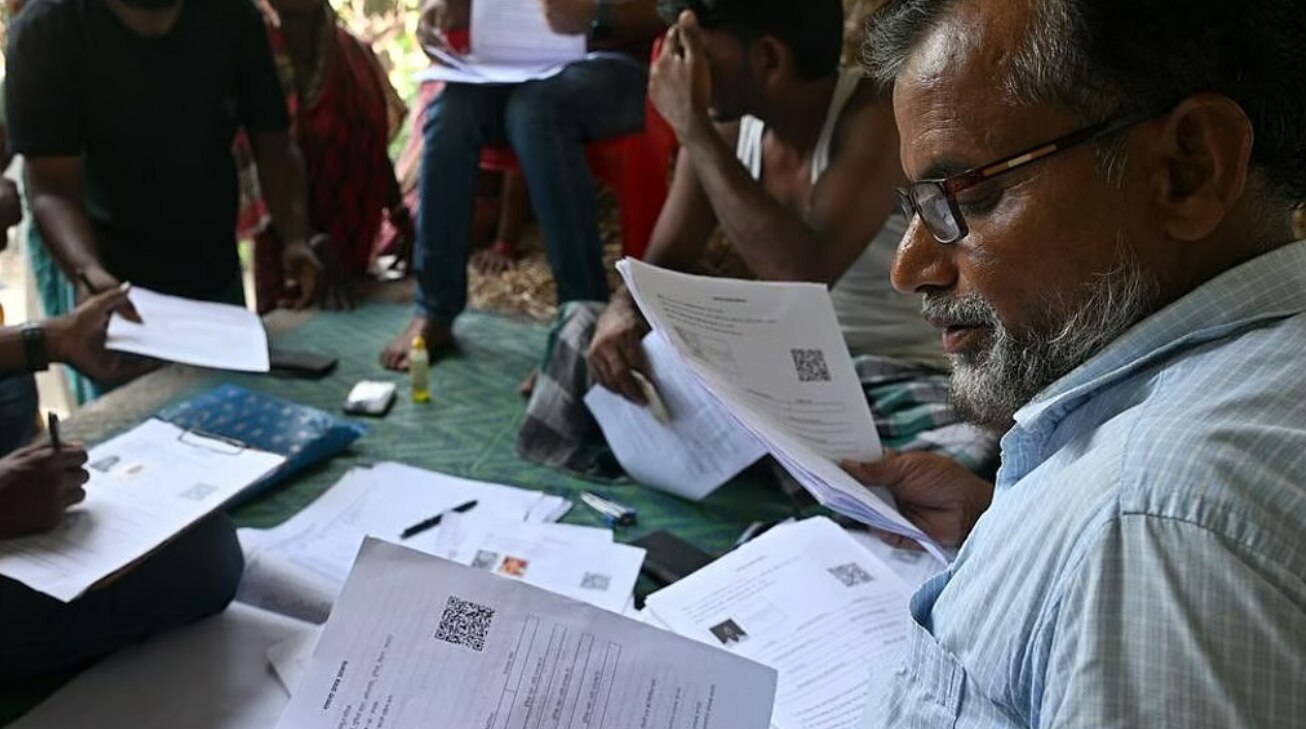
The Supreme Court has raised questions regarding whether the Election Commission (EC) adequately considered its actions while deleting names from Delhi’s draft electoral roll during the Special Intensive Revision (SIR). The court has requested clarification on the rationale behind asking voters already registered in the 2026 rolls to fill out Form 6 as new voters after changing their addresses.

During a hearing on Wednesday, the court directed the EC to facilitate the completion of the voter registration process for those who had not submitted their enumeration forms or had relocated. This includes the option to file Form 8 for updating address details. The EC assured the bench that the deadline of October 30 for filing claims and objections would be extended.

The draft electoral roll, published on August 31, indicated that 47.57 lakh of Delhi’s 1.45 crore registered voters were excluded, categorised as absent, shifted, deceased, or duplicates. Initially, the claims and objections window was set to close on September 30 but was later extended to October 30.

Concerns Over Voter Treatment

During the proceedings, the Supreme Court expressed concerns regarding voters who may have been temporarily away from their registered addresses when Booth Level Officers (BLOs) distributed enumeration forms. The court questioned whether the failure to submit these forms within the stipulated timeframe could justify permanently denying someone the right to vote.

Justice Joymalya Bagchi highlighted the importance of the right to vote, questioning if a voter who did not return an enumeration form on time should lose their place on the electoral rolls. The bench also queried the EC about the necessity for voters, already on the 2026 electoral roll but who had moved, to fill out Form 6 instead of Form 8, which is typically used for address changes.

Chief Justice of India (CJI) Surya Kant urged the EC to clarify why voters who had shifted residences were not permitted to use Form 8. Justice Bagchi noted that while Forms 6, 7, and 8 are established under law, the EC could seek declarations from voters regarding their failure to submit enumeration forms on time.

Legal Examination of Logical Discrepancies

The Supreme Court has also raised issues regarding the classification of voters under the ‘logical discrepancies’ category, indicating a need to examine whether there was proper consideration by the officials involved in the SIR process. Advocate Prashant Bhushan, representing the petitioners, informed the bench that approximately 13 lakh voters were classified as unmapped, while nearly 19 lakh faced logical discrepancies.

Justice Bagchi questioned how voters listed in the 2003 electoral rolls, which the EC used as a reference, could later be flagged for logical discrepancies. He noted that the legal validity of this categorisation requires further scrutiny. The court emphasised that the authority granted to the EC to proceed with the exercise does not automatically validate every aspect of the process.

In response to the concerns raised, DS Naidu, representing the EC, stated that voters could approach the authorities to have their names included until the final date for filing nominations for an election. He mentioned that the EC had conducted awareness campaigns and deployed BLOs and Booth Level Agents (BLAs) to assist voters. The Supreme Court will continue to examine these issues in two weeks.

Long or Short, get news the way you like. No ads. No redirections. Download Newspin and Stay Alert, The CSR Journal Mobile app, for fast, crisp, clean updates!

App Store – https://apps.apple.com/in/app/newspin/id6746449540

Google Play Store – https://play.google.com/store/apps/details?id=com.inventifweb.newspin&pcampaignid=web_share

Latest News

Popular Videos
