


Delhi’s Air Quality Index Drops to 229, Back to Poor Category
The CSR Journal Magazine

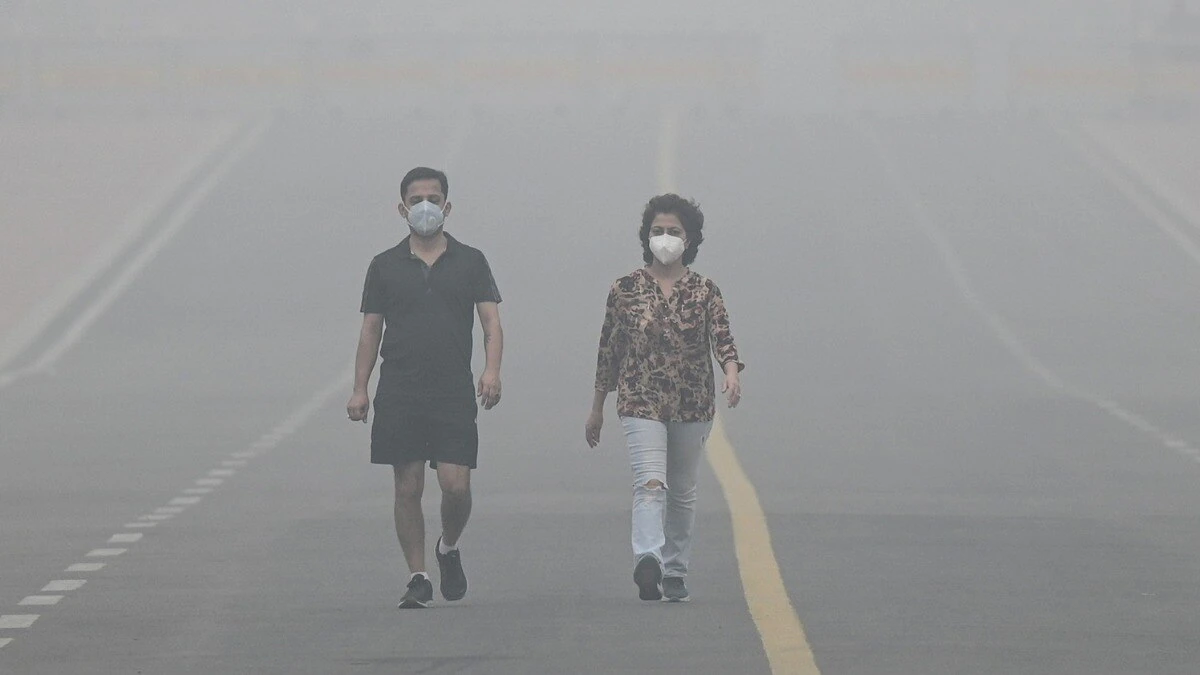
Delhi’s air quality has regressed to the poor category as of Wednesday, marking the end of a four-day period of moderate air quality. The Air Quality Index (AQI) in the city rose to 229 on Wednesday, up from 197 the previous day, according to data from the Central Pollution Control Board (CPCB). This fluctuation indicates a concerning trend in the capital’s air quality management.

Among the 58 monitoring stations across the city, Vivek Vihar recorded the most alarming AQI at 316, categorising it as very poor. While sixteen stations reported moderate air quality, 41 others fell into the poor category. The CPCB categorises AQI levels as follows: 0 to 50 is considered good, 51 to 100 satisfactory, 101 to 200 moderate, 201 to 300 poor, 301 to 400 very poor, and 401 to 500 severe.

The last instance of poor air quality in Delhi was on October 21, when the AQI was recorded at 245. Subsequent readings showed 223 on October 22 and 230 on October 23, before the air quality improved to moderate for four consecutive days.

Forecast and Contributing Factors

The Air Quality Early Warning System for Delhi has indicated that air quality is expected to remain moderate from October 29 to October 31. However, the outlook for the subsequent six days suggests a potential shift back to poor conditions. The warning system attributes this to a ventilation index below 6,000 square metres per second and an average wind speed of less than 10 kilometres per hour, which are unfavourable for pollutant dispersion.

The India Meteorological Department (IMD) has predicted a generally cloudy sky with moderate rainfall on Thursday, followed by thunderstorms and additional rain on Friday. Such weather conditions could influence air quality, although the extent remains to be seen.

According to the Decision Support System for Air Quality Management in Delhi, the transport sector was responsible for 19.3 per cent of the pollution recorded on Wednesday. Other contributors included the energy sector at 5 per cent, industries at 4.8 per cent, residential sources at 5.1 per cent, construction at 2.5 per cent, waste burning at 1.8 per cent, road dust at 1.3 per cent, and various other sectors collectively accounting for 1.3 per cent.

Regional Contributions to Pollution Levels

In the National Capital Region (NCR), several districts contributed significantly to Delhi’s pollution levels. Ghaziabad accounted for 11.8 per cent, followed by Gautam Buddh Nagar at 8.7 per cent, Meerut at 8.6 per cent, and Muzaffarnagar at 5.7 per cent. Other districts such as Baghpat, Bulandshahr, Faridabad, Gurugram, Sonipat, and Jhajjar contributed smaller percentages, with stubble burning contributing 0.9 per cent and other sources amounting to 9.6 per cent.

The Indian Agricultural Research Institute (IARI) reported that satellites detected 129 instances of farm fires across six states on October 27. Punjab had the highest number, with 33 incidents, while Haryana recorded one, Uttar Pradesh 18, Rajasthan 46, Uttarakhand seven, and Madhya Pradesh 24. Between September 15 and October 27, a total of 2,267 residue-burning events were identified across these states.

These figures highlight the ongoing challenges faced by Delhi in managing air quality, particularly with the seasonal increase in stubble burning, which has been a persistent issue contributing to pollution levels in the region.

Long or Short, get news the way you like. No ads. No redirections. Download Newspin and Stay Alert, The CSR Journal Mobile app, for fast, crisp, clean updates!

App Store – https://apps.apple.com/in/app/newspin/id6746449540

Google Play Store – https://play.google.com/store/apps/details?id=com.inventifweb.newspin&pcampaignid=web_share

Latest News

Popular Videos
