


Train Driver Missing After Deadly Spain Train Collision
The CSR Journal Magazine

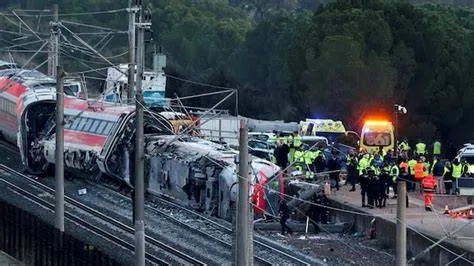
A tragic incident occurred in Spain’s central Toledo province on Wednesday, resulting in at least 30 fatalities following a collision between two high-speed trains. The crash, which took place shortly after 9 am local time on the Madrid-Seville line, near Urda, has raised concerns that the death toll may increase as rescue operations continue. Reports indicate that a trainee railway worker has been confirmed dead, while the driver of an AVE high-speed train remains unaccounted for.

The collision involved a Renfe train that struck the rear of a stationary Iryo train, leading to the derailment of two carriages. Some of these carriages reportedly fell down an embankment, complicating rescue efforts. Emergency services responded promptly, deploying teams to assist passengers trapped within the damaged coaches.

According to the Castilla-La Mancha regional government spokesperson, Esther Padilla, the Renfe train was carrying 397 passengers, while the Iryo service had 147 passengers, including a baby. This brings the total number of individuals on board both trains to 544, intensifying the urgency of the rescue operations.

Details of the Incident

Spain’s rail infrastructure operator Adif confirmed the suspension of traffic on the Madrid-Andalusia high-speed line following the accident. Initial investigations suggest that human error may have played a role, as a failure in the main signalling system reportedly occurred prior to the collision. Sources indicated that the signalling system had shifted to manual operation, resulting in several trains being halted in the vicinity.

Allegations have emerged that an operator at Madrid’s Atocha control centre instructed the Renfe train to proceed despite the Iryo train being obstructed on the track. These claims are currently under investigation, and no official cause for the crash has yet been established by authorities.

Rescue operations have been extensive, with medical helicopters deployed and hospitals in Toledo and Alcázar de San Juan prepared to treat the injured. Emergency services have concentrated their efforts on the two most severely damaged carriages, where passengers were trapped amid wreckage. Health Minister Mónica García described the impact as severe and cautioned that the situation could deteriorate as rescue efforts progressed.

Response and Ongoing Investigations

Witness accounts from passengers, including journalist Miguel Ángel Pérez Laguna, have highlighted the intensity of the impact, with descriptions of the train’s interior being violently thrown from side to side. The mayor of Urda, Manuel Galán, noted that emergency services requested the local council to prepare a sports pavilion to accommodate passengers and those needing assistance.

Regional president Emiliano García-Page visited the crash site to oversee the coordinated response by authorities. This incident marks another significant railway disaster in Spain this year, following a high-speed train derailment in January near Adamuz in Córdoba province that resulted in 46 deaths and hundreds of injuries. That earlier tragedy raised questions regarding railway maintenance and infrastructure investment, as well as the overall safety of Spain’s high-speed rail network.

The recent collision involving Renfe and Iryo trains has reignited these concerns, prompting investigators to determine the factors contributing to the crash. The focus will be on the reported signalling failure and the potential for human error in the lead-up to the collision. As investigations unfold, the priority remains on ensuring the safety of passengers and preventing future incidents.

Long or Short, get news the way you like. No ads. No redirections. Download Newspin and Stay Alert, The CSR Journal Mobile app, for fast, crisp, clean updates!

App Store – https://apps.apple.com/in/app/newspin/id6746449540

Google Play Store – https://play.google.com/store/apps/details?id=com.inventifweb.newspin&pcampaignid=web_share

Latest News

Popular Videos
