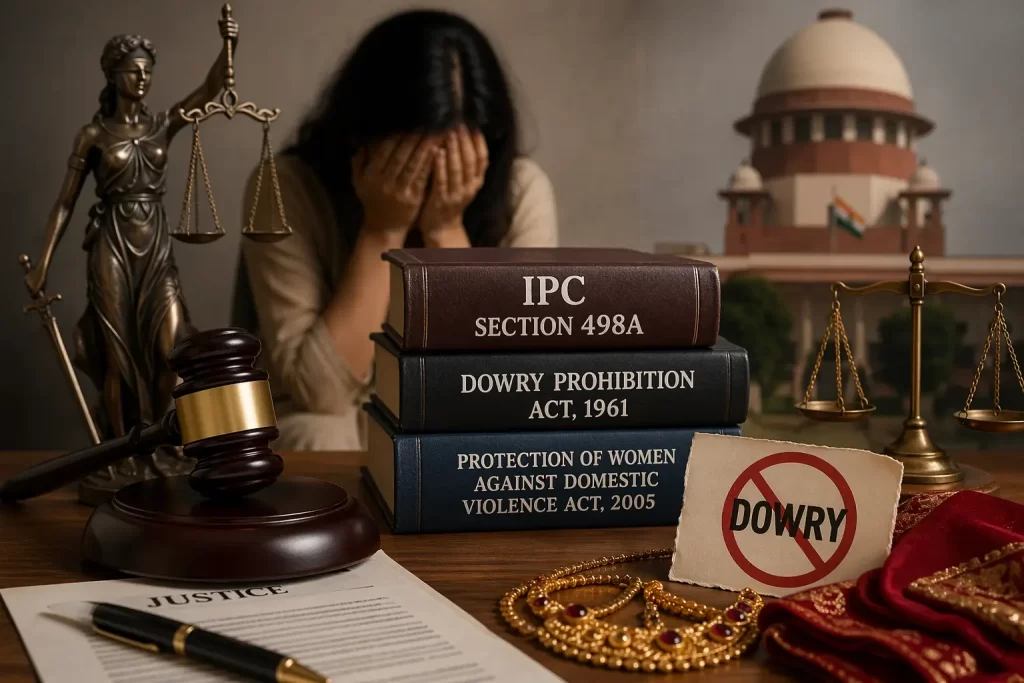

The Supreme Court has made significant observations regarding dowry-related harassment, particularly in a case stemming from Chhattisgarh involving a dowry death that occurred in 2010. In refusing to grant relief to a convicted husband’s family, the court emphasised that a robust message must be communicated against the humiliation faced by brides and their families. Justice BV Nagarathna posed a critical question, asking why boys marry girls only to insult them and their families.
The statement highlighted the court’s determination to hold accountable those who perpetuate such conduct. The bench, alongside Justice Ujjal Bhuyan, opted not to intervene in the convictions upheld by both the trial court and the Chhattisgarh High Court, which had ruled on several charges under the Indian Penal Code, including dowry death, abetment of suicide, and cruelty.
The unfortunate case revolved around the death of a woman found hanging within three years of her marriage, with allegations of ongoing harassment and repeated demands for dowry made by her husband and in-laws. These demands reportedly included significant requests for cash and a vehicle, which led to evident distress in her life.
Details of the Case and Convictions
The trial court determined that the woman’s death occurred under suspicious circumstances within the seven-year statutory period that invokes the presumption of dowry death. Testimonies from family members disclosed a pattern of financial coercion and emotional abuse faced by the woman, which intensified just prior to her demise. Medical evidence confirmed that asphyxia due to hanging was the cause of death.
Notably, the courts established a direct correlation between the cruelty endured and the woman’s tragic end. Currently, the appeal to the Supreme Court has been filed by the deceased woman’s younger brother-in-law, seeking relief from his conviction. His legal representative contended that the charges against him were insufficient to substantiate his conviction solely under the cruelty statute.
However, the Supreme Court expressed its disagreement with this viewpoint. Justice Nagarathna remarked that the individual should consider himself fortunate that he was only charged under Section 498A, which pertains to cruelty. This reflects the court’s insistence on the scrutiny of actions that demean brides and their families within marital relationships.