


Shashi Tharoor Slams Govt Over Women’s Reservation-Delimitation Link, Calls Move ‘Deeply Problematic’

The CSR Journal Magazine

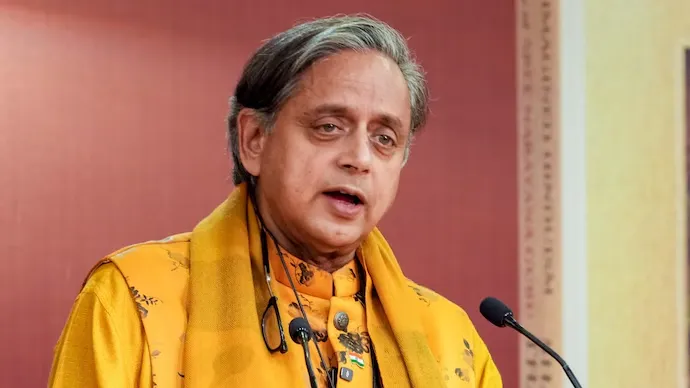
Congress MP Shashi Tharoor has raised strong objections in the Lok Sabha regarding the government’s approach to the linkage between women’s reservations and delimitation. He warned that this connection could potentially be detrimental, referring to it as “political demonetisation.” During a debate centred on amendments to women’s quota laws and the establishment of a delimitation commission, Tharoor underscored the unnecessary complication introduced by the government.

Arguing passionately, he claimed that linking what he termed a “moral imperative” to a “demographic minefield” was counterproductive. He cited the Prime Minister’s assertions that the government intended to empower women with “nari shakti,” while simultaneously criticising the association of this empowerment with complicated administrative tasks involving the expansion of Parliament and reliance on the 2011 Census data.

Political Consensus for Women’s Reservation

Tharoor noted that there is widespread political agreement on the necessity of enacting women’s reservations, asserting that the time for mere symbolism has passed. He advocated for immediate implementation of women’s reservation based on the current legislative seats available. He expressed dissatisfaction with the notion of intertwining these women’s rights with the processes of delimitation, which he described as one of the most intricate and contentious administrative undertakings in the history of India.

Moreover, he stated that linking the aspirations of women in India to delimitation effectively traps them from making progress in their quest for equality and representation. He made a case for sending the delimitation process to a Joint Parliamentary Committee (JPC) for further scrutiny and suggested delaying it to protect the interests of all states involved.

During his address, Tharoor also highlighted that delimitation should not be viewed solely as a bureaucratic process. It is, in fact, a significant shift in political authority that could potentially disrupt the existing federal structure of the country. He cautioned against rushing the delimitation exercise, drawing parallels with the swift measures taken during demonetisation and urging against such haste.

Legislative Developments Regarding Women’s Quota

The Constitution (131st Amendment) Bill, which aims to amend the women’s quota law, was presented in the Lok Sabha on April 16, 2026, following a division of votes. Accompanying this bill, the government also introduced two additional ordinary bills: the Delimitation Bill and the Union Territories Laws (Amendment) Bill. These are specifically designed to implement the revised framework for women’s reservations in Union territories, including Delhi, Puducherry, and Jammu and Kashmir.

With the introduction of these legislative measures, the government’s intentions have come under scrutiny, particularly regarding their alleged urgency and potential ramifications for women’s rights. Tharoor’s critique reflects broader concerns about how significant demographics and political representation might be shaped by procedural reforms without adequate deliberation.

The ongoing debate in the Lok Sabha and the surrounding discourse signify the critical nature of women’s reservation in Indian politics. As the government moves forward with its plans, the concerns voiced by Tharoor will likely continue to resonate among both legislators and the public, emphasising the need for a careful and inclusive approach to such significant changes.

Long or Short, get news the way you like. No ads. No redirections. Download Newspin and Stay Alert, The CSR Journal Mobile app, for fast, crisp, clean updates!

App Store –  https://apps.apple.com/in/app/newspin/id6746449540 

Google Play Store – https://play.google.com/store/apps/details?id=com.inventifweb.newspin&pcampaignid=web_share

Latest News

Popular Videos