


Russia’s Wartime Election Begins As Economic Pressures And Anti-War Crackdown Intensify
The CSR Journal Magazine

Russia began three days of voting on Friday in a parliamentary election widely expected to preserve the dominance of President Vladimir Putin’s United Russia party, even as the country faces mounting economic pressures and the growing impact of the war in Ukraine.

The election is the first wartime vote for the lower house since Russia launched its full-scale invasion of Ukraine in 2022. Authorities have tightened political controls ahead of the poll, while Ukrainian drone strikes on oil refineries, warehouses and logistics infrastructure have brought the effects of the war closer to everyday life for many Russians.

Putin Seeks Show Of Unity

United Russia, the main Kremlin-aligned party, already controls more than two-thirds of the 450-member State Duma and is expected to retain its dominant position. Other parties that form part of Russia’s so-called systemic opposition and support the war are also expected to maintain their parliamentary presence.

The election has also been extended for the first time to residents of four Ukrainian regions that Moscow claims to have annexed following the invasion. Ukraine has described the move as illegal.

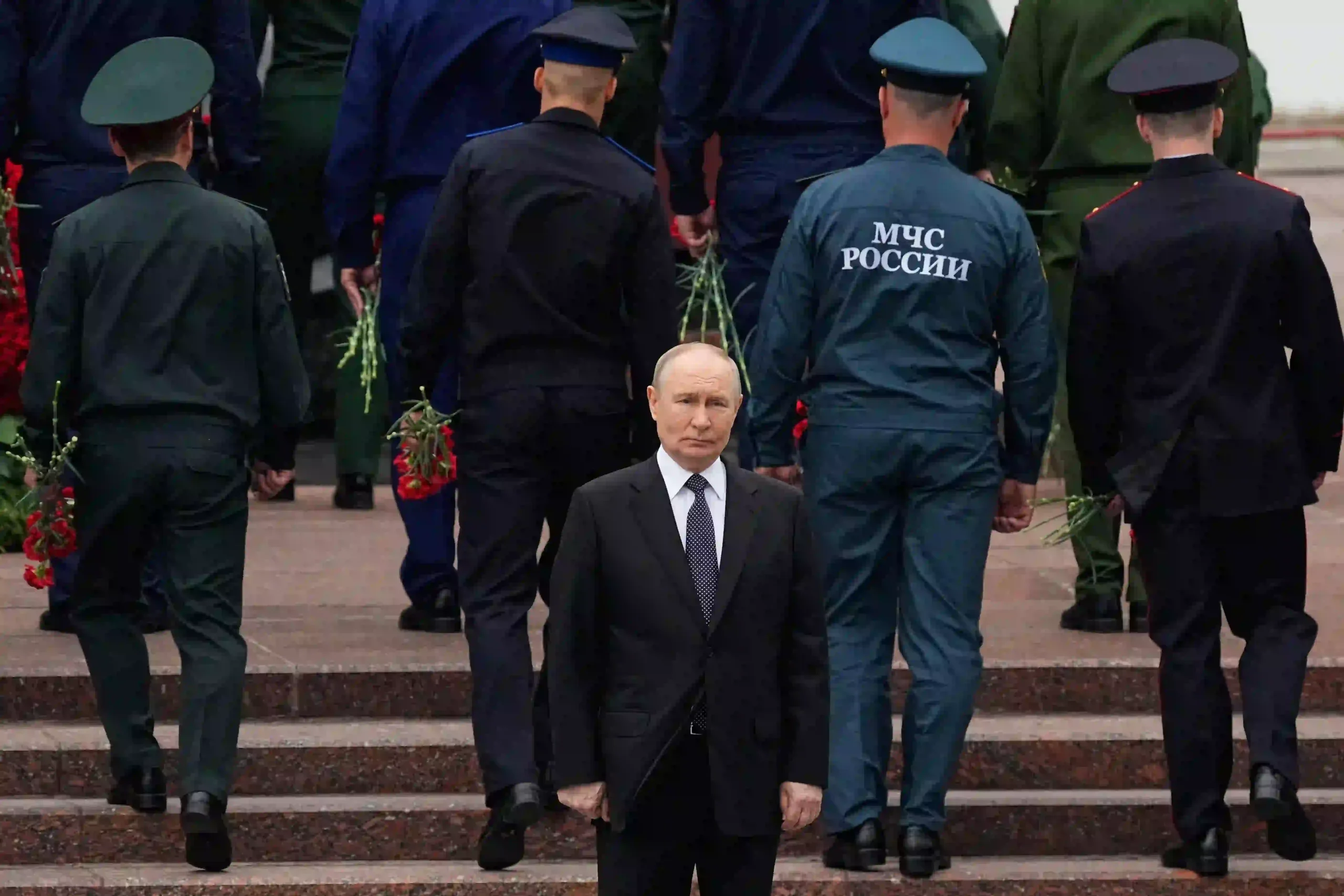
Analysts have said the Kremlin views the election as an opportunity to demonstrate domestic support for its war policy and portray Russia as united behind its leadership.

In a message issued before voting began, Putin said, “Your choice and resolve will once again demonstrate that millions of people stand behind our fighters, that we are a united people, bound by shared values, historical memory, and love for the Motherland.”

War Brings Economic Pressure

The political backdrop comes as the prolonged conflict increasingly affects Russia’s domestic economy. A surge in military spending initially boosted economic activity, but growth has since weakened and the economy has slipped into stagnation.

The government has raised taxes and increased domestic borrowing as it attempts to manage a widening budget deficit. Ukrainian attacks on Russian oil refineries have also contributed to disruption in the domestic fuel market.

The fuel crisis reached its peak in June before easing temporarily and returning in August. Attacks on warehouses operated by online retailers Wildberries and Ozon affected hundreds of thousands of individual sellers and added to economic concerns.

The impact of the war has also been reflected in public sentiment. Independent pollster Levada Center put Putin’s approval rating at 76 per cent in August, down from 87 per cent in September 2025, although the rating remained high.

Concerns have also surfaced within parts of Russia’s economic establishment. Andrei Klepach, chief economist at state-owned VEB.RF bank, warned at a seminar, “We won’t win the competition in this war of attrition. Our costs are mounting. I’m almost sure that we will come to face a social crisis.”

Klepach was dismissed the day after his comments were published.

Russia Intensifies Strikes On Ukraine

Putin has acknowledged that Ukrainian attacks have caused serious damage but has maintained that the Russian economy can withstand the pressure. He has also accused Ukraine of opening a “Pandora’s box” and warned that it would face heavy retaliation.

Russia has subsequently intensified missile strikes on Kyiv and other Ukrainian cities, alongside attacks using new jet-powered drones. The strikes have taken advantage of Ukraine’s shortage of defensive interceptors.

Moscow has also increased attacks on Ukrainian ports on the Black Sea, disrupting exports of grain and other agricultural products.

The possibility of another mobilisation has meanwhile emerged as an issue in Russia. A partial mobilisation of 300,000 reservists in 2022 prompted hundreds of thousands of Russians to leave the country.

Since then, the Kremlin has relied primarily on volunteers, offering relatively high pay and benefits to attract recruits. Military experts, however, say the flow of volunteers has weakened while battlefield losses remain high.

Ukrainian President Volodymyr Zelenskyy has repeatedly suggested that the Kremlin could order another mobilisation after the election. Putin has dismissed the suggestion as “nonsense”.

Anti-War Political Space Narrows

Political space for opposition to the war has also continued to shrink. The Central Election Commission cleared 11 parties for the ballot in July, including Yabloko, the only party openly critical of the war.

The Supreme Court later removed Yabloko from the ballot following an appeal by the nationalist Motherland party. The party argued that Yabloko’s position was comparable to seeking the violation of Russia’s territorial integrity.

Tatyana Stanovaya of the Carnegie Russia Eurasia Center said, “The risks that the campaign would turn into a struggle for and against peace – that is, a dispute about the war – were quite high, and this clearly was not part of the plan.”

The restrictions have extended beyond party participation. Maxim Kruglov, Yabloko’s deputy chairman and a former member of Moscow’s city council, was sentenced to seven years in prison in June for spreading false information about the military.

Last month, a court in the Pskov region sentenced Yabloko member Lev Shlosberg to more than 11 years in prison for speaking out against the war.

Half of the Duma’s 450 seats are allocated through party lists, while the remainder are decided through single-constituency races. Yabloko was excluded from the party-list vote, while many of its members were barred from standing in constituency elections for the Duma and regional legislatures.

Liberal politician Boris Nadezhdin, who attempted to challenge Putin in the 2024 presidential election, left Russia last month. He said he feared imprisonment after being designated a “foreign agent” and barred from contesting elections.

United Russia Expected To Maintain Control

Despite signs of public fatigue over the war and concerns about the economy, United Russia is expected to remain firmly in control of parliament. Some Russian reports have suggested that the Kremlin has slightly lowered its target for the party, but not by enough to threaten its dominance.

Analyst Mark Galeotti, who heads Mayak Intelligence, said, “United Russia may be allowed to slip a little to bring its actual sort of declared results more in line with probably its real results,” while the Kremlin will make sure it “is still absolutely dominant within the Duma”.

Galeotti described the elections as “legitimating rituals to give the impression that mass consensus is behind the Kremlin”.

The Communist Party, Liberal-Democratic Party and A Just Russia, which are all part of the systemic opposition and support the war, are also expected to retain their parliamentary presence.

Galeotti said Ukrainian attacks could further strengthen calls in Russia for a tougher response against Kyiv, “as long as they don’t have to be involved in it”.

Turnout And Public Narrative In Focus

Chris Weafer, chief executive of Macro-Advisory Ltd., said the Ukrainian attacks had damaged public morale but had not posed an immediate threat to the Kremlin’s political control.

“There has been a rally around the flag’ anyway since the start of conflict and the opinion polls consistently show the very high level of support,” he said.

Weafer said that although the election result is largely predetermined, turnout and the public narrative surrounding the vote remain important to the Kremlin as it seeks to portray the election as broad support for its policies.

The three-day election therefore comes less as a conventional contest for control of parliament and more as an exercise in reinforcing domestic support for the Kremlin’s war policy and demonstrating United Russia’s continued dominance of the State Duma.

Long or Short, get news the way you like. No ads. No redirections. Download Newspin and Stay Alert, The CSR Journal Mobile app, for fast, crisp, clean updates!

App Store –  https://apps.apple.com/in/app/newspin/id6746449540 

Google Play Store – https://play.google.com/store/apps/details?id=com.inventifweb.newspin&pcampaignid=web_share

Latest News

Popular Videos
