


Nasa Achieves Another Milestone in Keeping Voyager-1 Operational
The CSR Journal Magazine

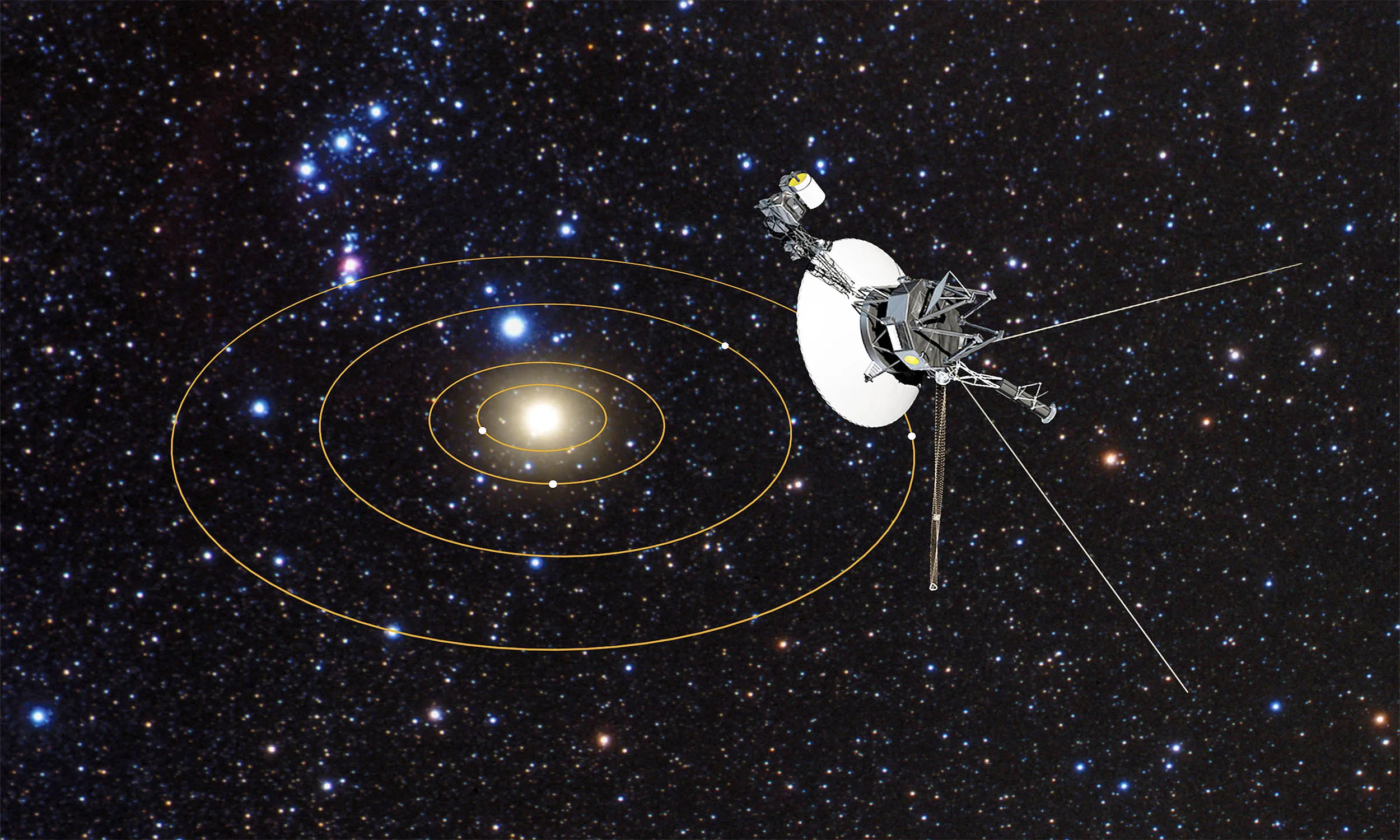
Nasa engineers have successfully implemented a significant power-saving operation on Voyager 1, humanity’s farthest spacecraft, which has been in space for nearly 49 years. This initiative allows the spacecraft to continue its exploration of the remote regions beyond the Sun’s influence longer than previously anticipated. The operation, informally referred to as the ‘Big Bang’, was completed in early September and is expected to prolong the operational life of Voyager 1’s remaining scientific instruments.

As Voyager 1 faces diminishing power supplies after decades of deep-space travel, Nasa’s Voyager team has switched off three non-essential devices and replaced them with lower-power alternatives. Launched in 1977, Voyager 1 utilises radioisotope thermoelectric generators (RTGs) that convert heat from the radioactive decay of plutonium into electricity. However, as the plutonium decays, the spacecraft loses roughly four watts of electrical power each year, necessitating the shutdown of non-essential systems to conserve energy.

Currently, Voyager 1 is travelling at approximately 61,155 kilometres per hour through interstellar space. The Big Bang operation was particularly complex, as it involved replacing three devices that maintain warmth in different sections of the spacecraft. Engineers had to ensure that the new setup reduced electricity consumption while preventing critical components from becoming dangerously cold.

Recent Communication Challenges Addressed

This achievement follows a recent incident that raised concerns about Voyager 1’s operational status. On October 18 and 19, Nasa’s Deep Space Network was unable to detect signals from the spacecraft during two scheduled communication attempts. Fortunately, communication was re-established on October 20, after approximately 48 hours of silence.

Engineers are currently investigating the cause of the interruption. Preliminary assessments suggest that one group of thrusters switched off, prompting backup thrusters to activate automatically after the spacecraft’s onboard computers detected a potential issue. This automatic safety mechanism, known as fault protection, places the spacecraft in a stable state and halts normal operations until engineers can conduct a thorough investigation.

Kareem Badaruddin, the Voyager mission manager at Nasa’s Jet Propulsion Laboratory, remarked that this incident is the first of its kind for the spacecraft, indicating the need for the team to be prepared for unexpected challenges as the mission progresses.

Voyager-1 Approaches a Historic Distance

As Voyager 1 continues its journey, it is expected to reach a remarkable milestone on November 18, 2026, when it will be approximately 16.09 billion miles (25.89 billion kilometres) from Earth, equivalent to one light-day. This distance means that a radio message sent from Earth will take about 24 hours to reach the spacecraft, with an additional 24 hours required for a response to return.

Despite the challenges posed by its ageing systems and diminishing power supply, Voyager 1 remains a vital source of scientific data from a region that no other human-made spacecraft has explored directly. For Nasa, the mission’s continuation is not merely about extending operational time; it represents humanity’s only direct connection to interstellar space.

As Voyager 1 continues to send back valuable scientific observations, Nasa’s efforts to maintain its functionality underscore the importance of this mission in expanding human knowledge about the universe beyond our solar system.

Long or Short, get news the way you like. No ads. No redirections. Download Newspin and Stay Alert, The CSR Journal Mobile app, for fast, crisp, clean updates!

App Store – https://apps.apple.com/in/app/newspin/id6746449540

Google Play Store – https://play.google.com/store/apps/details?id=com.inventifweb.newspin&pcampaignid=web_share

Latest News

Popular Videos
