


NASA Transforms Retired Boeing 777 Into Advanced Airborne Laboratory
The CSR Journal Magazine

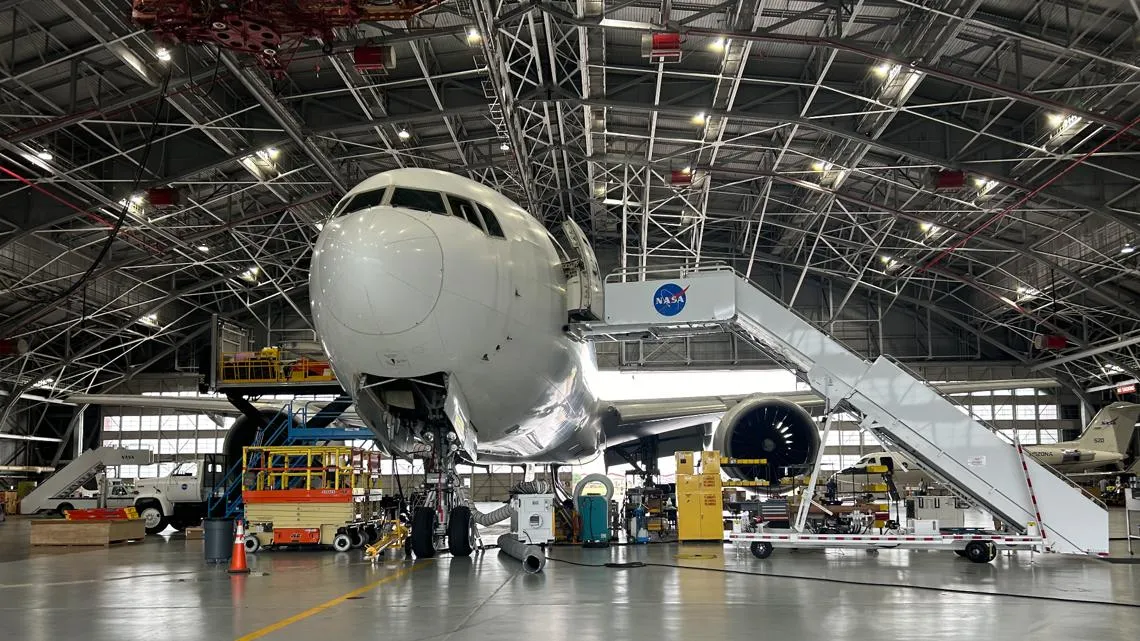
NASA has re-engineered a decommissioned Boeing 777, enabling it to function as a sophisticated airborne laboratory. This initiative aims to facilitate extensive scientific research by accommodating up to 100 scientists onboard. The project highlights the innovative repurposing of commercial aircraft for advanced scientific studies, leveraging the unique capabilities of high-altitude flight for environmental and atmospheric research.

The transformation involved extensive technological upgrades, using state-of-the-art equipment to allow researchers to conduct various experiments. Equipped with sophisticated sensors and instruments, the aircraft is designed to gather data on atmospheric conditions, including greenhouse gases and aerosols. This information is vital for understanding global climate change and its impact on weather patterns.

Adaptations made to the aircraft also include enhanced power systems and payload capacity, enabling it to support complex scientific operations. The modifications were executed by a team of engineers and scientists, ensuring that the aircraft meets strict safety and operational standards while maximising its research potential.

Scientific Objectives and Goals

The primary objective of repurposing the Boeing 777 is to conduct research focused on climate change and its ramifications. Researchers will gather crucial data that can inform climate models and impact assessments. This invaluable information will contribute to various environmental studies, assisting in the prediction of climate-related phenomena.

In particular, the airborne laboratory will focus on measuring air quality indicators and studying the distribution of pollutants in various atmospheric layers. Such data collection is crucial for developing strategies to mitigate air pollution and understand its health impacts on populations worldwide.

The initiative is expected to enhance the collaborative efforts of multiple research organisations, promoting a coordinated approach to climate research. By involving numerous scientists from diverse backgrounds, NASA aims to encourage knowledge sharing and foster innovative solutions to pressing environmental issues.

Future Prospects and Implications

The successful transformation of the Boeing 777 into an airborne laboratory not only reflects NASA’s commitment to advancing scientific research but also sets a precedent for future projects involving retired commercial aircraft. As the need for comprehensive studies on climate change intensifies, there are likely to be more initiatives that utilise existing resources to address urgent environmental challenges.

Furthermore, the project exemplifies the potential for collaboration between different sectors, including government, academia, and industry. By pooling resources and expertise, stakeholders can work towards shared objectives in tackling climate-related concerns.

Looking ahead, the insights gained from this airborne laboratory are expected to inform policymakers and contribute to international climate agreements. The project addresses the critical need for actionable data to support decision-making processes for environmental policies.

Long or Short, get news the way you like. No ads. No redirections. Download Newspin and Stay Alert, The CSR Journal Mobile app, for fast, crisp, clean updates!

App Store –  https://apps.apple.com/in/app/newspin/id6746449540 

Google Play Store – https://play.google.com/store/apps/details?id=com.inventifweb.newspin&pcampaignid=web_share

Latest News

Popular Videos
