


Lucknow Fire: Single Staircase and Blocked Exit Render Building a Death Trap
The CSR Journal Magazine

The recent tragic fire incident in Lucknow’s Aliganj area has resulted in the deaths of 15 individuals due to suffocation. The fire broke out on Monday afternoon in a three-storey building that featured a box-like structure, critically hindering evacuation efforts. The building was reported to have only a single entry and exit point, which was further obstructed by air-conditioning units, tangled wiring, and other equipment, significantly complicating escape as the fire rapidly escalated.

The design of the building posed severe risks to those inside. The lone access route quickly became congested as the fire intensified. Furthermore, the building incorporated a single narrow staircase linking the multiple floors, which restricted the movement of occupants as smoke permeated the premises.

Fire’s Origin and Rapid Spread

Initial reports suggest that the fire is believed to have originated on the first floor, which housed a pet shop. The basement was also utilized for storage and operational purposes by the same shop. Consequently, the flames spread swiftly to the upper levels, where a studio and a coaching centre were situated. The lack of multiple emergency exits exacerbated the situation, leaving occupants with limited avenues of escape once the smoke began to accumulate.

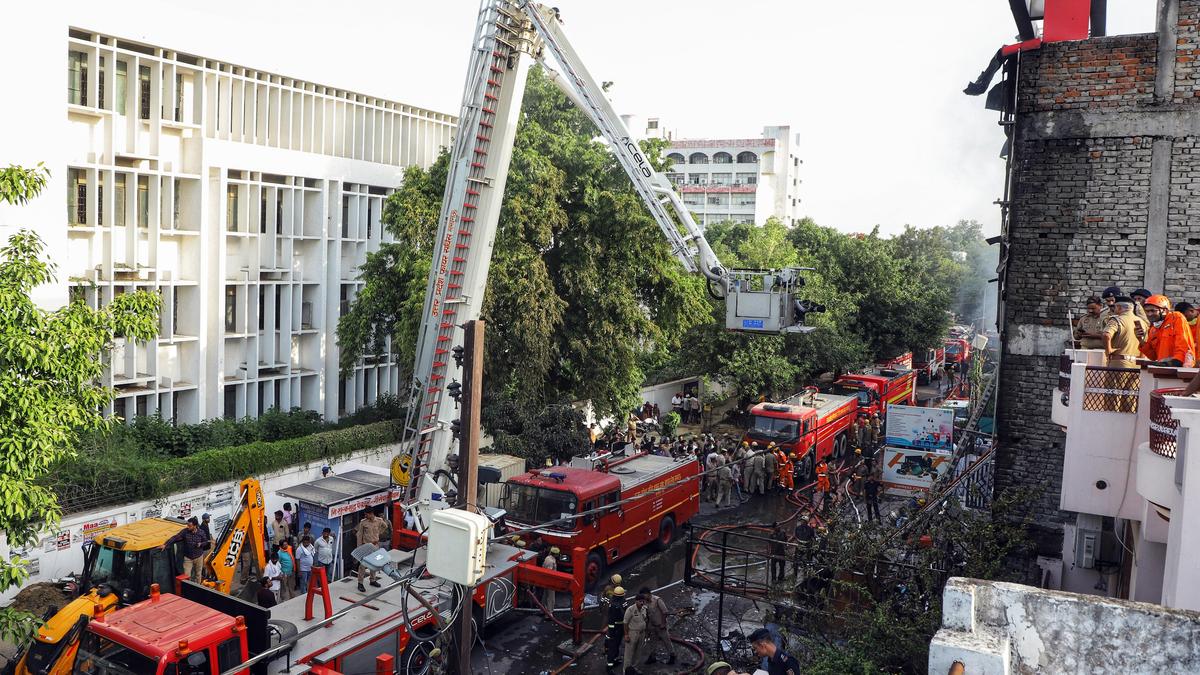
By the time rescue teams arrived on the scene, the building’s enclosed design had led to a significant build-up of thick smoke, rendering traditional rescue methods ineffective. Firefighters were compelled to employ hydraulic cutters, hammers, and drilling machines to access those trapped inside. This resulted in the creation of a sizable opening in a second-floor wall, which was shared with an adjacent structure.

Upon breaching the wall, a dense cloud of black smoke erupted, forcing rescuers to temporarily vacate the area until exhaust fans could be implemented to clear the air. This newly created passageway became a crucial route for transferring both survivors and victims, while emergency teams continued their efforts within the perilous environment of the smoke-filled building.

Emergency Response Challenges

Outside the building, firefighters made additional efforts by dismantling parts of the boundary wall to facilitate the entry of hydraulic platforms and multiple fire tenders. The narrow lanes of Aliganj posed significant challenges to emergency services, making timely access to the scene difficulty. More than a dozen fire tenders arrived to support rescue operations, although the structured layout of the area limited their effectiveness.

This tragic incident has raised serious concerns regarding building regulations and safety protocols. The building, purportedly approved for residential use, was reportedly functioning commercially in a designated residential area. This has prompted scrutiny of the Lucknow Development Authority and their oversight in permitting such operations in environments that lack proper safety measures.

Authorities will likely conduct a thorough investigation into the fire’s origins and the building’s compliance with safety regulations. The affected families are seeking answers regarding the circumstances that led to this devastating incident, while questions remain about the enforcement of existing safety codes in similar establishments across the city.

Long or Short, get news the way you like. No ads. No redirections. Download Newspin and Stay Alert, The CSR Journal Mobile app, for fast, crisp, clean updates!

App Store –  https://apps.apple.com/in/app/newspin/id6746449540 

Google Play Store – https://play.google.com/store/apps/details?id=com.inventifweb.newspin&pcampaignid=web_share

Latest News

Popular Videos
