


US Rules Out New Strikes on Iran, Focuses on Economic Pressure
The CSR Journal Magazine

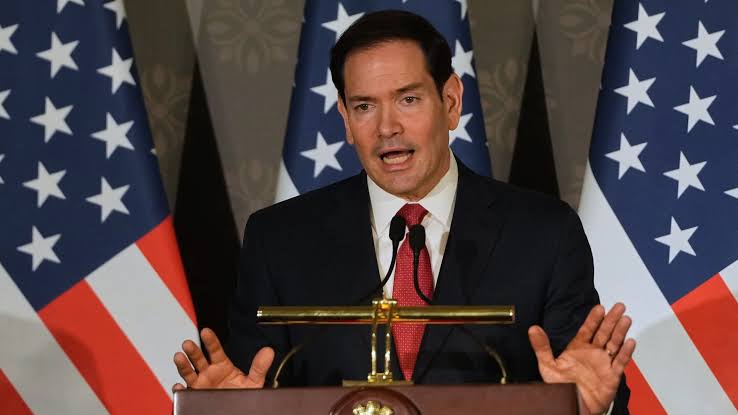
US Secretary of State Marco Rubio has informed several allied foreign ministers that the United States currently does not plan to conduct new military strikes against Iran. This indicates a shift towards economic measures and maritime enforcement while diplomatic efforts remain stagnant, according to a report by Axios.

US officials cited by Axios mentioned that Rubio communicated America’s intention to refrain from initiating military action against Tehran “for the time being.” Instead, the administration aims to enhance its leverage through naval blockades, economic sanctions, and the continued movement of petroleum through the critical Strait of Hormuz.

This strategic change is part of the Trump administration’s focus on pressuring Iran’s economy while steering clear of large-scale military engagements. Although Rubio indicated that Washington has no immediate plans for significant military operations, officials maintained that the military option remains available should Tehran take aggressive actions.

US operations near the Strait of Hormuz have reportedly diminished Iran’s ability to manipulate international energy markets. American forces have been involved in clearing mines from the area, which has led to an increase in tanker traffic utilizing the southern route of the strait.

Officials described this situation as significant, noting that Tehran’s ability to impede maritime energy flows has been considerably reduced. Additionally, US naval blockades have drastically lowered Iran’s oil exports, with very few tankers observed recently at Kharg Island, Tehran’s primary oil export terminal. State Department spokesman Tommy Pigott stated that the administration aims to dismantle what he termed as the Iranian regime’s remaining financial avenues, while reiterating President Donald Trump’s position that Iran must not acquire a nuclear weapon.

In parallel, the US has expanded its economic offensive against Iran, implementing additional sanctions and warning foreign nations engaged in commerce with Iran of potential severe consequences. Officials indicated that these policies could continue at least through the November midterm elections, with the possibility of reconsidering military options afterward.

The Iranian government has rejected the US strategy, condemning the measures intended to isolate its financial system as unlawful. Crude oil prices in global markets declined for a second consecutive day, as traders appeared to anticipate limited immediate disruptions due to the updated sanctions.

The ongoing conflict has resulted in thousands of fatalities, primarily in Iran and Lebanon, and US and Israeli military operations have significantly weakened Tehran’s conventional military capabilities. However, the exact state of Iran’s nuclear infrastructure remains uncertain.

Amid escalating tensions, Iran and Oman have engaged in discussions about managing maritime transit in the Strait of Hormuz, including plans to establish a temporary navigational corridor and cooperate in mine clearance efforts in the waterway, which has faced disruptions to regular commercial shipping.

Despite a relative decrease in major direct confrontations between the US and Iran, high-level diplomatic avenues for a lasting resolution remain obstructed. Maritime risks continue, highlighted by a recent report from the United Kingdom Maritime Trade Operations regarding an oil tanker struck by an unidentified projectile near Oman’s Ash Shishah.

US President Donald Trump has affirmed that sea mines in the strait have been cleared, attributing the increase in tanker traffic to Tehran’s loss of leverage over the waterway. Diplomatic efforts are ongoing through informal channels, despite the lack of direct negotiations between the US and Iran.

On Sunday, Pakistan Army Chief Asim Munir visited Tehran for talks with Iranian leaders and reportedly discussed proposals with Trump prior to his trip. While the White House did not deny Trump’s conversation with Munir, officials stated that active negotiations with Tehran are not taking place. Concurrently, the US has begun to restore diplomatic personnel at certain Middle Eastern missions that were previously reduced during periods of heightened conflict, indicating a belief that the immediate threat of escalation has decreased, although some bases and embassies continue to operate with limited staff.

Long or Short, get news the way you like. No ads. No redirections. Download Newspin and Stay Alert, The CSR Journal Mobile app, for fast, crisp, clean updates!

App Store –  https://apps.apple.com/in/app/newspin/id6746449540 

Google Play Store – https://play.google.com/store/apps/details?id=com.inventifweb.newspin&pcampaignid=web_share

Latest News

Popular Videos
