


Lost Wonder Found Underwater As 80-Ton Stones Reveal Secrets Of The Lighthouse Of Alexandria
The CSR Journal Magazine

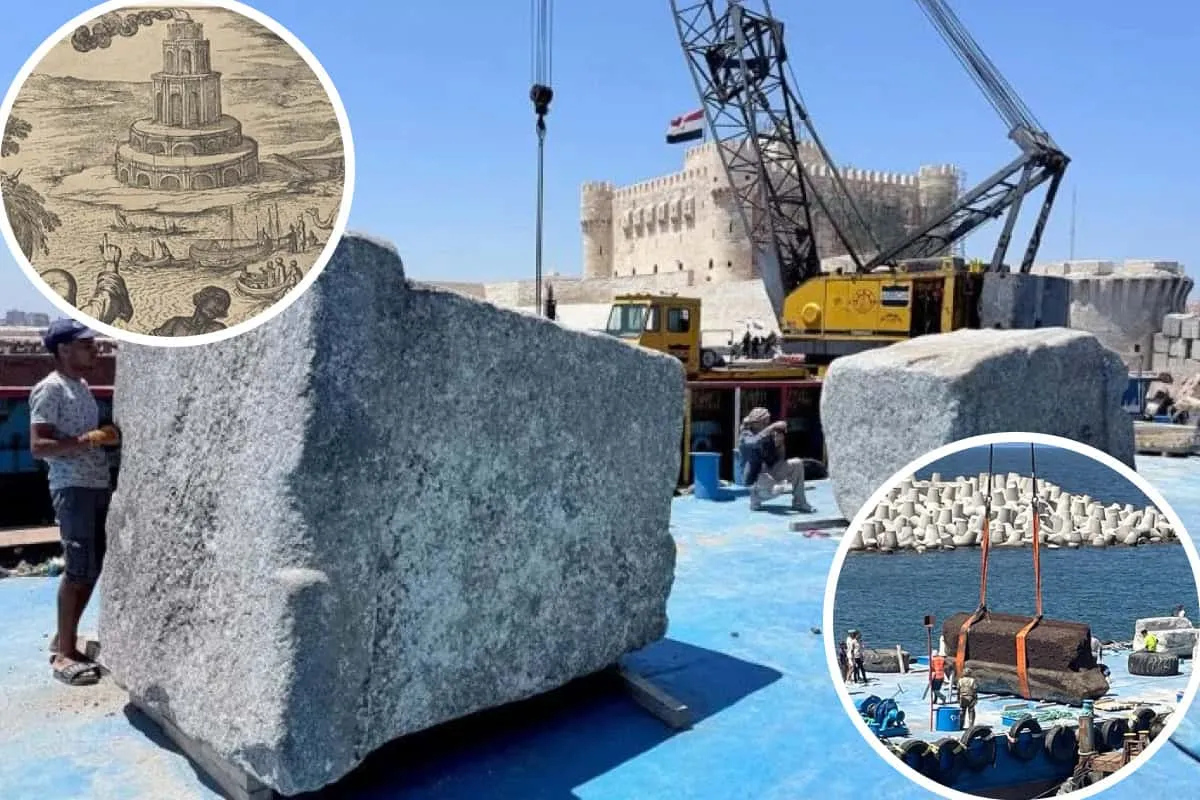
The recent discovery of massive 80-ton stones off the coast of Alexandria is sparking interest among archaeologists and historians. These submerged relics are believed to be remnants of the Lighthouse of Alexandria, one of the Seven Wonders of the Ancient World. The stones were recovered from a site known for its underwater excavations, highlighting the enduring historical significance of this famous structure.

The Lighthouse, completed around 280 BC, served as a landmark and a guide for sailors navigating the busy trade routes of the Mediterranean Sea. Standing tall on the small island of Pharos, it was constructed by the Greek architect Sostratus of Cnidus. The discovery raises questions regarding the exact construction techniques and materials used during that time period.

Historical Context and Significance

The archaeological site where the stones were found has been a focal point for researchers eager to explore the long-lost wonders of ancient civilisations. The Lighthouse of Alexandria was renowned for its impressive height, estimated to be around 100 metres. It was adorned with statues and an elaborate design that served not only a practical function but also a symbolic one, representing the city of Alexandria itself.

Researchers believe that the recently discovered stones could provide key insights into the architectural methods employed by ancient builders, as well as their cultural and technological innovations. The size and weight of these stones suggest that the construction methods may have been more advanced than previously thought. The elucidation of these ancient techniques could reshape current understanding of Hellenistic engineering.

This discovery could also enhance the narratives surrounding maritime trade in the ancient world. Alexandria was a hub of commerce, and the Lighthouse played a crucial role in facilitating the movement of goods and vessels. It is expected that further studies of these stones will help to illuminate the economic strategies of ancient societies.

Methods of Recovery and Analysis

The process of recovering these stones involved sophisticated underwater archaeology techniques, utilising diving equipment and remote-operated vehicles. Teams of researchers from various institutions collaborated in the endeavour, employing modern technology to map the site accurately. This multidisciplinary approach is aimed at ensuring both preservation and detailed analysis of the findings.

Upon recovery, the stones will undergo extensive examination to ascertain their origin and how they were incorporated into the original structure. Scientific analyses may also include dating techniques to provide a clearer historical timeline related to the Lighthouse’s construction and eventual degradation. This meticulous study aims to offer a comprehensive understanding of the site’s historical significance.

In the broader context of underwater archaeology, this finding emphasises the importance of ongoing exploration and research. As more ancient structures are uncovered, the field’s understanding of cultural exchanges and advancements in engineering will continue to evolve. This discovery is a reminder of the rich tapestry of human history waiting to be uncovered beneath the waves.

Long or Short, get news the way you like. No ads. No redirections. Download Newspin and Stay Alert, The CSR Journal Mobile app, for fast, crisp, clean updates!

App Store –  https://apps.apple.com/in/app/newspin/id6746449540 

Google Play Store – https://play.google.com/store/apps/details?id=com.inventifweb.newspin&pcampaignid=web_share

Latest News

Popular Videos
