


Indians Comprise 25% of AI Leaders at Trump’s Super Intelligence Meeting, Raises Questions About India’s Position

The CSR Journal Magazine

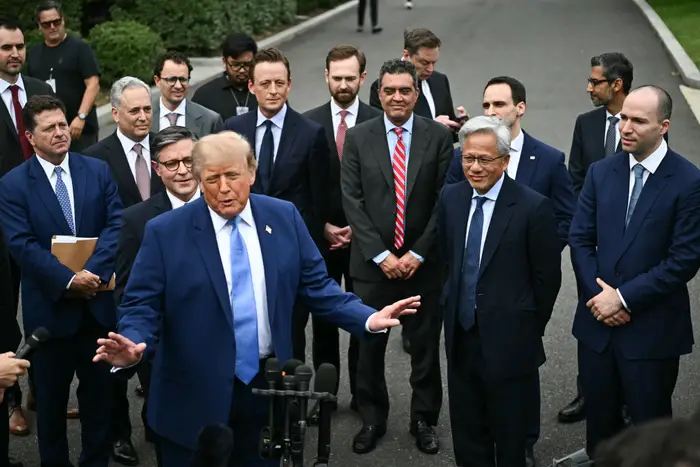
A recent gathering in Washington showcased a significant concentration of influential figures in the field of artificial intelligence. Notably, the meeting held on September 29 at the White House brought together top executives from major tech companies such as Nvidia, Google, Microsoft, Meta, and OpenAI. Among these prominent leaders, several individuals with roots in India were present. Harsh Goenka, in a post on X, highlighted that Indians constituted approximately twenty-five per cent of those attending, contrasting with around forty-five per cent from the United States and the remaining representatives from other countries.

This gathering was not merely an industry networking event; it served to address the government’s direction regarding artificial intelligence technologies. President Donald Trump signed a significant executive order, mandating federal agencies to adopt the term “Super Intelligence” in lieu of “Artificial Intelligence.” A critical element of this meeting included the signing of a voluntary Joint Commitment on Frontier Responsibilities, comprising a framework to manage advanced AI operations while addressing associated risks.

The agreement delineated four key layers of control, emphasizing internal monitoring of AI models, the establishment of dedicated teams for oversight, independent external evaluations, and the formation of a board committee to review findings. These discussions also encompassed the building of data centres and the necessary infrastructure to support AI development, linking it directly to national economic competitiveness.

The Indian Talent Conundrum

India has long been recognised for its pool of talent in science and technology, particularly in engineering and software development. The country’s educational institutions have produced numerous individuals capable of excelling in advanced technological fields. However, there exists a critical issue: while India supplies skilled professionals, it lacks the comprehensive environment required for innovation and entrepreneurship.

Successful innovation in technology often requires more than just talent. It necessitates adequate laboratories for scientists, financial resources for entrepreneurs, a customer base for companies, and supportive institutional frameworks for emerging industries. Silicon Valley exemplifies a thriving ecosystem that integrates all these elements, whereas India possesses some of the necessary components but has struggled to connect them effectively.

This disparity has led to a trend where many Indian engineers seek opportunities abroad for education and employment, leading to their eventual integration into the very establishments that dominate discussions in influential circles such as the White House. While the Indian education system has generated the talent pool, the American infrastructure has provided the essential conditions for its realisation and growth.

Current Initiatives in India

Despite these challenges, efforts are underway to foster a more conducive environment for technology and innovation within India. The IndiaAI Mission, approved in 2024, aims to enhance accessibility to computing resources, comprehensive datasets, advanced research, foundational models, and financing for startups. By 2026, over 38,000 graphics processing units (GPUs) have been made available as part of a collaborative computing programme to support national initiatives.

Moreover, Indian teams are being encouraged to develop local AI models, promoting indigenous research and innovation. However, the underlying challenge remains the necessity to create an ecosystem wherein engineers can thrive without migrating abroad. This involves enabling them to experiment, learn from failures, raise capital, and ultimately construct enterprises capable of significant impact in the industry.

The recent gathering at the White House serves as an important reminder of the capabilities of Indian talent and the context in which this talent operates. It underscores the need for India to cultivate an environment that nurtures innovation and supports the comprehensive development of technology, allowing the nation to harness its potential effectively.

Long or Short, get news the way you like. No ads. No redirections. Download Newspin and Stay Alert, The CSR Journal Mobile app, for fast, crisp, clean updates!

App Store –  https://apps.apple.com/in/app/newspin/id6746449540 

Google Play Store – https://play.google.com/store/apps/details?id=com.inventifweb.newspin&pcampaignid=web_share

Latest News

Popular Videos