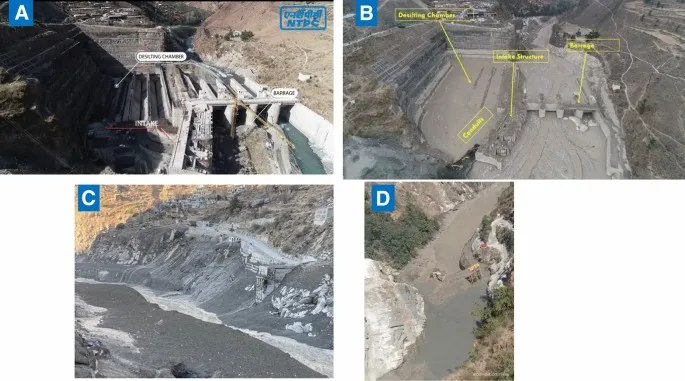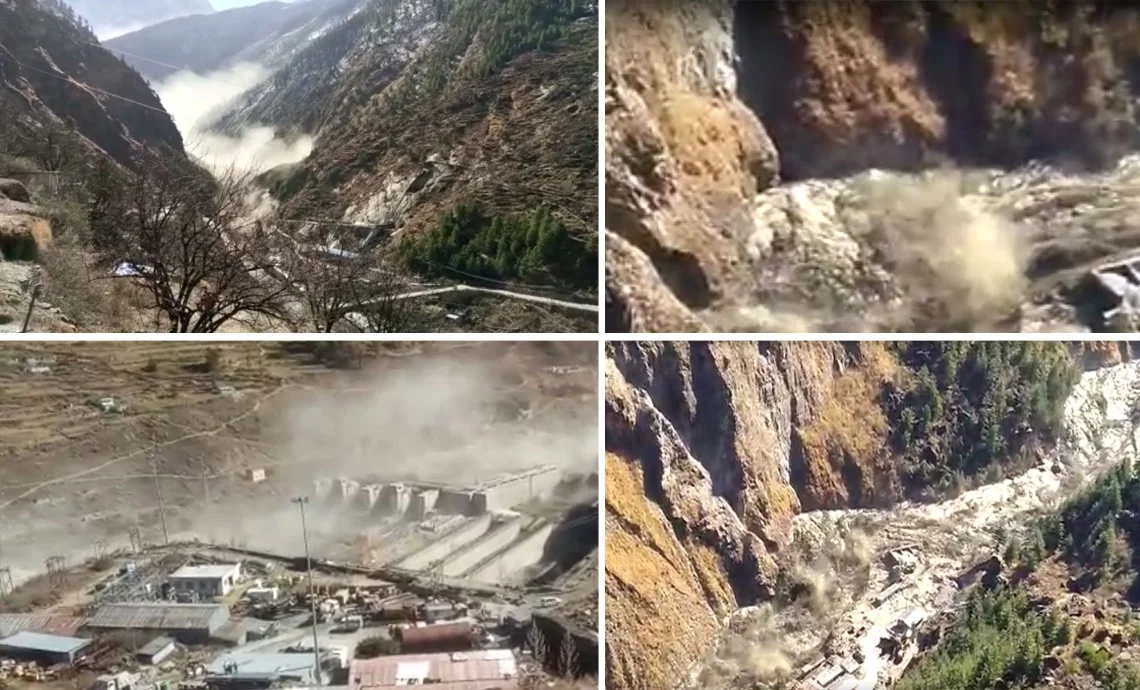

A team of researchers from the Indian Institute of Science, the Defence Research and Development Organisation (DRDO), and IIT-Bhubaneswar has reported the discovery of more than 200 potentially unstable hanging glaciers in the Central Himalayas. This discovery poses a growing, yet often overlooked, threat to local communities and vital infrastructure in Uttarakhand. The findings were published in the journal npj Natural Hazards, emphasising the Alaknanda river basin, which has experienced a series of disasters in recent years, including flash floods and landslides.
Hanging glaciers differ from their larger valley counterparts, as they precariously cling to steep slopes, often suspended above valleys. The sudden collapse of these glaciers can lead to significant events such as avalanches, debris flows, and glacial lake outburst floods. Through the utilisation of satellite imagery, terrain analysis, and hazard modelling, the researchers created a detailed inventory of these glaciers within the Indian Himalayas.
Mapping Findings and Their Implications
The comprehensive study revealed that many of the mapped hanging glaciers are situated above populated valleys, roads, and hydropower facilities. Importantly, the research indicates that while some glaciers lie above other ice masses, reducing the immediate risk of collapse, several are positioned directly over exposed slopes or river valleys, significantly increasing their danger to nearby human settlements.
The areas surrounding Joshimath and Vishnuprayag have been identified as critical hotspots where clusters of large hanging glaciers coincide with dense human activities. Already regarded as geologically fragile, these regions face heightened risks due to the presence of unstable ice masses, which could exacerbate the severity of future disasters.
This study also underscores the influence of climate change on glacier instability. The rise in temperatures is weakening glacier structures, while freeze-thaw cycles are making slopes more susceptible to failure. Expanding infrastructure, such as roads and hydropower projects, further increases exposure to these high-risk zones.