


India’s Limited Nobel Laureate Count Sparks Inquiry
The CSR Journal Magazine

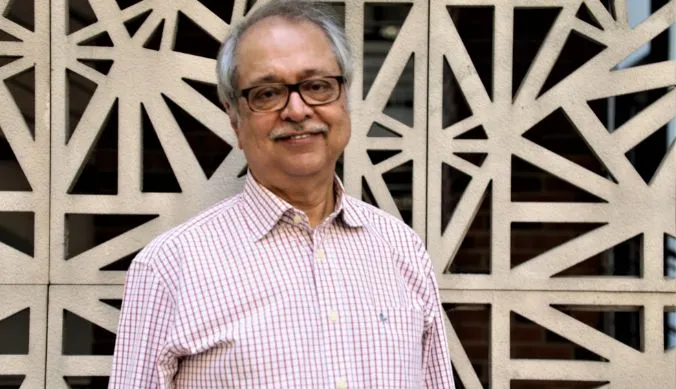
Rudrangshu Mukherjee, Chancellor and Professor of History at Ashoka University, has released a significant work titled *A Touch Of Genius: The Wisdom of India’s Nobel Laureates*, published by Aleph Books. This book compiles the accomplishments and contributions of the nine Indian Nobel laureates, which include prominent figures such as Rabindranath Tagore, C.V. Raman, Har Gobind Khorana, Mother Teresa, Subrahmanyan Chandrasekhar, Amartya Sen, Venkatraman Ramakrishnan, Kailash Satyarthi, and Abhijit V. Banerjee. The compilation showcases an array of formats, such as essays, poems, prayers, and tales that reflect the laureates’ diverse fields ranging from literature to science and activism.

Understanding the Nobel Prize Landscape

In the introduction, Mukherjee raises a pertinent question regarding the notably low number of Indian Nobel laureates, particularly given the country’s vast population and talent pool. He suggests that the initial disparity in representation stemmed from a Western bias prevalent during the early years of the prize, which was established in 1901. A significant oversight noted by Mukherjee is the absence of Mohandas Karamchand Gandhi from the Nobel Peace Prize recipients, an exclusion seen as comparable to that of renowned author Leo Tolstoy in the sphere of literature. Additionally, he highlights the disregard for other esteemed Indian scientists, such as J.C. Bose, S.N. Bose, and Meghnad Saha, who also went unrecognised.

Mukherjee indicates that these omissions might reflect deeper issues within the Nobel Committee’s decision-making, suggesting a lack of judgment that could stem from cultural biases. He quotes Venkatraman Ramakrishnan, who pointed out that the entire award system, including the Nobel Prize, is afflicted by cronyism, which further complicates the landscape of merit and recognition.

While the Western bias associated with the Nobel Prizes has reportedly diminished over the latter half of the twentieth century and into the twenty-first century, Mukherjee questions why Indian laureates continue to be few. He asserts that relying solely on conspiracy theories regarding Western bias fails to address more substantial reasons for this issue that warrant consideration.

Reevaluating the Educational Framework

According to Mukherjee, the educational institutions in India, including schools, colleges, and universities such as the IITs, need to critically assess their pedagogical approaches. Concerns have been raised about the emphasis on rote learning rather than fostering independent and critical thought, which is essential for cultivating a generation capable of producing Nobel-worthy contributions. He suggests that the fundamental goal of education should revert to enriching minds rather than being strictly transactional, focused merely on job placements.

Mukherjee posits that societal expectations often associate success solely with material gains, which could divert students from pursuing knowledge and creativity. He cautions that this fixation might stifle originality in the sciences and lead to a superficial engagement with the humanities, becoming overly influenced by contemporary trends.

The prevailing sentiment among students echoes this concern, as evidenced by a commentary from a young physics student, Arpan Malakar, who expressed his intention to pursue opportunities outside India to realise his potential. Malakar highlighted India’s minimal public expenditure on research and development, which stands at approximately 0.6 to 0.7 per cent of GDP, in stark contrast to the significantly higher investments of around 3.4 per cent and 2.6 per cent by the United States and China respectively. This underfunding, compounded by mismanagement and misdirection within the educational system, is viewed as a critical barrier to generating more Nobel laureates from India.

Long or Short, get news the way you like. No ads. No redirections. Download Newspin and Stay Alert, The CSR Journal Mobile app, for fast, crisp, clean updates!

App Store –  https://apps.apple.com/in/app/newspin/id6746449540 

Google Play Store – https://play.google.com/store/apps/details?id=com.inventifweb.newspin&pcampaignid=web_share

Latest News

Popular Videos
