


India Eyes Greater Market Access In BRICS To Boost Exports And Narrow Trade Gap
The CSR Journal Magazine

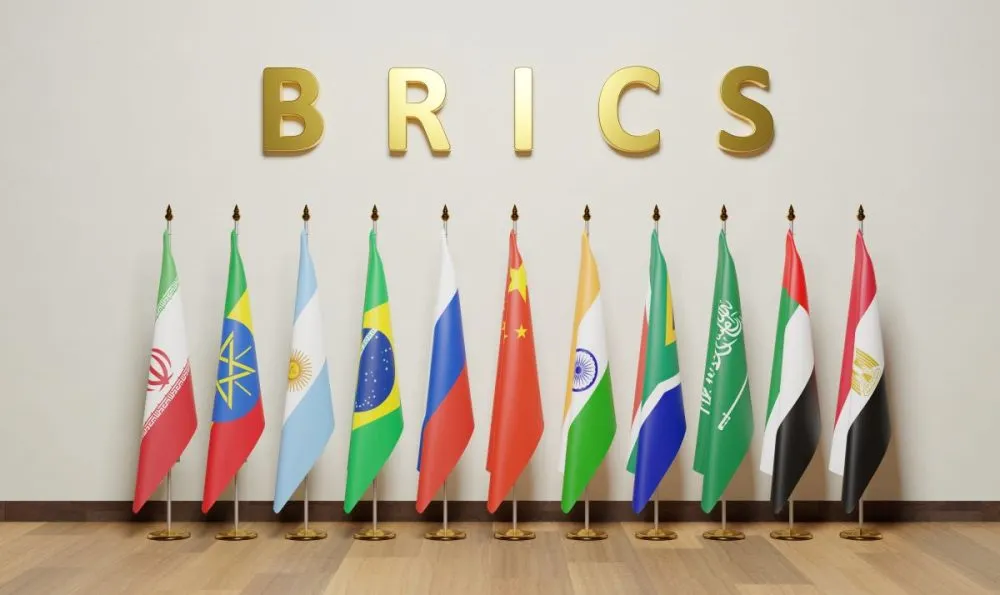
India is likely to raise market access concerns with its BRICS partners at upcoming meetings as New Delhi seeks to expand bilateral trade and create greater opportunities for Indian exporters.

Although India’s trade with BRICS countries has grown, imports have increased far more rapidly than exports. BRICS partners accounted for 41.5% of India’s merchandise imports and 21.7% of its merchandise exports in FY 2025-26, CNBC TV18 reported, citing government sources.

BRICS Trade Deficit Reaches $226.1 Billion

India’s merchandise imports from BRICS countries stood at $321.8 billion in FY 2025-26, compared with exports of $95.7 billion, resulting in a trade deficit of $226.1 billion.

Nearly half of the overall deficit was accounted for by China, making market access and trade imbalances with Beijing a key concern for New Delhi.

India is expected to use discussions with BRICS partners to press for greater access for its goods while seeking to address barriers that have limited the growth of its exports.

China Accounts For Nearly Half Of Trade Gap

India’s trade deficit with China stood at $112.16 billion in FY 2025-26, while total bilateral trade between the two countries was valued at $151.1 billion.

Trade between India and China reached $91.72 billion during the first six months of the current financial year, with India’s deficit during the period standing at $67.1 billion.

India’s imports from China amounted to $131.63 billion in FY 2025-26, accounting for nearly 17% of the country’s total merchandise imports.

New Delhi has continued to engage Beijing on market access issues. China, meanwhile, has alleged that India’s import restrictions on products such as solar panels are inconsistent with World Trade Organisation norms.

Growth And Manufacturing Drive Chinese Imports

The Ministry of Commerce and Industry has told Parliament that India’s dependence on Chinese imports is linked to the country’s rapid economic expansion, industrialisation, urbanisation, growing manufacturing base and deeper integration with global value chains.

India’s imports include key materials such as lithium, cobalt, nickel, graphite, copper and rare earth elements, which are used in clean energy technologies, electric vehicles, electronics and semiconductor manufacturing.

Imports of intermediate products, capital equipment and advanced technologies also support sectors such as pharmaceuticals, fertilisers, energy, advanced manufacturing and infrastructure, according to the ministry.

India’s principal exports to China over the past five years have included iron ore, light naphtha, p-xylene, shrimps and castor oil.

Machinery And Electronics Dominate China’s Exports

The Embassy of India in Beijing has said that India’s exports of raw material-based commodities have increasingly been overshadowed by Chinese exports of higher-value manufactured and technology products.

These include machinery, electronics, personal computers, monolithic integrated circuits, components for telephonic and telegraphic equipment, lithium-ion products and fertilisers.

The composition of bilateral trade has added to concerns in New Delhi over the widening imbalance and the need to expand India’s access to the Chinese market.

India Seeks To Narrow Russia Trade Gap

Russia is another major focus for India’s market access efforts, with New Delhi looking to reduce a trade deficit of more than $50 billion.

India has urged Moscow to address non-tariff barriers affecting exports of electronics, electrical goods and automobiles.

New Delhi is seeking greater access for a wider range of Indian products, including pharmaceuticals, chemicals, engineering goods, machinery, automobiles, agricultural products and marine goods.

India and Russia are also working to expand trade settled in rupees and roubles as part of broader efforts to increase bilateral economic engagement.

Crude Oil Dominates India-Russia Trade

Crude oil accounts for around 80% of Russia’s exports to India, underlining the imbalance in the structure of bilateral trade.

India’s goods exports to Russia were valued at $4.88 billion in FY 2025, while the two countries have set a target of raising bilateral trade to $100 billion by 2030.

Government sources indicated in December 2025 that India could also explore a separate agreement on services with Russia, given that the Eurasian Economic Union, or EAEU, is a customs union and existing trade arrangements do not cover services.

Non-Tariff Barriers Remain A Key Concern

India has flagged more than 65 non-tariff barriers affecting its marine exports and is also seeking to resolve obstacles faced by pharmaceutical companies seeking access to EAEU markets.

Sources have identified four key barriers for Indian pharmaceutical exporters: registration procedures, clinical trial requirements, market access restrictions and price registration.

India is also seeking to reduce regulatory overlaps involving Russian, EAEU and European standards.

Work is underway to provide greater clarity on labelling rules for products that require Russian-language information on packaging or within packaging.

Trade Pact Talks To Cover Wider Issues

India is not keen on including gold and precious metals in a proposed trade agreement with the EAEU.

Earlier discussions between the two sides focused on identifying sensitivities, deciding the frequency of negotiations and determining products for which both sides want to expand trade.

Any negotiations on a free trade agreement with the bloc are likely to cover customs administration, e-commerce, intellectual property rights, sanitary and phytosanitary measures, tariffs and technical regulations.

Local Currency Trade And Labour Mobility On Agenda

Officials in the Ministry of External Affairs have said the central banks of India and Russia are discussing a mechanism to settle trade in their respective local currencies.

The document for an agreement on labour mobility between India and Russia has also been finalised, with both countries completing the processes required before signing it.

As New Delhi prepares for further engagement with its BRICS partners, its focus is expected to remain on expanding market access, removing non-tariff barriers and strengthening opportunities for Indian exporters as imports from the grouping continue to outpace exports.

Long or Short, get news the way you like. No ads. No redirections. Download Newspin and Stay Alert, The CSR Journal Mobile app, for fast, crisp, clean updates!

App Store –  https://apps.apple.com/in/app/newspin/id6746449540 

Google Play Store – https://play.google.com/store/apps/details?id=com.inventifweb.newspin&pcampaignid=web_share

Latest News

Popular Videos
