


BRICS Leaders Emphasise Multilateralism, UN Reforms, and Peaceful Conflict Resolution
The CSR Journal Magazine

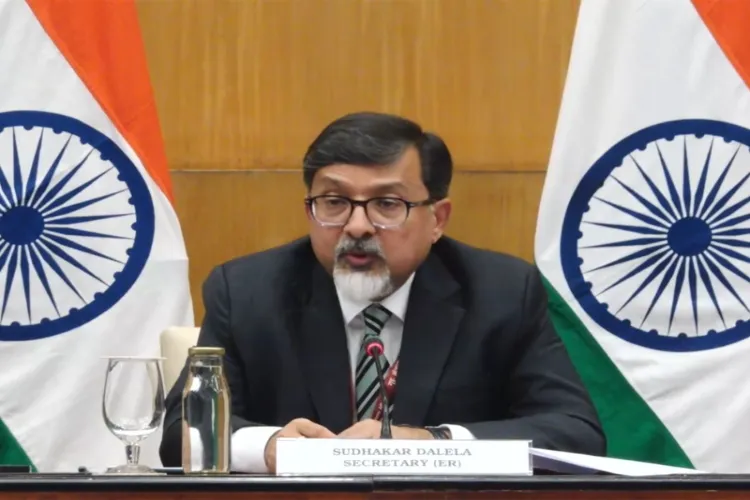
BRICS leaders convened to address the pressing need for enhanced multilateralism and efforts to reform global governance institutions for better representation and responsiveness. Sudhakar Dalela, Secretary for Economic Relations in the Ministry of External Affairs, articulated this consensus following the member session of the 18th BRICS Leaders’ Summit held in New Delhi. He expressed that the discussions aimed at promoting a stronger voice for the Global South while focusing on development-oriented outcomes.

During the briefing, Dalela celebrated the significance of India’s chairmanship, which commenced in January, as BRICS approaches its 20th anniversary. He reaffirmed the group’s commitment to the themes of resilience, innovation, cooperation, and sustainability, illustrating India’s strategic leadership under Prime Minister Narendra Modi.

The session welcomed leaders from the BRICS member nations, marking a milestone in international collaboration. The attendance demonstrated the global community’s growing belief in BRICS as an influential platform for dialogue and cooperation, especially among developing nations.

Focus on Global Governance Reform

Discussions at the member session revealed a broad agreement among BRICS leaders on the necessity of strengthening global governance frameworks and making them more inclusive. Dalela noted that while leaders shared insights from their national perspectives, there was a unified call for reforming the United Nations and enhancing the representation of developing countries in critical decision-making processes.

The leaders underscored the essential reforms needed for the UN Security Council, advocating for greater inclusion of developing nations. They voiced the need for changes in the international financial architecture to amplify the voice of the Global South, reflecting evolving geopolitical realities and fostering equitable development.

Simultaneously, the leaders engaged in discussions surrounding the current geopolitical tensions, including ongoing conflicts and economic challenges. They highlighted the importance of dialogue and diplomatic efforts to resolve disputes peacefully, demonstrating a collective commitment to stability and cooperation.

New Delhi Declaration and Future Directions

At the summit, the BRICS nations adopted the New Delhi Declaration 2026, expressing deep concern over escalating tensions in regions such as West Asia. The declaration called for restraint and urged the protection of civilians while encouraging diplomatic dialogue for long-term peace and security. It also addressed the need for maintaining smooth global trade, supply chains, and energy flows in accordance with international law.

In light of the growing risks of nuclear conflict, the declaration advocated for revitalising disarmament and arms control initiatives. It also recognised September 12 as United Nations Day for South-South Cooperation, aligning with the summit’s discussions on the role of emerging economies in shaping a better global order.

Prime Minister Modi proposed ten initiatives aimed at reforming global governance, seeking to position the Global South as a proactive participant in international dialogues. He stressed the necessity for BRICS to play a pivotal role in promoting equitable representation in global decision-making frameworks, particularly concerning the UN Security Council and financial institutions to adapt to current economic dynamics.

Long or Short, get news the way you like. No ads. No redirections. Download Newspin and Stay Alert, The CSR Journal Mobile app, for fast, crisp, clean updates!

App Store –  https://apps.apple.com/in/app/newspin/id6746449540 

Google Play Store – https://play.google.com/store/apps/details?id=com.inventifweb.newspin&pcampaignid=web_share

Latest News

Popular Videos
