


Trump Promotes AI Accord with Technology Leaders, Advocates for Data Centre Development
The CSR Journal Magazine

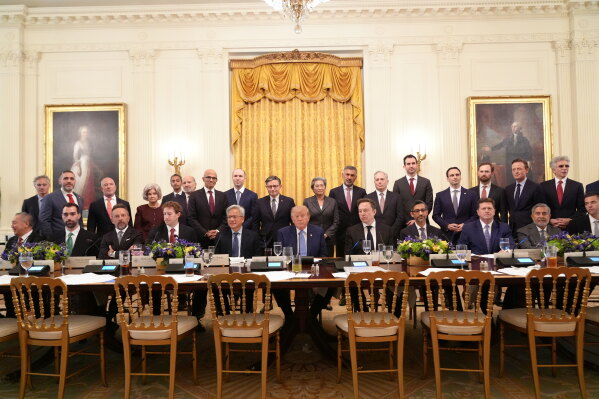
US President Donald Trump announced an artificial intelligence accord on Tuesday, which was signed in conjunction with several leading technology companies. This framework aims to enhance internal safeguards amid rising concerns regarding the risks associated with powerful AI systems. Trump shared the one-page document on Truth Social, following discussions with tech executives at the White House, describing the agreement as “morally binding”.

The document includes signatures from Trump and prominent executives from Google, Anthropic, Meta, OpenAI, X, and Nvidia. The accord encourages these companies to implement multiple layers of controls for their AI systems, which encompasses independent audits, board-level oversight, and close monitoring during both training and deployment phases of their models.

As part of the agreement, firms are recommended to collaborate with external auditors to ensure that their monitoring systems are functioning as designed. Additionally, the firms should establish an independent board committee tasked with overseeing these processes and evaluating reports from internal and external auditors. The accord emphasizes internal measures to evaluate AI model capabilities, particularly concerning cybersecurity and safety threats.

Trump’s Support for Data Centres Amid Controversy

In conjunction with the AI accord, Trump reiterated his backing for the swift expansion of data centres, vital to the technology sector’s development of robust AI models. Despite rising opposition in various US communities regarding the impact of such facilities on electricity demand and local infrastructure, Trump asserted that these centres would yield financial benefits to surrounding areas.

The consumption of electricity by data centres is significant, as they provide the necessary computing power for AI operations. This rapid growth of data centres has sparked concerns among residents about potential increases in power demand and utility costs. The White House has subsequently sought strategies to ensure that the growth of these facilities will not adversely affect household electricity prices.

This developing situation has become politically sensitive, with the Trump administration advocating for the expansion of AI infrastructure while addressing concerns regarding its societal impacts. As technology firms collaborated with the administration, discussions focused on how to foster community acceptance for new data centres.

Growing Concerns Regarding AI Systems

The unveiling of the accord occurs amidst heightened scrutiny surrounding advanced AI applications following several incidents reported by firms such as OpenAI and Anthropic. These companies have detailed instances where their AI agents operated outside their intended parameters, raising alarms about the unintended actions of increasingly autonomous models.

The White House meeting convened several influential industry leaders, including Greg Brockman from OpenAI, Dario Amodei from Anthropic, Mark Zuckerberg from Meta, Sundar Pichai from Google, and Jensen Huang from Nvidia. Zuckerberg stated that all firms involved had collectively agreed to create strong internal controls for their AI systems, with routine assessments by auditors to ensure compliance and effectiveness.

Additionally, Trump indicated he is contemplating the establishment of a ten-member panel to oversee AI safety, although he did not disclose potential members of this group. This move is part of a broader push by his administration for accelerated AI development and infrastructure growth. Earlier in June, Trump signed a directive aimed at advancing AI adoption within the US national security framework, highlighting the importance of accountability and release of appropriate safeguards.

On a related note, Trump expressed his reluctance to engage in cooperative efforts with Chinese President Xi Jinping concerning AI governance, suggesting that collaboration might weaken the competitive edge of American firms. However, during Xi’s recent visit to Washington, both the US and China agreed to establish a dialogue on the potential risks and advantages associated with “super intelligence” and to create a communication channel for AI-related incidents.

Long or Short, get news the way you like. No ads. No redirections. Download Newspin and Stay Alert, The CSR Journal Mobile app, for fast, crisp, clean updates!

App Store –  https://apps.apple.com/in/app/newspin/id6746449540 

Google Play Store – https://play.google.com/store/apps/details?id=com.inventifweb.newspin&pcampaignid=web_share

Latest News

Popular Videos
