


India, EU to Sign Free Trade Agreement by End of 2026, Says Ursula von der Leyen
The CSR Journal Magazine

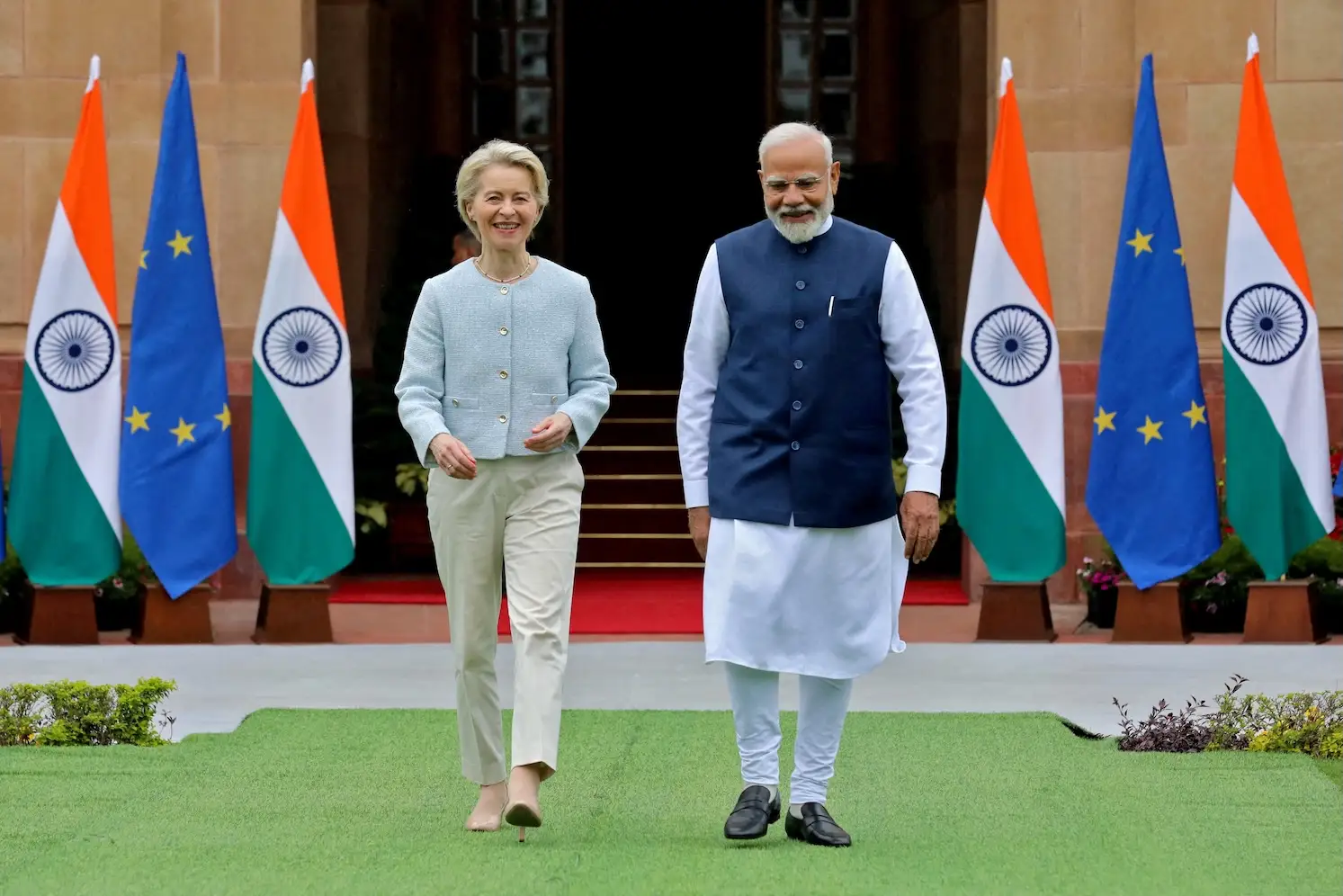
India and the European Union will sign their long-awaited free trade agreement by the end of this year, European Commission President Ursula von der Leyen said on Wednesday following talks with Prime Minister Narendra Modi on the sidelines of the G7 Summit in Évian, France. The two sides also agreed to intensify cooperation in defence and security and advance connectivity initiatives amid an increasingly uncertain global environment.

The meeting, which was also attended by European Council President Antonio Costa, focused on strengthening economic engagement and accelerating implementation of agreements reached earlier this year. Both sides highlighted the importance of the trade pact in boosting investment flows and diversifying supply chains at a time of geopolitical turbulence.

Trade Deal Set for Completion This Year

Following the meeting, Von der Leyen said the two sides were moving swiftly to deliver on commitments made after concluding negotiations for what has been described as the “mother of all trade deals”.

“Since we have concluded the mother of all trade deals, we have been moving fast to deliver on our commitments. We will sign the Free Trade Agreement by the end of the year. And accelerate work on an investment agreement,” she said in a post on social media.

Costa shared an identical message, adding that India and the EU would also strengthen cooperation in areas beyond trade.

According to an Indian readout, the leaders stressed the need for the expeditious signing and implementation of the agreement, noting that it would create significant opportunities for trade and investment while helping diversify supply chains in the current geopolitical climate.

India and the European Union had announced the conclusion of negotiations for the landmark agreement following Prime Minister Modi’s summit meeting with the EU leadership in New Delhi on January 27.

Officials said the agreement, covering economies that together account for nearly a quarter of global GDP, would eliminate tariffs on 99 per cent of Indian exports to the European Union and reduce duties on more than 97 per cent of European exports to India.

The EU estimates that European exporters could save up to four billion euros annually in tariffs once the agreement comes into force.

Economic and Strategic Partnership in Focus

Prime Minister Modi said discussions with the EU leaders centred on expanding economic ties and strengthening cooperation in an evolving global environment.

“At the start of this year, India was proud to host them for our Republic Day celebrations. This has been a great time for India-EU ties as we have concluded the Free Trade Agreement,” the Prime Minister said on social media.

“During our talks, we discussed how to further deepen economic linkages in the times to come. Our growing cooperation can play an important role in strengthening peace, stability and prosperity in today’s global environment,” he added.

The Ministry of External Affairs (MEA) said the three leaders recalled the outcomes of the 16th India-EU Summit held in January and welcomed the progress achieved in bilateral ties since then.

“The leaders emphasised the recent conclusion of negotiations for the India-EU free trade agreement as a historic achievement and stressed its expeditious signing and implementation, which would unlock huge opportunities for trade and investment and contribute towards diversification of supply chains, particularly in the current turbulent geopolitical context,” the MEA said.

India and the European Union also reviewed progress on the Joint India-EU Comprehensive Strategic Agenda endorsed earlier this year.

“As the world’s two largest democracies, with open market economies and pluralistic societies, India and the EU share a relationship based on trust, shared values and a common vision for the future,” the ministry said.

It added that both sides believed the strategic agenda would further strengthen the partnership and deliver “mutually beneficial and transformative outcomes”.

Defence Cooperation and Regional Issues Discussed

Von der Leyen said India and the EU would enhance cooperation in the security and defence sectors and work together to improve connectivity through the India-Middle East-Europe Corridor (IMEC).

“We will also step up security & defence cooperation. And join forces for better connectivity by advancing IMEC, the India-Middle East-Europe Corridor,” she said.

At their summit in January, India and the EU had unveiled a five-year roadmap aimed at strengthening cooperation in areas including trade, connectivity and defence while supporting a rules-based international order.

The leaders also exchanged views on developments in West Asia and welcomed the peace initiative between the United States and Iran.

“Exchanging views on regional and global issues of mutual interest, the leaders welcomed the developments in West Asia,” the MEA said.

“They reiterated their shared commitment to shaping a resilient multipolar global order that contributes to peace and stability, prosperity and sustainable development,” the ministry added.

The European Union remains India’s largest trading partner in goods. Bilateral merchandise trade between the two sides stood at around USD 136 billion in the 2024-25 financial year, with Indian exports valued at approximately USD 76 billion and imports amounting to USD 60 billion.

Long or Short, get news the way you like. No ads. No redirections. Download Newspin and Stay Alert, The CSR Journal Mobile app, for fast, crisp, clean updates!

App Store –  https://apps.apple.com/in/app/newspin/id6746449540 

Google Play Store – https://play.google.com/store/apps/details?id=com.inventifweb.newspin&pcampaignid=web_share

Latest News

Popular Videos
