


India Could Bridge Iran And Arab World Divide, Says Russian FM Lavrov
The CSR Journal Magazine

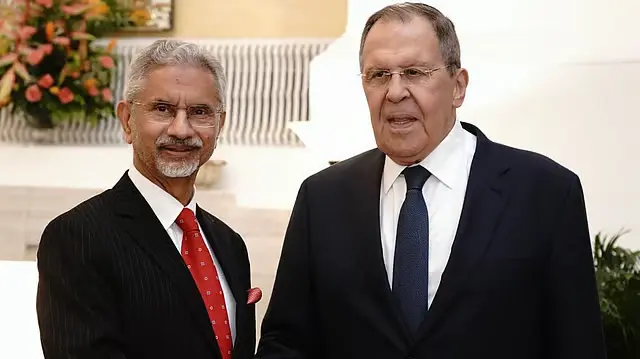
Russian Foreign Minister Sergey Lavrov said, that India could act as a long-term mediator in the ongoing conflict between Iran and the United States. Speaking at a media briefing in New Delhi following a meeting of the BRICS Foreign Ministers, Lavrov praised India’s extensive diplomatic experience and international reputation.

Lavrov highlighted Pakistan’s current efforts in facilitating dialogue between the US and Iran concerning immediate issues, while contending that India could play a crucial role in fostering broader diplomatic engagement to ensure long-term stability in the region. “If they seek a long-term mediator between Iran and its Arab friends, this role could be played by India,” he remarked.

This statement was made against the backdrop of Prime Minister Narendra Modi’s visit to the UAE and escalating global concerns regarding the tensions surrounding Iran, especially as US sanctions waivers on Russian and Iranian oil are nearing their expiry.

India’s Role in Regional Stability

During the press briefing, Lavrov elaborated on how India’s current position as the BRICS chair and its significant interests as an energy consumer could facilitate productive discussions among key stakeholders. He suggested that India could encourage dialogue between Iran and the UAE to avert potential hostilities.

He remarked, “Why won’t they offer their services… as a country that is currently presiding over BRICS, so they could invite Iran, the United Arab Emirates, to start with, to have a conversation with each other?” Lavrov underscored the importance of India’s involvement in promoting peace in the region, given its vested interests.

Moreover, Lavrov expressed concerns regarding external influences that might be exacerbating tensions between Iran and Arab nations. He alleged that certain countries are actively trying to heighten animosity in the region, asserting that Russia is working to lower tensions and promote diplomacy instead.

India’s Historical Context as a Mediator

India has consistently contributed as a global mediator and peacekeeper since its independence. The nation has evolved from idealistic, non-aligned mediation efforts in conflicts such as Korea and Vietnam to a more pragmatic approach termed “Vishwa Bandhu,” which means “friend of the world.” This strategy effectively combines moral diplomacy with high-level, neutral communication.

Historically, India has played significant roles in various international conflicts. In 1953, it was pivotal in the armistice process, particularly concerning proposals related to the repatriation of prisoners of war. Additionally, in the 1950s and 60s, India led the International Commission for Supervision and Control in Vietnam, significantly contributing to regional stability.

India’s influence extended to critical moments such as the declaration of Austrian neutrality in 1955, the withdrawal of Soviet troops, and interventions during the Suez Canal Crisis, the Congo, and the Iraq-Iran War. Under its G20 presidency, India has also underscored the repercussions of conflicts like the Russia-Ukraine war, advocating for dialogue.

Guided by the principle that “the whole world is one family,” India’s endeavours in peacemaking continue to shape its diplomatic interactions. The emphasis on understanding and resolving international conflicts is a cornerstone of India’s foreign policy.

Long or Short, get news the way you like. No ads. No redirections. Download Newspin and Stay Alert, The CSR Journal Mobile app, for fast, crisp, clean updates!

App Store –  https://apps.apple.com/in/app/newspin/id6746449540 

Google Play Store – https://play.google.com/store/apps/details?id=com.inventifweb.newspin&pcampaignid=web_share

Latest News

Popular Videos
