


Former CM Ashok Gehlot Criticises Rajasthan School Entry Restrictions
The CSR Journal Magazine

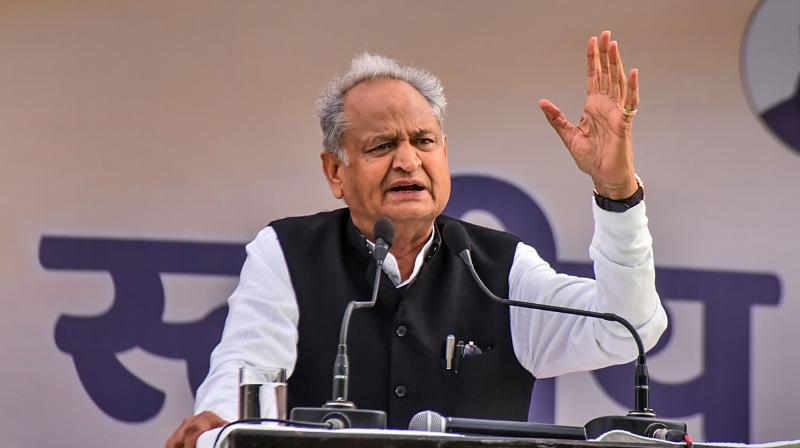
Former Chief Minister of Rajasthan, Ashok Gehlot, has voiced strong opposition to a recent directive from the state government that limits unauthorised access to government schools. Speaking in Jaipur on August 21, Gehlot demanded the immediate withdrawal of this rule, arguing that it obstructs media coverage of issues within the educational sector. He emphasised that such restrictions prevent journalists from identifying and reporting on problems that affect students and the quality of education.

Gehlot’s remarks come as part of a growing political controversy surrounding the Education Department’s order, which prohibits unauthorised entry into school premises. The regulations also restrict photography and videography without prior permission. Gehlot stated, “They should withdraw this rule. No media person can go into the school,” reflecting his concern over the implications for transparency and accountability in government schools.

The former Chief Minister’s comments are situated within a larger critique from Congress leaders, who argue that the new regulations stifle necessary oversight. They fear that these measures will hinder journalists and political representatives from documenting the prevailing conditions of government educational institutions in Rajasthan.

Congress Leaders Join The Protest Against Restrictions

In addition to Gehlot, other Congress leaders have also expressed their dissent regarding the Education Department’s directive. Notably, Tikaram Jully, the Leader of the Opposition, along with other Congress MLAs, staged a protest at a government school for deaf and mute students in Jaipur. The protest drew significant police presence as party members attempted to enter the school grounds, highlighting the tensions surrounding the government’s new rules.

Congress MLA and national general secretary Sachin Pilot has echoed Gehlot’s concerns, labelling the order as “condemnable.” Pilot argued that journalists and the public must be allowed to bring attention to issues within government schools, which are often overlooked. He suggested that rather than resolving infrastructure deficiencies, the government was restricting visibility of the problems.

The controversy has intensified as Congress maintains that transparency in governmental operations should be upheld. They assert that the directive, rather than being a matter of public safety, serves to conceal the condition of educational facilities from scrutiny.

Gehlot Comments on Broader Political Issues

Gehlot’s criticism extends beyond the educational directive to a broader political discourse surrounding Vande Mataram, India’s national song. He questioned the ruling BJP’s motivations, stating, “In the name of Vande Mataram, they are misleading people.” Gehlot’s comments are part of an ongoing exchange between the Congress and BJP regarding the historical significance and interpretation of the national song.

Current discussions on Vande Mataram have sparked sharp exchanges, with BJP leaders accusing Congress of disrespecting the song. Conversely, Congress has challenged the BJP’s political messaging and connection to Vande Mataram, suggesting that the ruling party is opportunistically leveraging the song for political gain.

The dual controversies—restriction of media access to schools and the debate over Vande Mataram—are illustrative of the charged political atmosphere in Rajasthan. While the Congress party calls for the withdrawal of the school access directive, the government defends these regulations as necessary measures to maintain order and safety within educational environments.

Long or Short, get news the way you like. No ads. No redirections. Download Newspin and Stay Alert, The CSR Journal Mobile app, for fast, crisp, clean updates!

App Store –  https://apps.apple.com/in/app/newspin/id6746449540 

Google Play Store – https://play.google.com/store/apps/details?id=com.inventifweb.newspin&pcampaignid=web_share

Latest News

Popular Videos
