


Elon Musk Predicts AI Will Surpass Human Intelligence Within Four Years
The CSR Journal Magazine

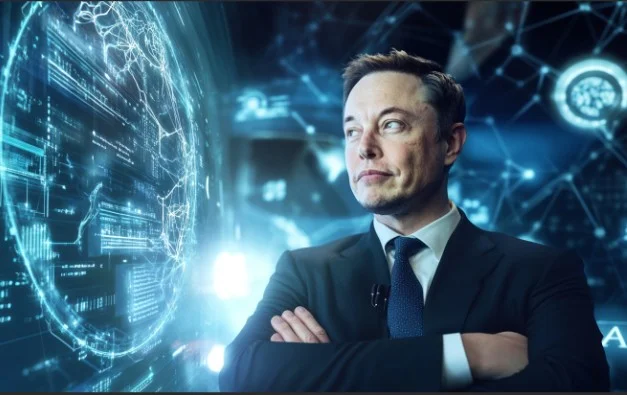
Elon Musk has claimed that artificial intelligence (AI) is on track to exceed the collective intelligence of humanity within the next four to five years. This assertion emerged in response to a post on the social media platform X by entrepreneur Peter H. Diamandis. Diamandis argued that future human prosperity will not solely depend on enhanced computing power and energy, but also on increasing the number of individuals who have access to the necessary tools and resources for innovation.

In his post, Diamandis stated, “Abundance isn’t just more compute and more energy. It’s more minds. More people free to invent, create and solve problems.” Musk’s remark suggested that AI development is quickly approaching a point where it will surpass human capabilities. His comment aligns with Diamandis’ views on expanding human potential through improved resources.

This is not the first time Musk has alluded to a close timeline for advanced AI. He has previously suggested that Artificial General Intelligence (AGI) could emerge as soon as 2026, with the potential for machine intelligence to outpace human intelligence within the decade.

Concerns About Future Intelligence

Musk has indicated that a singular AI model could potentially outsmart any individual’s intellect by approximately 2027. More broadly, he has forecasted that true artificial superintelligence (ASI) could start to materialise around 2030. During a discussion at the World Economic Forum in Davos, he stated, “By 2030 or 2031, AI could be smarter than all of humanity combined.” He further emphasised that the rate of technological development is surpassing the understanding of many policymakers.

Musk’s predictions come during a period of rapid advancements in AI technologies. Companies such as OpenAI, Google, Meta, Anthropic, and xAI are already developing models capable of executing various complex tasks, including code generation, content creation, and intricate problem-solving. Concurrently, significant investments are being directed towards enhancing data centres, AI chips, and the overarching computing infrastructure, as firms compete to build more advanced AI systems.

Musk believes that the integration of AI into various sectors will lead to widespread automation, resulting in a transformation of current work practices. He posits that AI-driven machines could take over many roles traditionally carried out by humans across manufacturing, logistics, and construction. In this scenario, goods and services could become more affordable and accessible to a broader audience.

Implications for Robotics and Automation

The vision of abundant resources is also reflected in Tesla’s humanoid robot initiative, known as the Optimus programme. Musk has suggested that the importance of Optimus may eventually outweigh that of Tesla’s electric vehicles. This humanoid robot is designed to perform repetitive, hazardous, and physically demanding tasks in various environments, including factories and homes.

Musk envisions a future where AI-powered robotics revolutionises industries, leading to “amazing abundance for all.” He believes that these humanoid machines will bring significant changes to current labour dynamics, fostering a new era of productivity and efficiency.

The implications of Musk’s predictions are being closely monitored by various sectors, as the potential rise of superintelligent AI presents both opportunities and challenges. The intersection of AI and human capabilities continues to be a focal point for discussions on technology, ethics, and society’s future.

Long or Short, get news the way you like. No ads. No redirections. Download Newspin and Stay Alert, The CSR Journal Mobile app, for fast, crisp, clean updates!

App Store –  https://apps.apple.com/in/app/newspin/id6746449540 

Google Play Store – https://play.google.com/store/apps/details?id=com.inventifweb.newspin&pcampaignid=web_share

Latest News

Popular Videos
